
Red spittlebug
Sphenorhina rubra
Description
How to identify
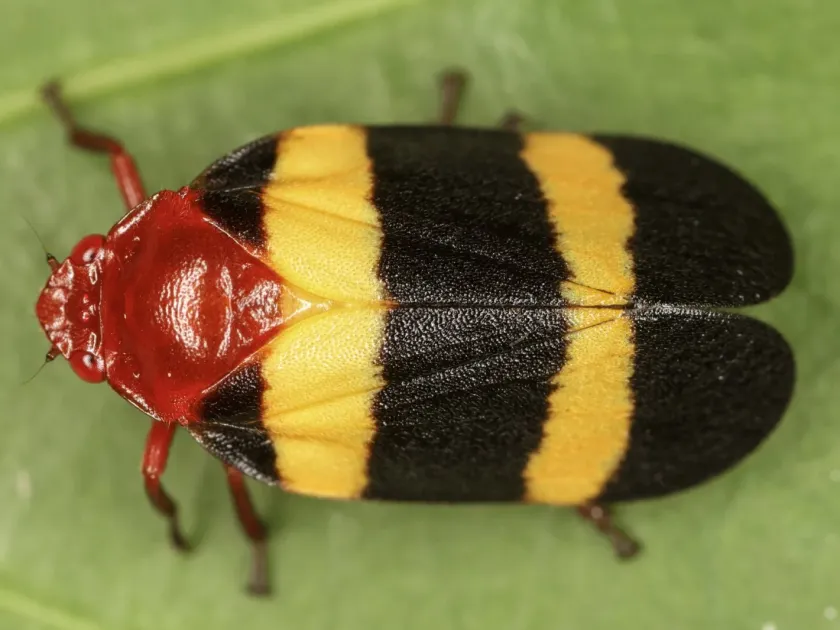
The red spittlebug (Sphenorhina rubra) belongs to the order Hemiptera and the family Cercopidae. These insects are well-known in tropical and subtropical regions for their distinct, often vibrant coloration and their unique method of protecting their offspring through the secretion of foam.
The life cycle consists of the egg, nymph, and adult stages. Nymphs are particularly notable for creating a frothy, white spittle mass, which acts as a shield against predators, extreme temperatures, and desiccation, while they feed on the host plant's xylem sap.
Adults are strong jumpers and flyers, capable of rapid movement across fields. They possess a specialized piercing-sucking mouthpart designed to penetrate plant stems and leaves, allowing them to extract nutrients directly from the vascular system of the host.
Systematically, they are closely related to other froghoppers. Their ability to adapt to diverse agricultural environments makes them a significant concern for farmers. They are highly active during warm, humid periods when plant growth is at its peak.
Identifying this pest in the field requires looking for both the colorful adults on the upper parts of the plants and the characteristic white foam masses usually hidden in the axils or near the base of the stems.
What it damages
As a polyphagous insect, Sphenorhina rubra feeds on a wide range of crops, including grasses, legumes, and various ornamental plants. The constant feeding depletes the plant's resources, leading to stunted growth and reduced vigor.
The damage caused by the spittlebug is twofold: direct mechanical injury from feeding and physiological stress caused by the injection of salivary enzymes. These enzymes can interfere with the plant's metabolic functions, causing localized necrosis and chlorosis.
Heavy infestations result in leaf yellowing, wilting, and in severe cases, the death of young shoots or entire plants. The loss of foliage and the resulting reduction in photosynthesis significantly decrease the total yield and quality of the harvested produce.
Furthermore, these insects are known vectors for various plant pathogens, including viruses and phytoplasmas. By moving from plant to plant, they facilitate the spread of systemic diseases that can be more destructive to the crop than the feeding activity itself.
- Stunted development of terminal shoots.
- Widespread chlorosis and leaf necrosis.
- Reduced water and nutrient uptake.
- Transmission of secondary bacterial or viral infections.
Signs of infestation
The most reliable sign of an infestation is the presence of white, bubble-like foam masses on the plant foliage and stems. These masses are unmistakable and indicate the location of active nymphs feeding on the plant sap.
Plants affected by the red spittlebug often exhibit a lack of vigor, with leaves showing yellow patches or browning edges. As the nymphs suck the sap, the plant struggles to maintain its structural integrity, leading to drooping or curling leaves.
Observing adult insects is another key indicator. Adults are easily disturbed and will jump or fly away when a person walks through the crop, creating a visible "flicker" effect that is characteristic of froghopper activity in the field.
Small, dark spots on leaves, often surrounded by a yellow halo, indicate recent feeding punctures where the insect has introduced its saliva into the plant tissue. These spots may eventually merge, leading to larger dead patches on the leaf surface.
Monitoring should be focused on the transition between the vegetative and reproductive stages of the crop, as the population density can increase rapidly if conditions are favourable, leading to sudden, noticeable damage across the field.
Control measures
Effective management of the red spittlebug requires an integrated approach. Cultural control methods, such as keeping the field free of weeds, remove potential alternative hosts and disrupt the pest's reproductive cycle during off-seasons.
Chemical control is often necessary for large-scale infestations. Systemic insecticides are preferred because they travel through the plant's vascular system, ensuring that the nymphs, which are shielded by their spittle, ingest the poison while feeding.
Biological control agents, including parasitic wasps and predatory beetles that feed on nymphs, play a crucial role in maintaining the balance of the ecosystem. Utilizing these natural enemies is a sustainable practice to keep pest populations below the economic threshold.
Regular monitoring using yellow sticky traps helps in tracking the flight patterns of adults. By identifying peak activity times, farmers can time their interventions precisely, ensuring maximum effectiveness and minimizing the unnecessary use of chemical pesticides.
Maintaining strong, healthy plants through balanced nutrition and appropriate irrigation helps them withstand the pressure from spittlebug attacks. Reducing stress on the crop naturally enhances its resilience against the physiological damage caused by this insect.
Taxonomy
- Latin name
- Sphenorhina rubra
- Order
- Hemiptera (bugs, aphids, leafhoppers)
- Family
- Cercopidae
- EPPO code
- TOMARU
Discussion
No discussions yet — be the first.