
Sphenorhina liturata
Sphenorhina liturata
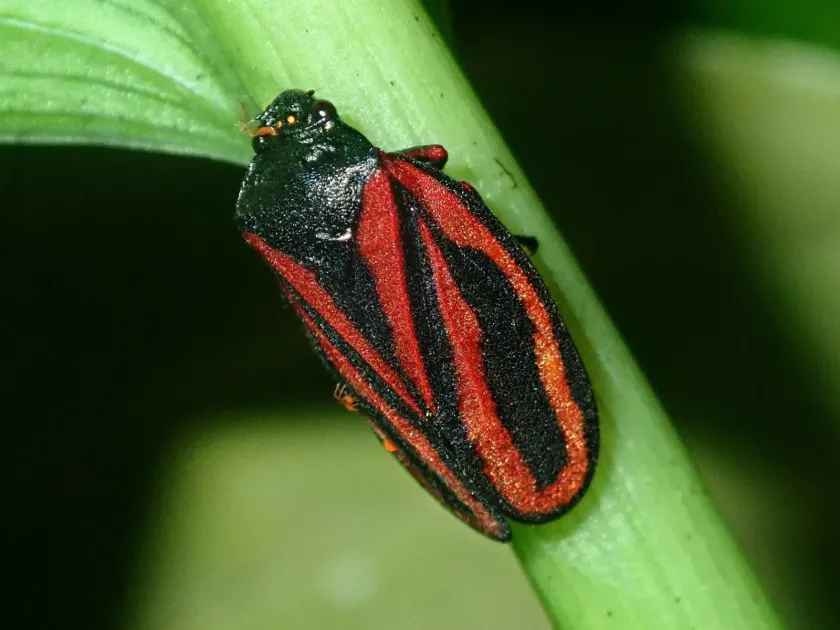
Description
How to identify
Sphenorhina liturata is a species of spittlebug belonging to the family Cercopidae within the order Hemiptera. These insects are well-known for their unique defensive mechanisms during their juvenile stages.
Adults possess a robust, shield-like appearance typical of froghoppers, with specialized mouthparts designed to pierce plant tissue and extract phloem sap efficiently. They are often colorful, which serves as a warning signal to potential predators in their natural habitats.
The nymphal stage is particularly distinct, as the insects produce a characteristic protective froth. This foam acts as a thermal buffer, keeps the nymphs hydrated, and masks them from visual detection by predators.
Morphologically, adults measure between 8 and 12 millimeters in length. They are highly agile, capable of powerful leaps, which makes them difficult to catch or trap without specialized equipment.
This species is predominantly found in tropical and subtropical climates where high humidity and abundant vegetation support large, sustained populations throughout the growing season.
What it damages
Sphenorhina liturata acts as a significant economic pest for various crops, including sugarcane, pasture grasses, and ornamental plants, by feeding on the vital fluids of the host plant.
Both nymphs and adults contribute to crop degradation. As they feed, they inject salivary enzymes into the host's vascular system, which interferes with nutrient transport and causes physiological stress to the plant.
Visible damage manifests as yellowing (chlorosis), stunted growth, and the wilting of leaves. In severe infestations, the plants may show signs of tissue necrosis and reduced biomass production.
The reduction in photosynthetic capacity leads to lower yield quality and quantity. Furthermore, the overall health of the plant is compromised, making it less resilient to drought or other environmental stresses.
Secondary infections are a common consequence of this feeding damage, as the puncture wounds left by the insects become entry points for fungi, bacteria, and viral pathogens.
When it appears
The life cycle and seasonal presence of Sphenorhina liturata are heavily dictated by moisture levels and ambient temperatures. They thrive during the wet season when host plants are in their most vigorous growth phases.
This pest can complete multiple generations within a single year if the climatic conditions remain stable. This high reproductive rate allows for rapid population explosions that can overwhelm local agriculture.
Eggs are typically deposited in sheltered areas, such as leaf sheaths or the soil surface near host roots, to protect them from extreme heat and dehydration.
Nymphs emerge early in the season and undergo several instars while remaining within their frothy homes. As they develop, they move throughout the canopy of the host plant to seek the most nutritious parts for feeding.
Adults are the most mobile stage, responsible for colonizing new host plants and spreading the infestation across fields once their primary food source becomes depleted.
Signs of infestation
The most reliable sign of a Sphenorhina liturata infestation is the presence of white, saliva-like foam on stems and leaf axils, which indicates the presence of developing nymphs.
Early-stage infestations appear as localized pale spots or flecks on the leaf surface. As feeding progresses, these spots coalesce into larger yellow patches, signaling a decline in plant vigor.
The accumulation of honeydew on the leaves is another critical indicator. This sticky substance often attracts ants and promotes the growth of black sooty mold, which can cover the foliage and inhibit photosynthesis.
Affected plants often display signs of physiological fatigue, such as drooping foliage or stunted internodes, even when soil moisture is considered optimal for the crop.
Regular visual inspections, particularly at the base of the stems or near the soil line, are the most effective way to identify early infestation before the damage reaches an economic threshold.
Control measures
Managing Sphenorhina liturata requires an Integrated Pest Management (IPM) approach that combines cultural, biological, and chemical strategies for long-term suppression.
Cultural control measures, such as maintaining appropriate crop spacing and regular weeding, help to eliminate alternative host plants and disrupt the life cycle of the pest.
Biological control using entomopathogenic fungi, such as Metarhizium anisopliae, has shown significant success in controlling population density by infecting nymphs within their protective foam.
Chemical intervention should be reserved as a last resort, utilizing systemic insecticides that target sap-feeders while sparing beneficial insect predators and pollinators to maintain the ecological balance.
Implementing monitoring programs, including the use of yellow sticky traps and scheduled field scouting, is essential to determine the timing and necessity of any control measures applied to the crop.
Taxonomy
- Latin name
- Sphenorhina liturata
- Order
- Hemiptera (bugs, aphids, leafhoppers)
- Family
- Cercopidae
- EPPO code
- SPHHLI
Discussion
No discussions yet — be the first.