
Sphenorhina
Sphenorhina
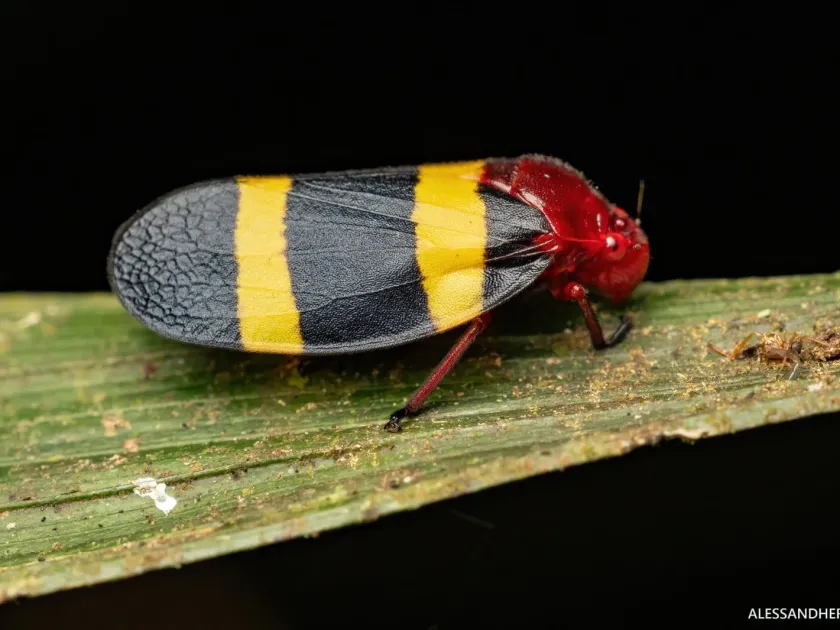
Description
How to identify
Sphenorhina belongs to the Cercopidae family, part of the order Hemiptera. These insects are distinguished by their ability to create a protective "frothy house" around themselves, which makes initial identification challenging.
Adult individuals often have bright, contrasting colors, typical of many members of this family. They possess a streamlined body shape adapted for sudden jumps, often earning them the name "jumping cicadas."
Nymphs have soft bodies and develop inside foamy secretions that protect them from desiccation and natural predators. Visually, they are recognized by the characteristic "spittle" clumps on stems and leaves.
The insect's life cycle includes egg, nymph, and adult stages. Eggs typically overwinter in tree bark or plant debris, making them highly resistant to unfavorable climatic conditions.
The development of nymphs progresses through several instars, during which they actively feed on plant sap before transitioning into an adult capable of flight.
What it damages
This pest damages a wide range of agricultural crops, including vegetable, flower, and ornamental species. Both annual grasses and young shrub shoots are at risk.
The main damage is caused by adults and nymphs sucking cell sap from stems and leaves. This leads to a deficiency of nutrients in plant tissues.
Under heavy infestation, plants show stunted growth, shoots become distorted, and leaves may turn yellow and drop prematurely, significantly reducing overall crop productivity.
During feeding, pests secrete waste that can promote the growth of sooty mold, further degrading the condition of the affected plant.
A serious risk is the transmission of viral diseases, which are introduced into plant tissues when the insect punctures them with its proboscis during feeding.
Signs of infestation
The most obvious sign of Sphenorhina presence is the white foam clumps resembling saliva on shoot tips and leaf axils.
Leaves of affected plants often lose turgor, curl up, or develop chlorotic spots, indicating an interference with the photosynthesis process.
Stunted internode development results in a squat and deformed appearance. Widespread wilting of young tissues is often observed during hot hours of the day.
Adult presence can be detected by mechanically disturbing the plant: they make sudden jumps, scattering in different directions, which helps determine the infestation level.
In early stages, signs may be local, but without intervention, the pest spreads rapidly to neighboring plants, creating entire infestation hotspots.
Control measures
Controlling Sphenorhina requires a comprehensive approach, combining agrotechnical, mechanical, and chemical plant protection methods.
Mechanical removal of foam nests is effective when population density is low. Regular overhead irrigation helps wash away the foam, depriving nymphs of their protective shell.
- Use of systemic insecticides during heavy infestation.
- Strict crop rotation to break the pest's development cycle.
- Weed management to eliminate alternative hosts.
- Use of biological agents based on entomopathogenic fungi.
It is essential to conduct treatments during early morning or evening hours when pests are less active and products remain effective on leaf surfaces for longer.
Preventive spraying at the start of the growing season helps reduce the population before significant damage occurs to the crops.
Taxonomy
- Latin name
- Sphenorhina
- Order
- Hemiptera (bugs, aphids, leafhoppers)
- Family
- Cercopidae
- EPPO code
- SPHHSP
Discussion
No discussions yet — be the first.