
Sphecius
Sphecius
Description
How to identify
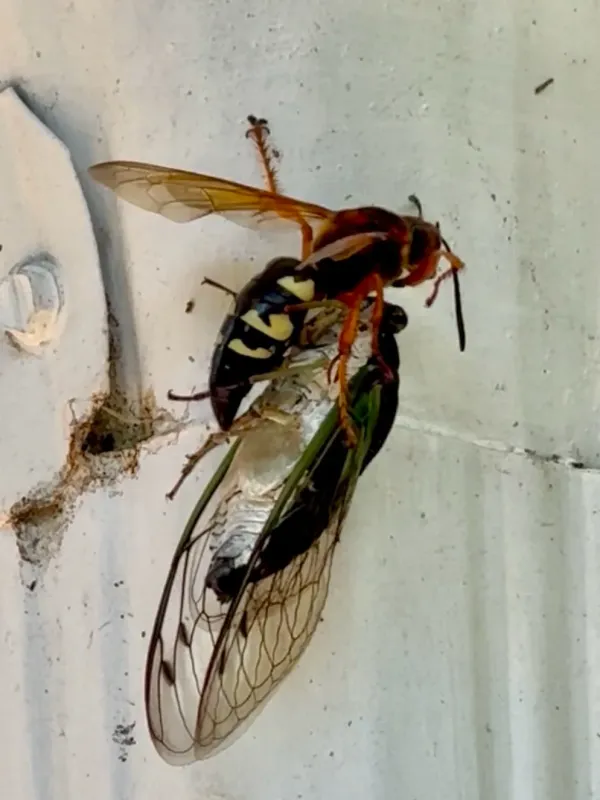
Sphecius, commonly known as the cicada killer wasp, belongs to the family Crabronidae. These are among the largest wasps found in gardens, with adults reaching lengths of up to 5 centimeters.
They possess a distinct black and yellow color pattern similar to hornets. Females are significantly larger than males and are responsible for digging deep burrows in the soil.
The life cycle involves the female paralyzing cicadas and dragging them into underground chambers, where she deposits eggs. These larvae feed on the paralyzed insects until they pupate.
Their wings have a characteristic rusty-red tint, which helps distinguish them from other large wasps such as the European hornet or various yellowjacket species.
Despite their intimidating size and loud buzzing flight, they are generally solitary and non-aggressive toward humans unless directly threatened or handled.
What it damages
Sphecius wasps are not phytophagous; they do not consume plant foliage, flowers, or fruit. Their impact on agriculture and gardening is primarily physical and structural.
Damage occurs when they dig extensive burrow systems in the soil. These tunnels can disturb the root zones of seedlings, vegetable crops, or ornamental plants, leading to wilting.
Large-scale nest construction can contribute to soil erosion on slopes or uneven surfaces, which may require remedial efforts to stabilize the ground around the garden beds.
In addition, the constant activity of these wasps in high-traffic garden areas can cause unease among people, affecting the utility of the landscape for recreational purposes.
While they provide a natural check on cicada populations, excessive nesting in nursery settings or intensive garden beds is often considered a nuisance rather than a severe pest problem.
When it appears
The activity of Sphecius is seasonal, aligning with the emergence of their primary prey, cicadas. Their peak period is typically mid-to-late summer, around July and August.
Nesting activity commences once the soil temperature is sufficiently high, as warm, well-drained soil is a requirement for the successful development of their offspring.
Adult wasps are most visible during the sunny parts of the day when they actively search for prey or perform maintenance on their burrows.
By late summer or early autumn, the active adult generation dies off, and the new generation overwinters in the ground as pupae or larvae.
Environmental conditions, particularly heavy rainfall during the construction phase, can significantly reduce the success rate of local nesting colonies.
Signs of infestation
The most obvious indicator is the presence of small, circular holes in the ground, usually accompanied by a U-shaped mound of excavated soil at the entrance.
Observing large wasps flying low over the ground, often carrying a cicada back to a specific burrow, is a definitive sign of their nesting activity.
A loud, low-pitched buzzing sound during flight is a frequent auditory clue that helps locate the proximity of the burrow sites in dense garden plantings.
Sudden disturbances in the soil or small, localized wilting of plants without evidence of common root pests may suggest underground activity by nesting insects.
In areas with dry, compact, or sandy soil, the entrances are very easy to spot because the soil debris remains loose and distinct from the surrounding surface.
Control measures
Cultural control is the most recommended approach. Modifying the soil environment, such as increasing irrigation or frequent cultivation, discourages wasps from building nests.
Applying a thick layer of organic mulch or planting dense ground cover can effectively block access to the soil, forcing the wasps to relocate to more suitable areas.
Chemical control is generally unnecessary and counterproductive, as these wasps act as biological regulators of cicada populations and pose minimal risk.
In cases where nests interfere with walkways, simple physical exclusion methods or slight increases in soil moisture are usually sufficient to move the colony.
- Maintain high soil moisture levels.
- Use thick layers of mulch on flower beds.
- Regularly rake or cultivate open soil areas.
- Plant ground covers to minimize exposed soil.
Taxonomy
- Latin name
- Sphecius
- Order
- Hymenoptera
- Family
- Crabronidae
- EPPO code
- SPHCSP
Discussion
No discussions yet — be the first.