
Smoky-winged beetle bandit
Cerceris fumipennis
Description
How to identify
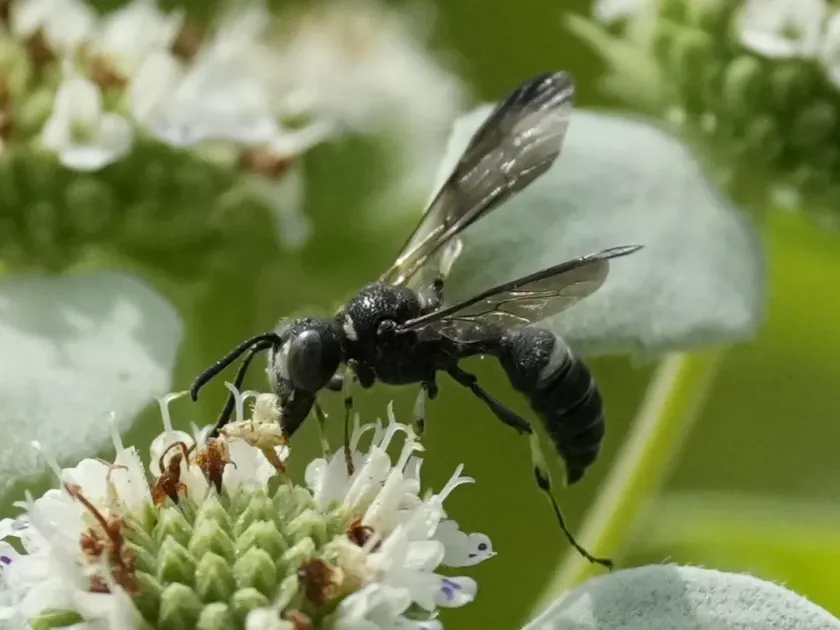
The smoky-winged beetle bandit (Cerceris fumipennis) is a species of digger wasp in the family Crabronidae. It is named for the distinctive smoky, dark-tinted appearance of its wings, which sets it apart from many other similar wasp species.
Adult wasps typically range from 10 to 15 millimeters in length. Their bodies display a striking black and yellow pattern, and they possess robust thoracic muscles that enable them to transport prey items back to their nesting sites.
These wasps are highly skilled hunters with advanced sensory organs, which they utilize to locate their specific prey within the forest canopy or under the bark of trees.
Sexual dimorphism is present but subtle, usually manifesting in differences in antennal structure and abdominal shape. Both sexes are agile fliers, though the females are more frequently observed due to their nesting and provisioning activities.
Identification is confirmed by examining the clypeus and the specific wing venation patterns, which are definitive characteristics of the genus Cerceris within the Hymenoptera order.
What it damages
The smoky-winged beetle bandit is not a plant pest; rather, it is a highly beneficial predatory insect. It is recognized primarily as a natural regulator of wood-boring beetles, specifically those in the Buprestidae family.
The wasps target various species of jewel beetles (Buprestids), which are notorious for causing significant damage to hardwood trees by boring into their trunks and branches. By preying on these beetles, the wasp helps maintain the health of forest stands.
The female wasp captures and paralyzes the beetle with a sting, then transports it to a subterranean nest cell. This paralyzed beetle serves as a fresh food source for the developing wasp larva.
Because they actively reduce the population of these destructive wood-boring insects, these wasps are considered valuable allies in both forestry and conservation management.
They pose no threat to agricultural crops or ornamental plants, as adult wasps feed primarily on nectar and do not cause physical damage to vegetation.
When it appears
The active flight season for these wasps typically coincides with the peak activity of their buprestid prey, generally spanning from June through August, depending on the local climate and temperature.
Females prioritize nesting sites in sunny, open areas with well-drained, sandy or loose soil. These micro-habitats are crucial for maintaining the ground temperature necessary for the successful development of their larvae.
The lifecycle follows a standard pattern: eggs are laid on the paralyzed prey in individual ground cells, followed by larval development, pupation, and the emergence of the next generation of adults.
Synchronization with the emergence of their beetle prey allows the wasps to efficiently provision their nests throughout the warm summer months.
Observing the wasps is easiest on warm, sunny days when they are actively patrolling and flying to and from their nesting burrows.
Signs of infestation
The most common indicator of a smoky-winged beetle bandit population is the presence of small, circular holes in the soil, often surrounded by a characteristic small mound of excavated dirt.
The appearance of wasps carrying beetles in flight is a clear sign of an active colony. These wasps are often observed near infested trees or flying close to the ground in open, sunny clearings.
Reduced numbers of wood-boring buprestids in a forest area can sometimes be attributed to the successful predation pressure exerted by a stable population of these wasps.
Monitoring efforts often focus on observing these nesting sites during the mid-morning hours, as this is when the wasps are most active and visible.
The absence of typical buprestid exit holes on tree bark can serve as a positive sign that natural biological controls, such as these wasps, are effectively managing the beetle populations.
Control measures
Control measures against the smoky-winged beetle bandit are unnecessary, as they are non-pest, beneficial insects that provide free biological control services.
To support and preserve their populations, it is recommended to avoid the excessive application of broad-spectrum insecticides, especially in areas where these wasps are known to nest.
Maintaining patches of bare, undisturbed ground is highly beneficial, as this provides the nesting habitat required by the females for rearing their young.
When managing buprestid beetle populations, it is advisable to adopt an integrated pest management approach that prioritizes the conservation of natural predators like the smoky-winged beetle bandit.
Conservation of these wasps is an essential component of ecological forest management, promoting a healthier ecosystem and reducing the need for chemical interventions.
Taxonomy
- Latin name
- Cerceris fumipennis
- Order
- Hymenoptera
- Family
- Crabronidae
- EPPO code
- CRCRFU
Discussion
No discussions yet — be the first.