
Ectemnius wasp
Ectemnius
Description
How to identify
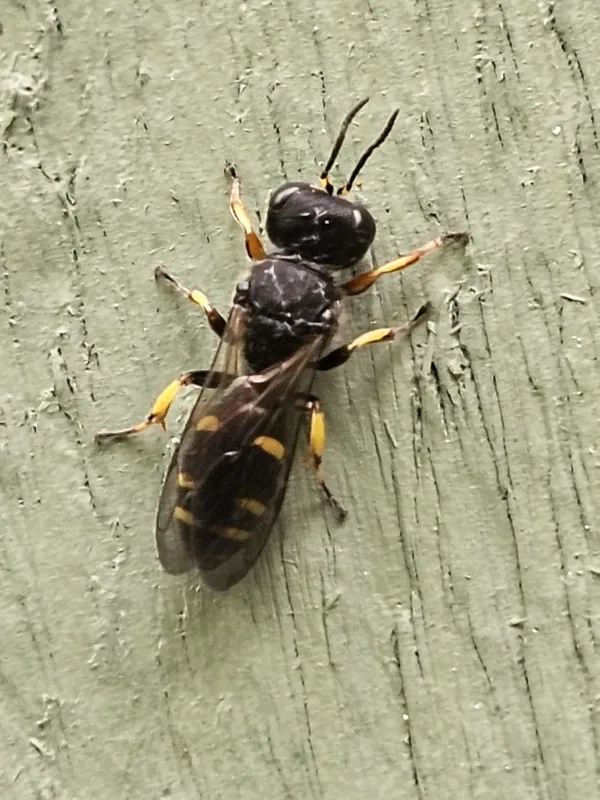
The Ectemnius wasp belongs to the Crabronidae family within the order Hymenoptera. These insects are medium-sized and typically exhibit black coloration with yellow markings on the abdomen.
Adults are characterized by a robust, stocky build and powerful mandibles. They have a relatively large head and a thick thorax, which is a distinctive anatomical feature of this genus.
The genus Ectemnius includes a vast variety of species, which makes precise field identification challenging for those without specialized entomological expertise.
Females are equipped with specialized legs adapted for digging in the soil or boring through wood, which is a critical behavioral trait of these solitary wasps.
Unlike social wasps, Ectemnius wasps lead solitary lives and do not form large colonies with a queen, which significantly alters their ecological impact.
What it damages
The primary damage caused by Ectemnius involves mechanical destruction of woody plant tissue. These wasps prefer decaying or weakened wood to construct their nests.
By boring numerous tunnels into tree trunks, branches, or even thick plant stems, they create entry points for fungal pathogens and opportunistic bacteria.
While adult wasps feed on nectar and pollen, their nest-building activities compromise the structural integrity of the plant, often leading to localized branch dieback.
Intense colonization by Ectemnius wasps can make the affected wood brittle, increasing the risk of structural failure during high winds or heavy snow loads.
Although they are not considered primary phytophagous pests, their role as biological agents that weaken woody structures is a concern for nursery and orchard management.
When it appears
The activity period for Ectemnius wasps begins in late spring, once stable, warm temperatures are reached, which are necessary for flight and mating.
Peak activity generally occurs during the summer months of June and July, when females are actively searching for suitable nesting sites and provisioning for their larvae.
The life cycle is typically completed within a single season, though under unfavorable climatic conditions, larvae may enter a period of prolonged dormancy.
As autumn approaches and temperatures drop, adult wasps die off, leaving behind cocoons that will produce the next generation in the following year.
Monitoring for these pests should be conducted in early summer, as this is when the signs of their boring activities become most apparent to the observer.
Signs of infestation
One of the most clear signs of Ectemnius presence is the appearance of neat, circular holes in the wood, usually measuring 3 to 5 millimeters in diameter.
Small piles of wood dust or frass around the entrance holes are common indicators that the wasps are actively excavating tunnels in the tree.
Frequent sightings of adult wasps hovering around the trunks of older trees or wooden structures are a strong indication of a nearby nesting colony.
Sometimes, remnants of paralyzed insects, such as flies or other small dipterans used as larval food, can be observed near the tunnel entrances.
Gradual wilting of specific branches or the emergence of cracks in the bark with associated boring holes confirms that these wasps are utilizing the plant.
Control measures
The most effective management strategy is the timely removal and disposal of dead or decaying wood, which acts as the primary attractant for these wasps.
Sealing existing wounds or holes on trees with grafting wax or tree wound dressings prevents access to the soft inner tissue, discouraging further colonization.
If active nests are discovered in valuable ornamental plants, targeted application of appropriate insecticides directly into the entry holes may be necessary.
Maintaining overall tree health is vital, as vigorous, healthy trees are significantly less attractive to Ectemnius wasps compared to weakened specimens.
In cases of significant infestation, professional consultation is recommended to assess the extent of the damage and implement a comprehensive sanitization plan.
Taxonomy
- Latin name
- Ectemnius
- Order
- Hymenoptera
- Family
- Crabronidae
- EPPO code
- ECTESP
Discussion
No discussions yet — be the first.