
Cerceris halone
Cerceris halone
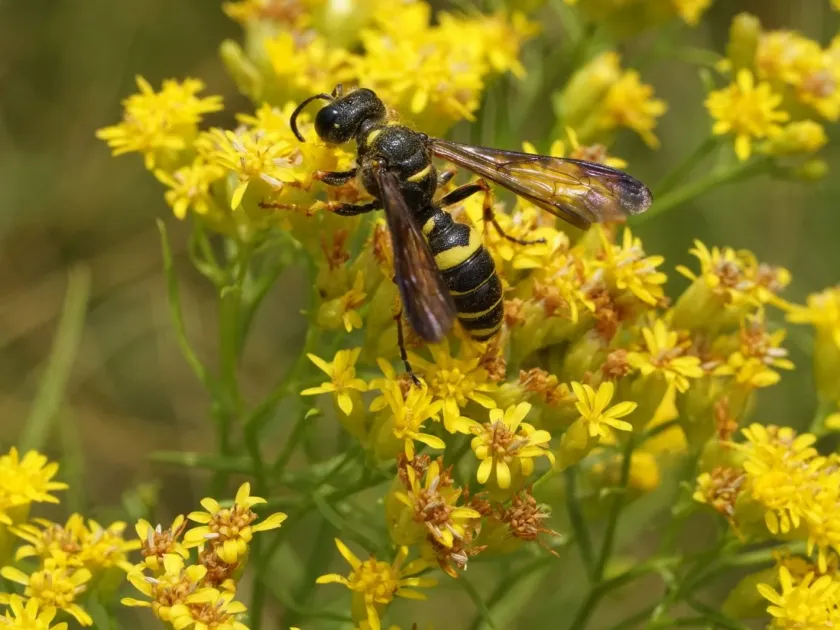
Description
How to identify
Cerceris halone is a species of crabronid wasp belonging to the order Hymenoptera. Like other members of the genus Cerceris, these insects exhibit a characteristic morphology, including a distinctively slender "wasp waist" and yellow-patterned markings on their abdomen.
Adults typically live solitary lives and construct elaborate underground tunnels for nesting. They possess well-developed mandibles and strong wings, which facilitate their movement and nest-building activities within the soil profile.
The coloration of adults usually features dark tones accented with bright yellow or white bands. Identifying this species correctly is essential, as their behavior is closely linked to soil surface conditions and nest-building habits.
Larvae develop within specific cells buried beneath the surface, ensuring a protected environment during their growth. Because of this cryptic lifestyle, observing them during the early stages of colony formation can be difficult.
Agronomic monitoring of this species is important to distinguish it from beneficial insects. Precision in identification allows growers to select appropriate defense strategies while minimizing damage to the beneficial insect population.
What it damages
Although Cerceris halone is primarily seen as a predator, its impact on agriculture often results from the disruption of soil structure. The constant digging of tunnels can undermine the stability of the soil and affect plant root zones.
Root damage occurs when tunnel networks penetrate the soil area where young plants and seedlings are establishing their systems. This compromises the plant's ability to absorb nutrients and water, often leading to stunted growth.
Young transplants and decorative plantings are particularly vulnerable. In fields with high colony densities, the loose soil caused by burrowing insects can lead to excessive drainage, leaving plants dehydrated even with sufficient irrigation.
For ornamental gardens, the aesthetic damage is significant due to the proliferation of exit holes across lawn areas. This makes routine maintenance and landscape management more arduous for farmers and gardeners.
Economic losses arise from the combined impact of plant weakness, yield reduction, and the costs associated with soil restoration. Failing to manage high populations can lead to consistent reductions in crop quality.
When it appears
The life cycle of Cerceris halone is highly dependent on temperature and soil warmth. Adults begin their activity in late spring, as soon as the soil temperatures are high enough to support tunnel construction.
The peak activity period occurs during the summer months of June and July. This is the time when the wasps are most industrious, building nests and ensuring the survival of their offspring, making it the critical window for intervention.
The insect’s development is synchronized with regional climatic patterns. Variations in seasonal warmth can shift the timing of their activity, necessitating that agronomists remain flexible with their pest management schedules.
By late summer, the activity of adults wanes. The larvae remain in the soil, overwintering within cocoons to emerge the following year when favorable conditions return, completing the cycle.
Proactive monitoring during the early summer season is the most effective approach. Detecting the first signs of burrowing allows for quick action before the wasp population expands to damaging levels.
Signs of infestation
The most evident sign of an infestation is the presence of small, circular holes in the ground, often surrounded by tiny mounds of displaced soil. These exit holes serve as clear indicators of a nearby nest.
Increased flight activity over open soil areas is another indicator. Adults often hover near the ground, scouting for the perfect site for their next tunnel, which is a key signal for site managers.
Plants showing signs of wilting or slow growth in specific patches often indicate that their roots have been disturbed by underground burrowing. Even with optimal watering, these plants may appear stressed.
Structural changes in the soil surface become more pronounced after rainfall. The appearance of multiple small holes across a field or lawn confirms that a colony has successfully established itself.
Regular visual inspections of soil surfaces in high-risk areas are necessary to diagnose the extent of the colony's reach. Identifying the problem early is crucial for maintaining soil health.
Control measures
Control of Cerceris halone is best achieved through cultural practices that discourage nesting. Regular irrigation and soil compaction make the ground less suitable for burrowing, encouraging the wasps to relocate.
Applying mulch or establishing dense ground cover serves as a physical barrier. This simple method prevents the wasps from finding the exposed soil they require, effectively deterring them from colonizing the area.
In cases of severe infestation, localized insecticide treatments targeting nest entrances can be effective. This precise method eliminates the active source of the colony while minimizing impact on surrounding beneficial insects.
Maintaining strong, vigorous plant growth is key to resilience. Healthy plants with deep, established root systems are less prone to the stress caused by minor soil disturbances related to wasp activity.
- Regular soil compaction through irrigation
- Use of protective mulch layers
- Planting dense ground-covering vegetation
- Targeted treatment of nest openings
- General farm and garden hygiene
Taxonomy
- Latin name
- Cerceris halone
- Order
- Hymenoptera
- Family
- Crabronidae
- EPPO code
- CRCRHA
Discussion
No discussions yet — be the first.