
Cerceris
Cerceris
Description
How to identify
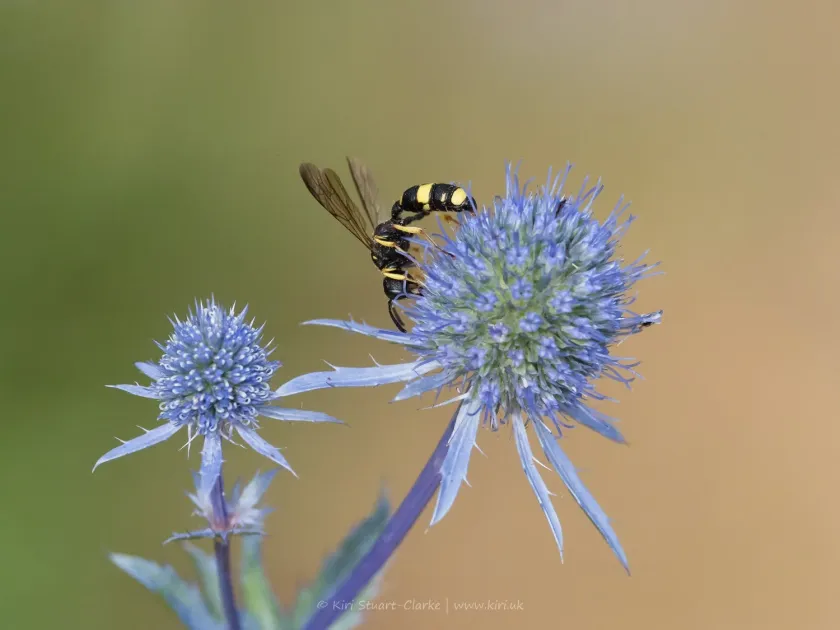
Cerceris is a genus of digger wasps belonging to the family Crabronidae (sand wasps). They resemble common wasps but have a more robust body and a distinct yellow or white banding pattern on the abdomen.
These insects lead a solitary lifestyle. Adult wasps have a developed proboscis for feeding on flower nectar, while females are equipped with powerful mandibles used to excavate burrows in the soil.
The life cycle of Cerceris involves a metamorphosis consisting of egg, larva, pupa, and imago. The wasps are active during sunny weather, preferring open areas with firm but workable soil.
It is important to distinguish these wasps from harmful insects, as most species within this genus are entomophagous, preying on other insects such as weevils.
Identifying specific species of Cerceris requires entomological analysis, as the genus shows high specialization in selecting prey for their offspring.
What it damages
From a classical agricultural perspective, Cerceris is not considered a crop pest. These wasps do not damage fruits, leaves, or roots of plants.
As the primary diet of adults consists of flower nectar, their presence on a plot aids in the pollination of blooming plants, which is a clear benefit to the agroecosystem.
Any potential "damage" is indirect: females dig burrows in the soil to build nests, which can occasionally disturb the aesthetic integrity of ornamental lawns or potted plants.
If large clusters of burrows occur, they may disrupt the landscape, but Cerceris does not cause direct economic loss or harvest reduction.
On the contrary, many species of Cerceris are considered beneficial because they destroy pests (like weevils) that cause significant harm to gardens and fields.
When it appears
The activity period of Cerceris begins in late spring when the soil warms up and continues throughout the summer until mid-autumn.
Adult activity peaks in July and August, during stable, hot, and dry weather conditions, which are essential for larval development within underground chambers.
During nighttime or periods of heavy rain, the wasps retreat to their burrows, becoming largely invisible to plot owners.
The life cycle of one generation lasts about a year, with most Cerceris species overwintering as pre-pupae deep within the soil.
You can observe these insects during sunny hours, as females are busy hunting for prey or maintaining nesting tunnels in open ground areas.
Signs of infestation
The primary sign of Cerceris presence is the appearance of small holes in the ground, often surrounded by characteristic piles of fine soil excavated during burrowing.
You may notice females flying low over the ground, carrying paralyzed prey insects to their nests to nourish their future offspring.
Sometimes, next to the burrows, you can find remains of insect chitinous shells, confirming their role as predators in the local ecosystem.
If numerous burrows are formed in a lawn, the soil may become less firm in those spots, and some localized drying of the grass cover may be observed.
The lack of damage to cultivated plants is the main indicator that you are dealing with a beneficial insect that performs biological control rather than a pest.
Control measures
In the vast majority of cases, control measures against Cerceris are unnecessary because they act as beneficial predators that regulate populations of harmful beetles.
If wasp activity is bothersome in a specific area, it is recommended to reduce soil tillage in their nesting sites to make the ground less attractive for burrowing.
Mulching the soil surface with bark or wood chips, or planting dense groundcover, discourages nest building, as the wasps prefer open and firm soil.
The use of chemical insecticides against Cerceris is not recommended, as it causes the death of beneficial entomofauna and disrupts the garden's ecological balance.
If necessary, simply restrict access to the nesting area, keeping in mind that Cerceris wasps generally do not show aggression toward humans unless provoked.
Taxonomy
- Latin name
- Cerceris
- Order
- Hymenoptera
- Family
- Crabronidae
- EPPO code
- CRCRSP
Discussion
No discussions yet — be the first.