
Bembix rostrata
Bembix rostrata
Description
How to identify
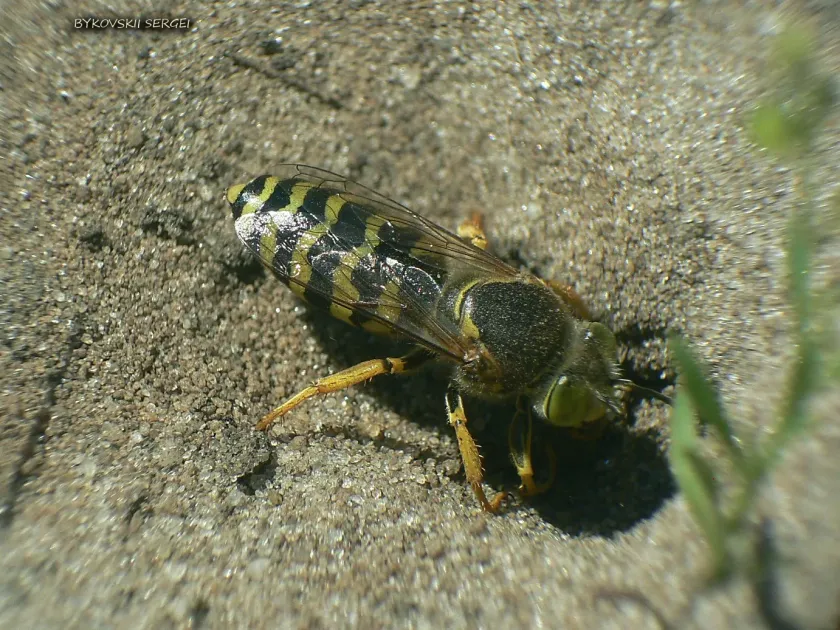
Bembix rostrata is a large species of sand wasp belonging to the Crabronidae family. Adults typically measure between 15 and 24 millimeters in length.
The insect is characterized by a striking black and yellow pattern on its abdomen and a prominent, elongated lower head structure that resembles a snout.
They are strong flyers, often observed patrolling sunny, sandy areas where the soil is loose enough for digging deep nesting burrows.
Unlike social wasps, they do not build paper nests. Each female creates an individual burrow in the ground to rear her offspring independently.
These wasps are generally non-aggressive towards humans unless their nests are directly disturbed or they feel physically threatened by human interaction.
What it damages
Bembix rostrata is not a plant pest; it does not consume agricultural crops, garden vegetables, or fruit trees at any stage of its life cycle.
It acts as a beneficial entomophagous insect. Adult wasps feed on nectar, providing pollination services, while their larvae are predators of various flies.
The female wasp captures and paralyzes flies to provision its nest, helping to regulate the populations of horseflies and other nuisance dipterans.
By controlling the number of blood-sucking flies in the vicinity, they provide indirect benefits to livestock and agricultural workers in the area.
Therefore, Bembix rostrata is considered an essential component of a healthy ecosystem and should be encouraged rather than managed as a pest.
When it appears
The active period for Bembix rostrata occurs during the height of summer, typically from July through August, when temperatures are ideal for ground nesting.
The lifecycle begins with the female excavating a burrow in sandy soil. After laying an egg, she periodically brings paralyzed insects to feed the developing larva.
Larval development happens entirely underground. The mother remains actively involved in provisioning the nest until the larva is ready to pupate.
Once the larva completes its feeding stage, it spins a cocoon and enters a period of diapause, remaining in the soil throughout the winter months.
The emergence of the new generation is synchronized with the availability of prey species, ensuring that the next cycle begins at the start of summer.
Control measures
There is no need for control measures against Bembix rostrata because it does not cause damage to plants and is a highly beneficial predator.
The use of broad-spectrum pesticides is highly discouraged in areas where these wasps are present, as they would be negatively affected by such chemicals.
Preserving sandy soil patches and maintaining natural habitat features is the best way to support the population of these natural fly controllers.
If you encounter their nests, simply avoid the immediate area to prevent accidental disturbance; they will not seek out humans for confrontation.
In sustainable agriculture and permaculture, the presence of these wasps is viewed as an indicator of a diverse and thriving insect population.
Taxonomy
- Latin name
- Bembix rostrata
- Order
- Hymenoptera
- Family
- Crabronidae
- EPPO code
- BEMXRO
Discussion
No discussions yet — be the first.