
Silver-striped prominent
Spatalia argentina
Description
How to identify
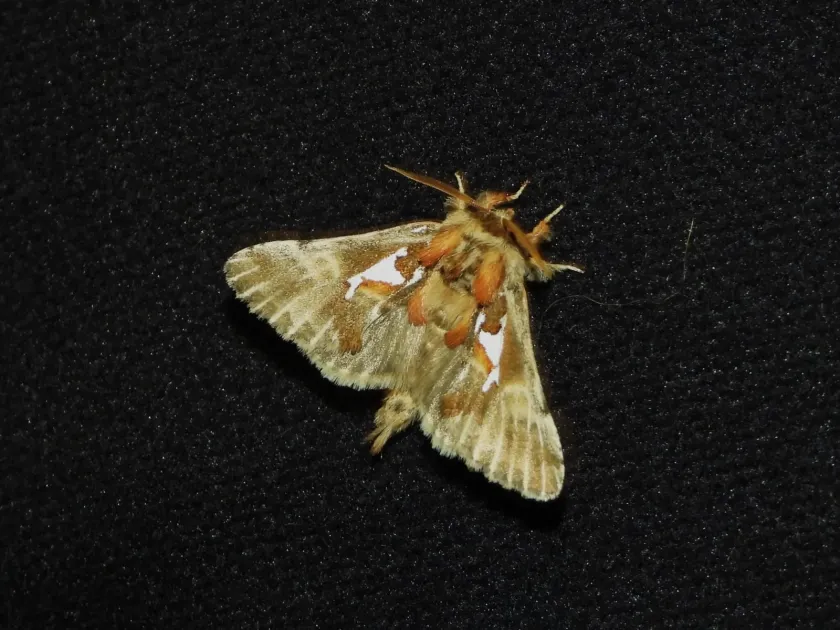
The silver-striped prominent (Latin: Spatalia argentina) is a moth belonging to the family Notodontidae, order Lepidoptera. The adult moth is characterized by its specific color pattern: greyish-brown forewings featuring a distinct metallic silver streak at the apex, which justifies its name.
The wingspan of this moth typically ranges from 35 to 45 millimeters. Its body is covered with dense hair, a common trait among members of the Notodontidae family. When at rest, the moth folds its wings in a tent-like fashion, pressing them closely against the surface.
The larvae, or caterpillars, of the silver-striped prominent display a peculiar body shape with protrusions and vibrant patterns, which provide effective camouflage against the foliage. They undergo several instars, increasing significantly in size before pupation.
The life cycle is closely linked to woody host plants, which serve as both a food source and a site for oviposition. The adults are primarily active during dusk and throughout the night, often being attracted to artificial light sources.
The species is well-adapted to temperate climates, allowing it to successfully overwinter in the pupal stage, typically within leaf litter or crevices in tree bark.
What it damages
The silver-striped prominent primarily infests plants from the Salicaceae (willow family) and Betulaceae (birch family) families. Poplars, willows, and sometimes aspens are the most frequent hosts for this pest.
In forestry and ornamental gardening, this species is considered a secondary pest, though it can cause significant defoliation of stands during mass outbreaks.
The caterpillars pose a particular threat to young seedlings in nurseries, where heavy foliage loss stunts growth and reduces the overall vigor of the plants.
For mature trees, severe infestation can compromise their aesthetic appeal, which is critical for urban parks and avenues. Weakened trees may also become more susceptible to secondary pests and various pathogens.
While the silver-striped prominent rarely kills mature trees, repeated defoliation over several consecutive seasons can lead to severe physiological decline and stress.
When it appears
The flight of the first generation usually begins in late spring or early summer, coinciding with the stabilization of night temperatures. This period marks the start of the reproductive phase.
Larval development continues throughout the summer months. Depending on the local climate, the species may produce one or two generations per season, which directly influences the severity of the damage inflicted.
By late summer, the larvae reach maturity and begin searching for suitable sites for pupation. This is the period when damage becomes most visible due to the high intensity of larval feeding.
Overwintering occurs in the pupal stage. The cocoon is often concealed in the topsoil layer or within protected niches on the tree trunk, where the insect remains dormant until the following spring.
Monitoring population levels via light traps during the adult flight period is recommended to assess the potential risk to nearby greenery before the larval season begins.
Signs of infestation
The primary sign of the silver-striped prominent's presence is partial consumption of leaf blades. Larvae typically begin feeding from the margins of the leaf, progressing toward the central vein.
The presence of frass (larval excrement) on leaves located below the feeding sites is a reliable indicator of active caterpillar presence within the canopy.
Careful inspection may reveal the larvae themselves, which, due to their unique coloration, often resemble bits of bark or withered plant parts, though their activity gives them away.
During mass outbreaks, a characteristic sound in the canopy caused by high numbers of caterpillars feeding simultaneously becomes a clear indicator of infestation.
Affected branches may appear thinned or skeletonized, which is easily noticed during visual surveys of ornamental plantings at the peak of the pest's activity.
Control measures
The primary control measure in nurseries is the application of biological agents based on Bacillus thuringiensis, which are effective against young larvae.
For the protection of valuable ornamental trees, systemic or contact insecticides registered for use in green zones may be applied.
Mechanical control involves collecting and disposing of fallen leaves where pupae may overwinter, as well as cleaning trunks of loose, dead bark.
Encouraging natural enemies, such as insectivorous birds and parasitoid wasps, is a crucial part of long-term population management.
- Installation of pheromone traps to monitor and regulate male populations.
- Maintaining optimal soil moisture to promote tree health and resistance.
- Planting resistant poplar and willow cultivars to reduce host attractiveness.
Taxonomy
- Latin name
- Spatalia argentina
- Order
- Lepidoptera (butterflies)
- Family
- Notodontidae
- EPPO code
- SPATAG
Discussion
No discussions yet — be the first.