
Spatalia argentina
Spatalia
Description
How to identify
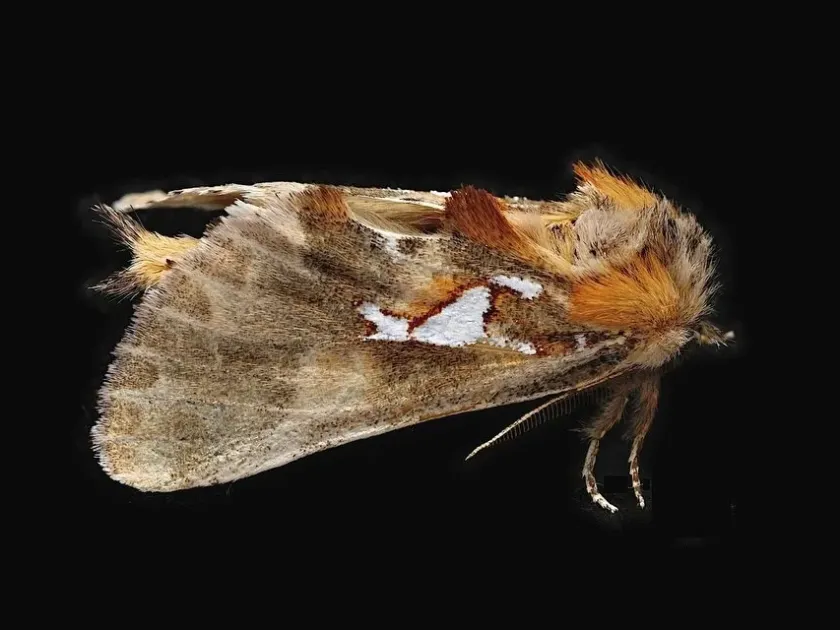
Spatalia argentina is a species of moth belonging to the family Notodontidae, commonly known as the prominents. Adult moths typically have a wingspan ranging from 40 to 50 mm.
The forewings are characterized by a greyish-brown coloration with a prominent silvery or white patch, which often resembles a tooth or crest, a common feature among members of this family.
The larvae, or caterpillars, are known for their distinct morphology. They are smooth and greenish, possessing specialized humps or protrusions on their dorsal segments, which aid in camouflage among foliage.
As members of the subfamily Notodontinae, the adults have vestigial mouthparts and do not feed; their lifespan is dedicated solely to reproduction.
The insect undergoes complete metamorphosis, completing its lifecycle in synchronization with the vegetative season of its host plants in forest and parkland ecosystems.
What it damages
The primary hosts for Spatalia argentina include various broad-leaved trees, specifically those within the Fagaceae and Salicaceae families.
They are frequently observed on species such as poplars, aspens, willows, and occasionally oaks or birches, often colonizing young plantations or saplings.
The damage is caused exclusively by the larvae, which possess robust mandibles capable of consuming large amounts of leaf tissue.
Younger larvae initially engage in skeletonizing the leaves, whereas older instars are capable of consuming the entire leaf blade, leaving only the primary veins and petioles behind.
Severe infestations can lead to significant defoliation, which stresses the tree, reduces its annual growth increment, and increases susceptibility to secondary pests and diseases.
When it appears
The lifecycle usually consists of one or two generations per year, depending on the climatic conditions of the habitat.
The insect overwinters in the pupal stage, encased in a durable cocoon buried within the soil or the leaf litter near the base of the host tree.
Adults emerge in late spring or early summer (May–June). Following mating, females deposit eggs in clusters on the underside of host leaves.
Larval feeding is most intense during the summer months. By late summer or early autumn, the caterpillars descend to the ground to pupate.
Environmental factors like ambient temperature and humidity play a critical role in the rate of larval development and the overall population density for the season.
Signs of infestation
Initial signs of infestation include the appearance of irregular holes on leaf blades, typically occurring in the mid to upper canopy of the tree.
Careful inspection of the underside of leaves may reveal egg batches or clusters of small, newly hatched larvae.
The presence of frass (caterpillar droppings) on the leaves below or on the ground surface is a reliable indicator of active larval feeding in the canopy above.
Extensive stripping of the foliage and bare branches are symptomatic of a high population density of the pest within the tree crown.
The presence of the characteristically shaped larvae, when observed visually on branches, confirms the infestation by this specific species.
Control measures
Mechanical control involves the manual collection and destruction of caterpillars in home gardens where infestations are localized and minor.
Biological control agents, such as formulations of Bacillus thuringiensis, are highly effective against early-instar larvae and are safer for non-target beneficial insects.
In cases of widespread outbreaks, selective insecticides may be required, provided they comply with forestry regulations regarding safety and environmental protection.
Encouraging local populations of insectivorous birds and predatory insects provides a natural check on the pest population, which is crucial for long-term management.
Removing leaf litter and disturbing the soil around the base of trees in autumn can destroy overwintering pupae, thereby reducing the emergence of the next generation.
Taxonomy
- Latin name
- Spatalia
- Order
- Lepidoptera (butterflies)
- Family
- Notodontidae
- EPPO code
- SPATSP
Discussion
No discussions yet — be the first.