
Sogata kolophon
Sogata kolophon
Description
How to identify
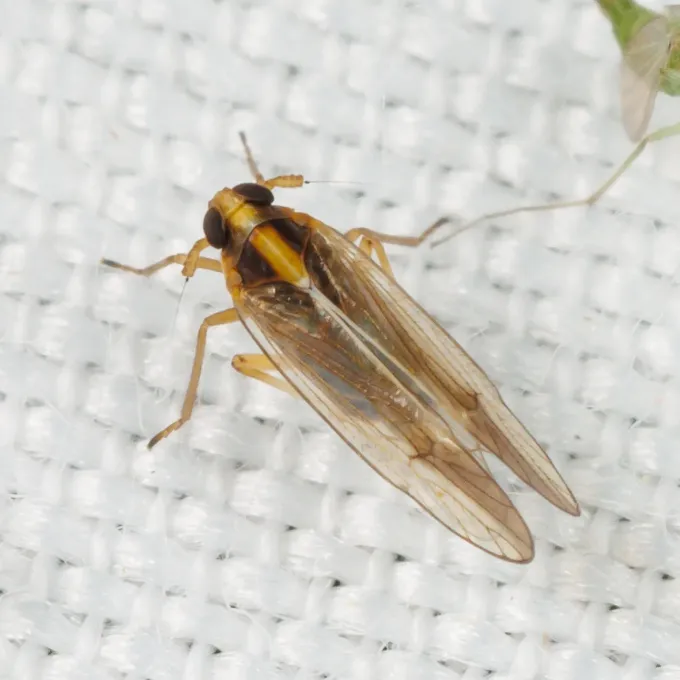
Sogata kolophon is a small insect belonging to the order Hemiptera and the family Delphacidae. These planthoppers are characterized by specialized piercing-sucking mouthparts designed to feed on plant sap.
Adults typically measure between 3 to 5 mm in length and exhibit yellowish-brown or light brown coloration, which provides excellent camouflage within the canopy of cereal crops.
The wings of the insect are transparent with distinct venation, folding tightly against the body, a key morphological feature for identifying species within this family.
Nymphs resemble smaller, wingless versions of the adults and progress through several instars before reaching maturity, maintaining high mobility throughout their development.
This species is well-adapted to high-humidity environments, making it a common inhabitant of wetlands, irrigated rice paddies, and nearby grass vegetation.
What it damages
The primary host for Sogata kolophon is rice (Oryza sativa), though they also utilize various wild grass species as alternative hosts throughout the growing season.
Both adults and nymphs cause damage by extracting sap from leaves and stems, which disrupts the normal physiological processes of the host plant.
Heavy infestations lead to stunted growth and reduced vigor, which significantly impairs the plant's ability to develop healthy grains and limits overall yield.
Beyond direct mechanical injury, the feeding process can cause leaf yellowing and tissue necrosis, often leading to the premature death of the affected plant tissues.
Planthoppers are also known as potential vectors for various plant viruses, which can exacerbate the damage by causing systemic diseases in the crop population.
When it appears
The life cycle of Sogata kolophon involves internal egg-laying within plant tissues, providing the offspring with protection and a ready food source upon hatching.
Mass appearance of the pest is often synchronized with the tillering stage of the crop, as the succulent plant tissues are highly attractive for development.
Multiple generations can occur throughout the growing season, with populations exploding rapidly under favorable conditions of warmth and moisture.
Adult planthoppers are highly migratory and can colonize new areas quickly, spreading the infestation across fields and between adjacent farms.
The insect typically overwinters in the egg or adult stage, remaining dormant in plant debris, stubble, or perennial weeds at the edges of fields.
Signs of infestation
Early symptoms of an infestation include the appearance of tiny chlorotic spots on the leaves, marking the precise locations where the planthoppers have fed.
As the infestation progresses, leaves may begin to curl and yellow, eventually showing signs of wilting even in fields with adequate irrigation.
The presence of sooty mold on the leaf surfaces is a clear indicator of pest activity, as the mold grows on the honeydew excreted by the feeding insects.
A quick inspection of the canopy, especially during early morning hours, often reveals the presence of jumping insects when the plants are disturbed.
A noticeable uneven growth pattern across the field, combined with patches of yellowing vegetation, often signals a high density of the pest.
Control measures
Integrated pest management strategies begin with rigorous field sanitation, including the destruction of weeds that serve as reservoirs for the pest.
Water management is crucial; intermittent drying of the paddies can significantly disrupt the life cycle of the nymphs and limit population expansion.
Chemical control should be implemented based on scouting results, utilizing systemic insecticides when the economic threshold is reached.
Rotation of insecticides from different chemical classes is essential to manage the risk of developing pesticide resistance in the pest population.
- Routine scouting using yellow sticky traps to monitor population density.
- Application of selective insecticides at the early signs of infestation.
- Encouraging natural predators such as ladybugs and parasitic wasps in the field.
Taxonomy
- Latin name
- Sogata kolophon
- Order
- Hemiptera (bugs, aphids, leafhoppers)
- Family
- Delphacidae
- EPPO code
- SOGAKO
Discussion
No discussions yet — be the first.