
Sogata cubana
Sogata cubana
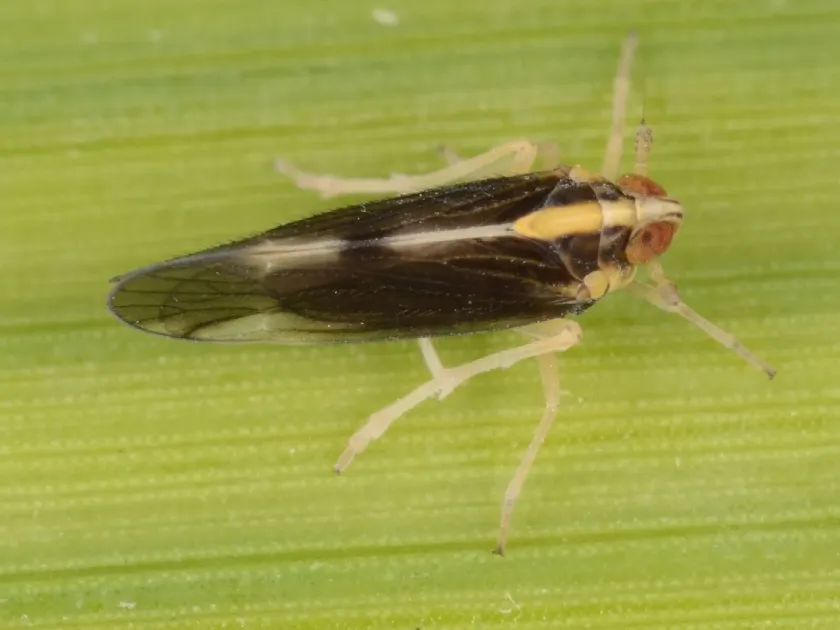
Description
How to identify
Sogata cubana is a small insect of the Hemiptera order, belonging to the Delphacidae family, commonly known as planthoppers. Both adults and nymphs are characterized by strong hind legs adapted for jumping, which is a signature trait of the family.
Adults are typically yellowish-brown in color, measuring about 3 to 4 millimeters in length. They have translucent wings that fold flat against the body, creating a distinct triangular profile when the insect is at rest.
The nymphs undergo several developmental stages, gradually resembling the adult form as they mature. They are generally cryptic, preferring to inhabit the base of the plant or hidden spaces within leaf sheaths to avoid predators and desiccation.
Identification of the species often requires careful examination by specialists, as external morphological markers can be similar to other related planthopper species found in the same habitats.
These insects thrive in agroecosystems with high humidity, such as rice paddies, where the microclimate provided by the water and dense foliage supports rapid population growth.
What it damages
The primary host plant for Sogata cubana is rice. The pest utilizes its piercing-sucking mouthparts to penetrate plant tissues, specifically extracting sap from leaves and stems, which weakens the plant's physiological integrity.
Beyond cultivated rice, this insect also infests various wild grasses that grow in irrigation ditches, ponds, and riverbanks, which act as secondary hosts and reservoirs during the off-season.
Heavy infestations result in significant yield losses and reduced grain quality. The constant sap extraction diverts nutrients away from grain development, leading to smaller, less viable panicles and reduced overall harvest volume.
Feeding damage manifests as chlorotic spots at the site of the puncture. Over time, these spots can enlarge and merge, leading to premature leaf drying and a significant reduction in the plant's photosynthetic capacity.
In addition to direct damage, Sogata cubana is known to act as a vector for various plant viruses, which can cause severe systemic diseases that are often more destructive than the physical feeding damage itself.
When it appears
The lifecycle of Sogata cubana is strongly correlated with the hydrological and thermal cycles of rice cultivation. Activity typically begins during the tillering stage of the crop, when the plants provide sufficient cover and nutrients.
Multiple generations can occur within a single growing season. Rapid population increases are usually observed during periods of hot weather and high humidity, which are ideal for the insect’s reproductive success.
As the season progresses toward autumn and temperatures decline, the population density begins to decrease. The insects prepare for overwintering, typically in the adult or late-nymphal stage, hiding among crop residues or weeds.
Comprehensive monitoring should be conducted throughout the entire growing cycle, starting from the seedling stage and continuing through the milky-dough stage of grain development.
Peak populations often align with the rapid vegetative growth phases of the rice crop, necessitating heightened vigilance and potentially intervention during these critical temporal windows.
Signs of infestation
The first clinical sign of an infestation is the appearance of whitish or pale spots on the leaf blades, which expand as the insects continue to feed, eventually causing the leaves to yellow and wilt.
Detection is best achieved by inspecting the undersides of the leaves or by parting the leaf sheaths where the insects congregate for shelter from harsh environmental conditions.
Field observation often reveals the pest's presence through sudden "hopping" activity. When walking through a rice field, disturbed insects will take flight or jump, providing a clear visual indication of high population density.
An indirect sign of the presence of planthoppers is the growth of sooty mold on the leaves. This fungus thrives on the honeydew (sugar-rich secretions) produced by the nymphs and adults during feeding.
Advanced stages of infestation are marked by "hopperburn," where large areas of the rice paddy turn brown and desiccate, leading to stunted plant height and a failure of the panicles to develop properly.
Control measures
Integrated Pest Management (IPM) is the most effective approach, starting with crop rotation and the rigorous removal of weeds along irrigation canals, which effectively eliminates the insect's habitat.
Proper nitrogen management is crucial, as excessive nitrogen applications can make the plants more attractive to sap-sucking insects by increasing the concentration of free amino acids in the sap.
If population thresholds are exceeded, the use of systemic insecticides is recommended to protect the crop. These treatments are most effective when applied at the onset of the infestation to prevent exponential population growth.
Biological control plays a significant role; supporting populations of natural predators such as spiders, mirid bugs, and parasitic wasps can significantly keep pest numbers in check without relying solely on chemicals.
- Use yellow sticky traps for monitoring population density.
- Practice water management, including periodic drying of paddies where appropriate.
- Select and plant rice varieties with known resistance or tolerance to sucking pests.
Taxonomy
- Latin name
- Sogata cubana
- Order
- Hemiptera (bugs, aphids, leafhoppers)
- Family
- Delphacidae
- EPPO code
- SOGACU
Discussion
No discussions yet — be the first.