
Twin-spotted sphinx
Smerinthus jamaicensis
Description
How to identify
The Twin-spotted sphinx (Smerinthus jamaicensis) is a member of the Sphingidae family within the Lepidoptera order. The adult moth is known for its impressive wingspan and striking eyespots on the hindwings, designed to deter predators.
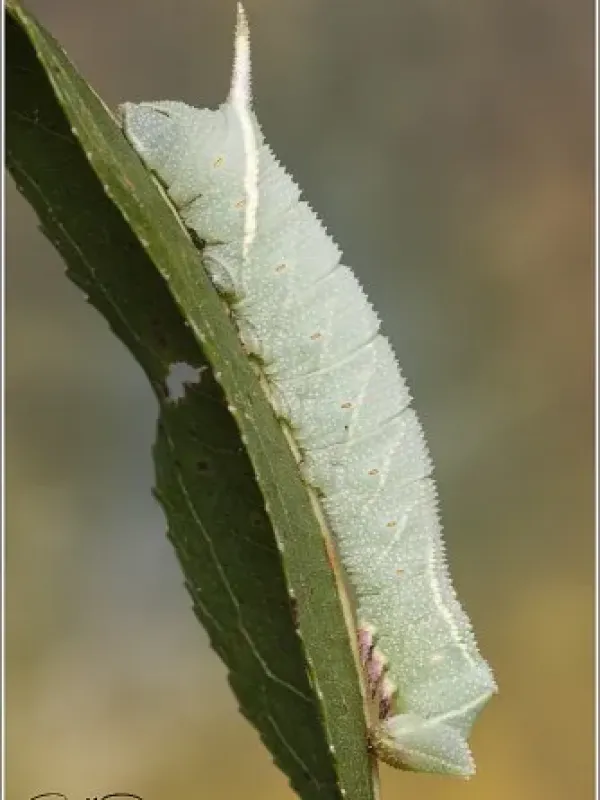
The larvae are large, green caterpillars characterized by diagonal white stripes along their sides and a distinct horn-like projection on the posterior end. This camouflage allows them to blend seamlessly with the foliage of their host trees.
The life cycle undergoes complete metamorphosis, including egg, larval, pupal, and adult stages. The pupa typically winters in the soil or under leaf litter, emerging in late spring as the weather warms.
As nocturnal creatures, the adults are rarely seen during the day, resting on tree trunks where their cryptic coloration provides excellent protection against detection.
The species biology is highly adapted to deciduous environments, where the timing of larval emergence often coincides with the flush of new growth on host trees, ensuring an abundant food source.
What it damages
The larval stage is responsible for all significant damage to plants. Large populations of these caterpillars can defoliate entire branches, leading to a significant loss of photosynthetic capacity.
Common host plants include various deciduous trees and shrubs, such as apple, pear, cherry, willow, birch, and rose plants. They are frequent inhabitants of both wild woodlands and managed orchards.
Severe defoliation weakens the host plant, making it more susceptible to secondary environmental stressors, including drought, late frosts, and opportunistic fungal or bacterial infections.
Young plants and nursery stock are at the highest risk, as the loss of a significant portion of their canopy can result in stunted growth, reduced vigor, and in extreme cases, plant death.
By consuming foliage, the caterpillars also disrupt the tree's ability to store energy reserves, which are essential for producing flowers and fruits in the subsequent growing season.
Signs of infestation
The most visible sign of infestation is missing leaf tissue, often starting from the edges of the leaves and moving inward, frequently leaving only the main veins intact as the larvae mature.
The presence of large amounts of frass (caterpillar droppings) accumulating on the ground or on lower leaves is a clear indication that caterpillars are feeding in the canopy above.
Close inspection of the undersides of leaves during the early season may reveal individual, rounded, pale-green eggs laid by female moths on the host plant foliage.
Nighttime observation with a flashlight may reveal the larvae actively feeding. Their large size makes them relatively easy to spot once their location is identified by foliage damage.
Signs of shelter-seeking behavior, such as curled leaves or sparse silk threads used to anchor foliage, are further indicators of caterpillar presence and activity.
Control measures
For small-scale gardens, hand-picking the caterpillars is a highly effective and eco-friendly control method. This is best done in the early morning or late evening.
Cultivating the soil around the base of the trees in late autumn or early spring can help disrupt the pupal stage, exposing the pupae to birds and other natural predators.
Biological insecticides, such as those containing Bacillus thuringiensis, are effective against young larvae and have minimal impact on non-target species and beneficial insects.
Chemical intervention should be reserved for severe infestations and must be applied in accordance with regional agricultural guidelines to ensure safety for pollinators and fruit harvest.
- Install light traps to monitor adult moth activity.
- Encourage insectivorous birds to nest in the garden area.
- Maintain tree health through proper fertilization and watering.
Taxonomy
- Latin name
- Smerinthus jamaicensis
- Order
- Lepidoptera (butterflies)
- Family
- Sphingidae
- EPPO code
- SMERJA
Discussion
No discussions yet — be the first.