
Cerisyi Sphinx
Smerinthus cerisyi
Description
How to identify
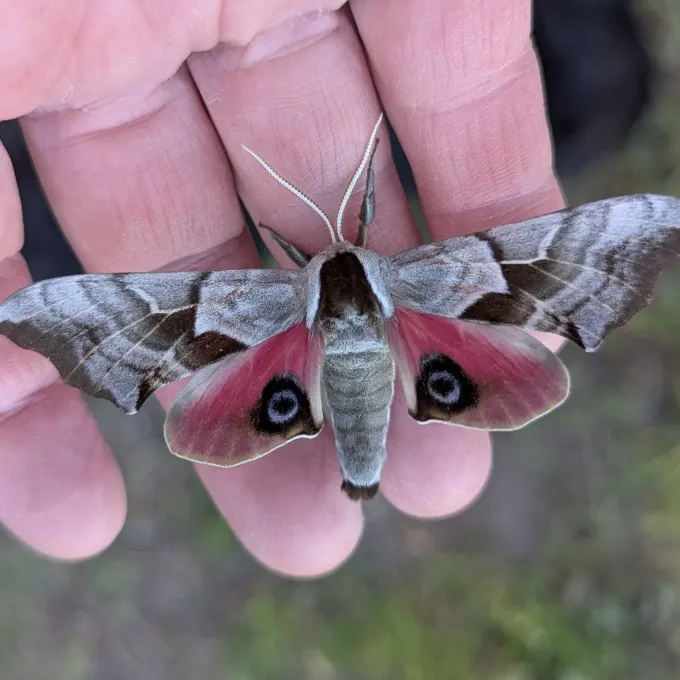
The Cerisyi Sphinx (Smerinthus cerisyi) is a member of the Lepidoptera order and the Sphingidae family, commonly known as hawk moths. These insects are distinguished by their robust bodies and large hindwings featuring prominent eye-spots, which serve as a defensive mechanism against predators.
Adult moths are nocturnal and possess a hairy, thick thorax that aids in flight thermal regulation. With a wingspan typically ranging from 70 to 90 mm, they are impressive insects that are well-adapted for survival in diverse temperate forest habitats.
The caterpillars go through several larval stages, reaching a large size before pupation. They are usually green with diagonal pale lateral stripes, mimicking the veins of leaves to avoid detection by birds and other predators.
The life cycle consists of four distinct stages: egg, larva, pupa, and adult. The insect typically overwinters in the pupal stage, buried within the leaf litter or shallow soil, which provides insulation against harsh winter temperatures.
Adult moths lack functional mouthparts and do not feed, relying entirely on energy reserves stored during the larval phase to facilitate mating and reproduction.
What it damages
The larval stage is responsible for all damage, as the caterpillars are voracious leaf-eaters. This species primarily targets hosts within the Salicaceae family, specifically willows and poplars.
Caterpillars consume leaf tissue rapidly, often skeletonizing entire branches or causing total defoliation when population densities are high. This loss of foliage limits the plant's photosynthetic capacity.
In forest nurseries and ornamental landscapes, persistent defoliation by these larvae can lead to stunted growth and reduced vigor in young saplings, making them susceptible to further stress.
While mature trees can generally tolerate periodic defoliation, repeated infestations over consecutive years can weaken their immune response, leaving them vulnerable to pathogens and wood-boring pests.
Control is most critical in areas where high densities of larvae can permanently affect the aesthetic value or health of valuable woody vegetation.
When it appears
The flight period for adult Cerisyi Sphinx moths typically occurs in the late spring and early summer. As nocturnal insects, they remain inactive and well-hidden during the daylight hours.
After mating, females deposit eggs individually on the undersides of host plant leaves. The incubation period usually lasts approximately two weeks, depending on ambient environmental temperatures.
The peak larval activity occurs during mid-summer, spanning from June through July. This coincides with the peak vegetative growth of host trees, providing a rich food source for the developing larvae.
By late summer, the fully grown caterpillars descend to the soil to pupate. The pupa remains dormant in the ground throughout the autumn and winter months, awaiting the following spring.
The species generally follows a univoltine life cycle, meaning only one generation is produced per year, which is typical for hawk moths in northern temperate climates.
Signs of infestation
The presence of larvae is often indicated by the accumulation of frass (caterpillar droppings) on leaves or the ground beneath the canopy, which appear as uniform, pellet-like structures.
Signs of feeding include ragged leaf margins or large sections of the leaf blade consumed, leaving only the midribs. Caterpillars are often found resting near these midribs during the day.
Inspecting the canopy at night with a flashlight often reveals the larvae actively feeding. They are less visible during the day due to their effective counter-shading and green coloration.
Widespread defoliation is a clear sign of a significant infestation. Additionally, increased bird activity in the canopy can serve as a biological indicator of high caterpillar populations.
Stunted development of young trees or premature leaf loss, especially on willow or poplar species, should prompt a thorough inspection for the presence of hawk moth larvae.
Control measures
Hand-picking caterpillars is the most effective and eco-friendly management tactic for small-scale gardens or residential properties where the infestation is limited in scope.
Biological control using Bacillus thuringiensis (Bt) is highly recommended. This bacterium targets lepidopteran larvae specifically, providing excellent control without harming beneficial insects or the surrounding ecosystem.
Disturbing the soil under host trees in autumn can expose overwintering pupae to predators and colder temperatures, effectively reducing the emergence rate for the following spring.
Systemic or contact insecticides should be reserved for cases of severe outbreaks that pose a threat to the structural integrity or survival of young trees, applying them strictly according to label instructions.
- Install light traps for monitoring and reducing local adult populations.
- Encourage natural predators by providing diverse habitats for birds and predatory wasps.
- Regular canopy inspections during the early summer to identify and manage outbreaks before they spread.
Taxonomy
- Latin name
- Smerinthus cerisyi
- Order
- Lepidoptera (butterflies)
- Family
- Sphingidae
- EPPO code
- SMERCE
Discussion
No discussions yet — be the first.