
Eyed hawk-moth
Smerinthus
Description
How to identify
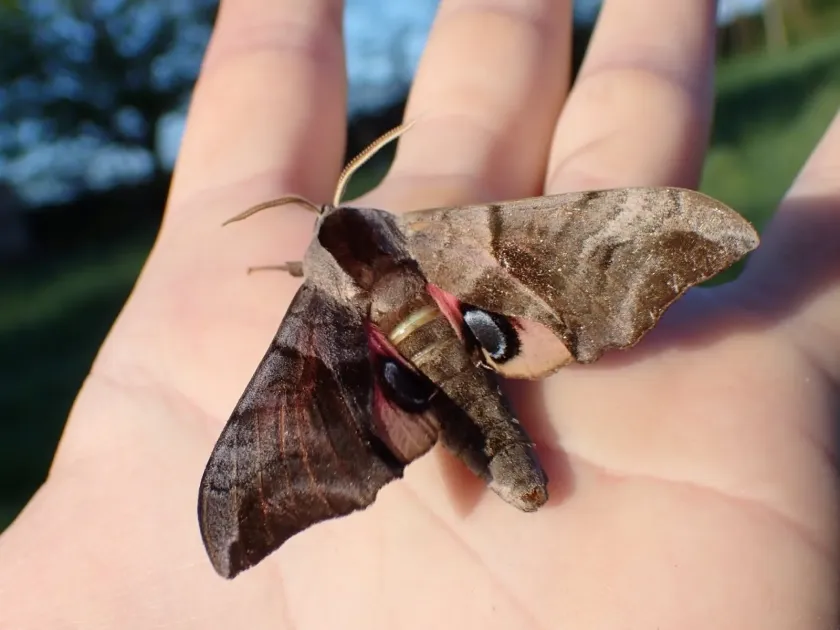
The Eyed hawk-moth (Smerinthus ocellatus) is a member of the Sphingidae family. The adult moth has a wingspan of 70–80 mm, featuring large "eye-spots" on its hindwings, which are displayed to startle predators when the moth is at rest or threatened.
Larvae (caterpillars) are large, reaching up to 80 mm in length. They are typically pale green with white diagonal stripes along the sides and a prominent blue-tipped horn on the posterior end, providing excellent camouflage among foliage.
The life cycle undergoes complete metamorphosis, including egg, larva, pupa, and adult stages. The insect overwinters in the pupal stage, burrowing 10–15 cm into the soil to protect itself from winter frost.
Adult moths emerge in late spring or early summer. Females lay eggs singly on the undersides of leaves, ensuring that the emerging larvae have an immediate food supply to begin their growth.
Development from larva to pupa takes approximately six weeks. The species typically produces one generation per year in most regions, which generally keeps its population density within natural limits.
What it damages
The Eyed hawk-moth is a polyphagous pest, preferring plants from the Rosaceae family. Common host plants include apple, pear, plum, cherry, and various decorative trees like willow or poplar.
Caterpillars are voracious eaters. They consume leaf tissue, often starting from the margins and progressing towards the midrib. In severe cases, they can cause significant defoliation of branches.
Extensive foliage damage disrupts the tree's photosynthesis, leading to reduced vigor and impaired nutrient storage. This weakens the tree, potentially affecting fruit size and quality for the subsequent season.
Young saplings in nurseries are at the highest risk. Damage to the crown in young trees can stunt growth and ruin the tree's form, which is detrimental to orchard establishment and ornamental value.
While the Eyed hawk-moth rarely causes complete tree mortality, its feeding activities create wounds on the leaves, which can serve as entry points for secondary fungal or bacterial pathogens.
Signs of infestation
The primary sign of infestation is the presence of eaten leaf margins. Because the caterpillars are well-camouflaged, they are often difficult to spot until the damage becomes widespread.
Frass (droppings) on the soil beneath the canopy is a clear indicator of active feeding. Larger droppings indicate the presence of later-stage, more destructive caterpillars residing in the higher branches.
Monitoring for adults can be done at night using light traps, as these moths are highly attracted to artificial light sources. This helps in detecting their arrival in the garden early in the season.
Digging in the soil near the trunk of host trees during the off-season may reveal the pupae. This is a reliable way to confirm the presence of the pest in the local garden ecosystem.
Visible changes to the leaf canopy, such as irregular feeding patterns or missing leaves, are often the first visible cues for orchardists to inspect the trees for larvae.
Control measures
Manual collection of caterpillars is the most effective and eco-friendly control method for small gardens. Removing them by hand in the early morning or late evening is highly efficient.
Deep cultivation of the soil around the base of trees in the autumn helps disturb and destroy pupae. This mechanical intervention significantly reduces the next year's population without the need for chemicals.
Biological control using Bacillus thuringiensis sprays is highly effective against young larvae. This bacterial agent is specific to caterpillars and poses no threat to beneficial pollinators or predators.
In cases of severe infestation, targeted insecticide applications may be necessary. It is crucial to use products approved for fruit trees and to apply them according to the manufacturer’s instructions to minimize harm.
Maintaining a healthy garden environment by encouraging birds and natural predators is a key long-term strategy. Predators like wasps and birds help regulate the caterpillar population naturally.
Taxonomy
- Latin name
- Smerinthus
- Order
- Lepidoptera (butterflies)
- Family
- Sphingidae
- EPPO code
- SMERSP
Discussion
No discussions yet — be the first.