
Lesser stag beetle
Sinodendron
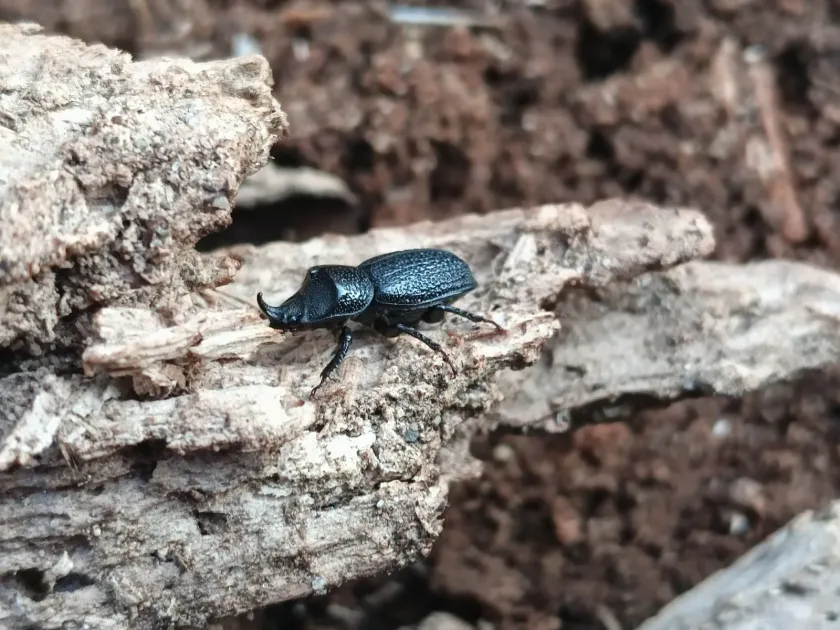
Description
How to identify
The Lesser stag beetle, scientifically known as Sinodendron cylindricum, belongs to the Lucanidae family within the order Coleoptera. Adult beetles are characterized by their distinct cylindrical body shape, typically ranging from 10 to 16 millimeters in length.
The coloration of these beetles varies from dark brown to pure black, and their body surface is notably shiny. Males exhibit a characteristic horn-like projection on the head and pronotum, which points forward and gives this species its common name.
Females are easily distinguished from males as they lack the prominent horn, possessing only a small tubercle or a short, blunt tooth on the head. This sexual dimorphism makes the identification of the species within the family relatively straightforward.
The larvae follow the typical form of scarabaeiform grubs: they are C-shaped, creamy white, with a well-developed dark head capsule and powerful mandibles. Larval development occurs deep within the wood, which often makes their presence difficult to detect.
Adults lead a primarily secretive, nocturnal lifestyle. While they are not frequently seen, they are often discovered during sanitary logging operations or when examining fallen or decaying timber in wooded areas.
What it damages
This pest is a specialized xylophage that prefers to develop in dead, decaying, or severely weakened broadleaf wood. Common host species include beech, oak, hornbeam, willow, alder, and birch, with occasional attacks on fruit trees.
The primary damage is caused by the larvae, which bore numerous tunnels throughout the rotting wood. They destroy the internal structure of the trunks, accelerating the decomposition process and facilitating the spread of wood-decaying fungi.
Although the Lesser stag beetle rarely attacks perfectly healthy, vigorous trees, its presence in orchards or parks serves as a significant indicator of poor tree health and the existence of localized rot pockets.
In forestry and ornamental landscaping, a mass infestation can lead to the premature death of stressed trees. The harm is manifested in the destruction of the trunk base and root collar, which compromises the tree's structural integrity.
While playing an ecological role as a decomposer, the beetle can pose a risk in commercial orchards, particularly for old fruit trees that may already contain hollows, frost cracks, or other wounds in the bark.
When it appears
The flight period for adult beetles begins in late spring, typically around May, and continues throughout June. During this time, they actively search for suitable substrates to deposit their eggs, frequently targeting trees already affected by decay-causing fungi.
Fertilized females lay their eggs in bark fissures or directly into the soft, decaying timber. A single tree can be colonized by multiple generations over several years, as long as the wood maintains the nutritional quality required by the larvae.
The complete larval development cycle within the wood lasts from two to three years, depending on regional climatic conditions and the degree of substrate decomposition. Pupation takes place inside the tunnels within specially constructed chambers.
Young adults emerge from the pupal stage by late summer or autumn but often remain inside the host tree to overwinter, only emerging onto the surface the following spring. Thus, the pest's life cycle is strictly linked to seasonal temperature variations.
Monitoring the beetle population is most effective in late spring when inspecting the lower trunk sections of broadleaf trees, especially those showing signs of rot, fungal growth, or surface cracks.
Signs of infestation
The main sign of infestation is the presence of numerous small, circular or slightly oval holes in the bark and wood. Frass, or wood dust produced by larval feeding, often accumulates around these entry points.
When the bark is removed, one can observe a complex network of tunnels tightly packed with larval excrement. Unlike wood-boring bark beetles, the tunnels of Sinodendron cylindricum are broader and more chaotic due to the larvae feeding directly on the woody tissue.
A decline in the tree's vitality, including dieback of branches in the crown and discoloration of the bark at the base, often accompanies an infestation. The tree gradually loses its ability to effectively transport nutrients and water.
The presence of specific fungal symptoms, such as white or brown rot, is a strong indicator that the wood is becoming susceptible to the beetle. The species explicitly thrives in wood that has begun fermentation via fungal action.
Attraction of adult beetles to artificial light sources near gardens during May and June may also suggest that there is an active breeding site located in the immediate vicinity.
Control measures
The primary management strategy is the timely sanitary maintenance of gardens and parks. Removing dead standing timber, fallen logs, and severely weakened trees eliminates the pest's food source and potential egg-laying sites.
Proper pruning and wound treatment on trunks are essential practices. Applying tree wound dressings and antiseptic pastes helps prevent the entry of fungal infections, which are the necessary precursor for beetle colonization.
Maintaining high horticultural standards, including consistent irrigation and balanced fertilization, promotes tree vigor. A healthy tree possesses sufficient internal defenses to resist initial colonization by wood-boring insects.
In cases of localized infestation, manual removal of damaged wood sections followed by disinfection can be attempted. However, in cases of severe trunk damage, the most effective management remains the total removal and safe disposal (burning) of the infested trees.
The use of chemical insecticides against this beetle is generally ineffective due to the cryptic, internal nature of the larval life cycle. Consequently, the defense strategy should focus entirely on proactive measures aimed at preserving overall tree health.
Taxonomy
- Latin name
- Sinodendron
- Order
- Coleoptera (beetles)
- Family
- Lucanidae
- EPPO code
- SINDSP
Discussion
No discussions yet — be the first.