
Stag beetle
Lucanus cervus
Description
How to identify
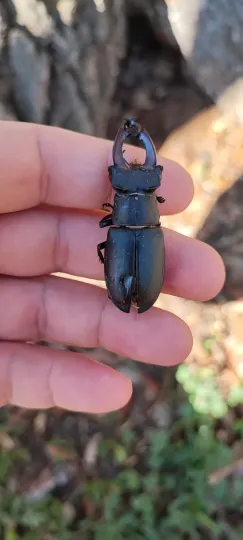
The stag beetle (Lucanus cervus) is the largest beetle in Europe, belonging to the Lucanidae family. Males are famous for their large, antler-like mandibles, which they use in ritualized combat for mating rights.
The overall body color is chestnut brown to blackish. While males are easily identified by their headgear, females are smaller and have shorter mandibles, though they remain structurally distinct.
The larvae are C-shaped, creamy-white in color, with a characteristic brown head. They can grow up to 12 centimeters in length, making them one of the largest beetle larvae in the region.
Adult beetles have a short lifespan of only a few weeks, primarily dedicated to reproduction. The majority of their long life cycle, spanning several years, is spent in the larval stage.
Due to the loss of their natural habitats, the stag beetle is protected in many jurisdictions, making it an important indicator of a healthy and biodiverse environment.
What it damages
In terms of agriculture and horticulture, the stag beetle is not classified as a pest. It poses no threat to living trees, healthy wood, fruits, or any agricultural produce.
The larvae develop exclusively in decaying wood, such as old stumps or rotting logs. They perform an ecological service by breaking down dead organic matter and returning nutrients to the soil.
There are no documented cases where stag beetle larvae have caused significant economic damage to crops or ornamental plants in commercial gardens.
Any damage found near them is almost always caused by fungal rot, which is what attracted the larvae to the wood in the first place, rather than the larvae attacking the plant tissue itself.
Home gardeners should view these insects as beneficial decomposers rather than threats, as they contribute to the natural recycling process within the garden ecosystem.
When it appears
The adult flight period typically occurs between late May and July. During warm summer evenings, these beetles are often seen flying near trees or artificial light sources.
The life cycle is long and complex, lasting between 4 to 6 years depending on climatic conditions. The larvae remain entirely subterranean or hidden within decaying wood during this time.
Eggs are laid in summer, usually in the soil near the base of decaying logs or stumps, where the larvae have easy access to their source of food upon hatching.
Pupation occurs in a soil chamber or deep inside the rotting wood at the end of the summer season, after which the new adult beetle remains dormant through the winter.
The emergence of adults is highly synchronized, which helps to ensure they find mates quickly during their very limited lifespan as flying insects.
Signs of infestation
The primary sign of a stag beetle presence is the discovery of large, C-shaped larvae during the removal of old stumps or clearing of decaying wood piles.
The appearance of large flying beetles around lights on summer evenings is another indicator of a local population inhabiting the surrounding landscape.
Inside the decaying wood, one might find galleries and tunnels filled with coarse sawdust-like material, which indicates the feeding activity of the larvae.
The absence of any damage to leaves, bark, or stems of live plants is a clear indicator that the garden is free from real pests, regardless of the beetle's presence.
Observing stag beetles in a garden should be seen as a positive sign of ecological health, reflecting the presence of mature trees and decaying organic material.
Control measures
There is no need for chemical or physical control against the stag beetle, as it is not a harmful species to agricultural production or home gardens.
To avoid having larvae in your garden, simply clear away old, rotting stumps or buried timber that might be unsightly or a haven for wood-decaying fungi.
Good garden management, including the regular maintenance of tree health and the removal of decaying organic debris, will naturally limit the habitats suitable for stag beetles.
If you encounter larvae during garden work, it is best to relocate them to a nearby forest area with plenty of deadwood rather than attempting to destroy them.
Maintaining a balanced garden ecosystem is the most effective way to ensure that both ornamental plants and local wildlife coexist without the need for intervention.
Taxonomy
- Latin name
- Lucanus cervus
- Order
- Coleoptera (beetles)
- Family
- Lucanidae
- EPPO code
- LUCACE
Discussion
No discussions yet — be the first.