
Lesser stag beetle
Platycerus
Description
How to identify
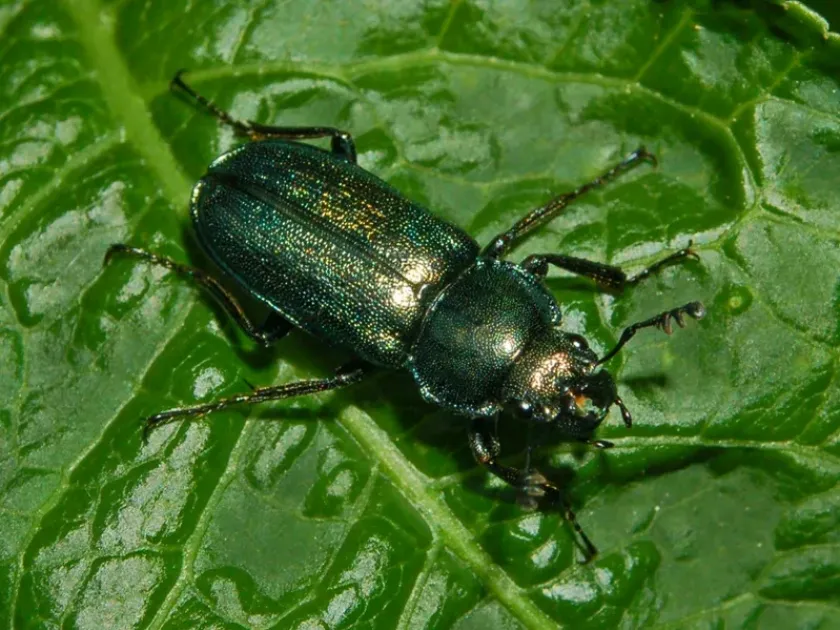
The Lesser stag beetle belongs to the Lucanidae family. These beetles are relatively small, typically measuring 8 to 15 mm in length, and are known for their flattened, metallic-colored bodies that range from blue-black to deep green.
Males are characterized by distinct mandibles that resemble antlers, although they are much smaller and simpler compared to the larger European stag beetle. The head is broad, and the pronotum is distinctly square-shaped, which is a key diagnostic feature for the genus Platycerus.
The larvae are typical of the scarab family: they are C-shaped, creamy-white in color, with a well-defined head capsule and legs. They develop entirely within wood, making them elusive during the early stages of infestation.
These insects are primarily associated with hardwood trees, favoring sites where the wood is already decaying or weakened by environmental factors or mechanical injury.
Proper identification requires examining the mandibles and the overall body structure, as they can sometimes be confused with other small wood-boring beetles found in orchard environments.
What it damages
The primary damage is caused by the larvae, which tunnel through the wood of branches and trunks. This activity can compromise the structural integrity of affected limbs and accelerate tissue decay.
In orchards, Platycerus species may target weakened fruit trees such as apple, pear, and cherry. While they often act as secondary pests, their presence can exacerbate existing health issues in mature trees.
As the larvae feed and create tunnels, they disrupt the transport of nutrients and water within the tree, which can lead to localized wilting and the death of individual branches over time.
Adult beetles may occasionally feed on young buds or leaves, causing minor cosmetic damage, but the long-term impact on the tree's health is largely due to the larval stage activity.
The economic impact is generally low in well-maintained orchards, but they can be problematic in older stands where deadwood management is neglected.
When it appears
The active flight period for adult Lesser stag beetles typically occurs in late spring, spanning from late April through June, when they are most likely to be seen on the bark of trees.
During this period, mating occurs, and females seek out suitable crevices or weakened wood to lay their eggs. This is the critical window for monitoring and preventative measures.
The larval stage is long-lasting, often taking several years to complete development, meaning the pest can be present within the wood throughout all seasons of the year.
Feeding activity of the larvae increases during warmer months, which is when external signs of infestation, such as sawdust or frass, become more apparent to the observer.
Effective control strategies should be implemented well before the emergence of adults in spring to prevent the cycle of reproduction from continuing on the property.
Signs of infestation
One of the first signs of infestation is the appearance of fine, wood-colored frass or sawdust at the base of the tree or caught in bark crevices, indicating larval tunneling.
Small, round exit holes on the surface of the bark are clear indicators that adult beetles have emerged from the wood, confirming the presence of a colony.
Branches that exhibit premature yellowing, wilting, or drying out, while the rest of the tree appears healthy, may be harboring a larval population in the internal wood.
Peeling away dead or loose bark may reveal underlying galleries filled with debris, which is a classic signature of wood-boring beetle activity.
Increased activity of woodpeckers on specific sections of the trunk or larger branches often provides a hint that insects are present within the wood.
Control measures
Sanitation is the most effective control method: removing and destroying dead, dying, or heavily damaged branches reduces the available habitat for the beetles to breed.
Maintaining tree health through proper fertilization, irrigation, and avoiding physical injury to the bark ensures that trees remain resistant to infestation.
Painting larger wounds or pruning cuts with appropriate wound sealants or fungicidal pastes can prevent females from finding suitable sites to deposit their eggs.
In cases of high infestation, targeted insecticide applications during the adult emergence period can help reduce the population of active beetles.
- Remove stumps and decaying timber piles from the garden to eliminate breeding grounds.
- Promote natural predators, such as insectivorous birds, by providing nesting sites.
- Regularly inspect trees for signs of wood-boring pests during spring and summer.
- Monitor the garden with light traps if you suspect a significant population buildup.
Taxonomy
- Latin name
- Platycerus
- Order
- Coleoptera (beetles)
- Family
- Lucanidae
- EPPO code
- PLTESP
Discussion
No discussions yet — be the first.