
Stag beetle
Lucanus
Description
How to identify
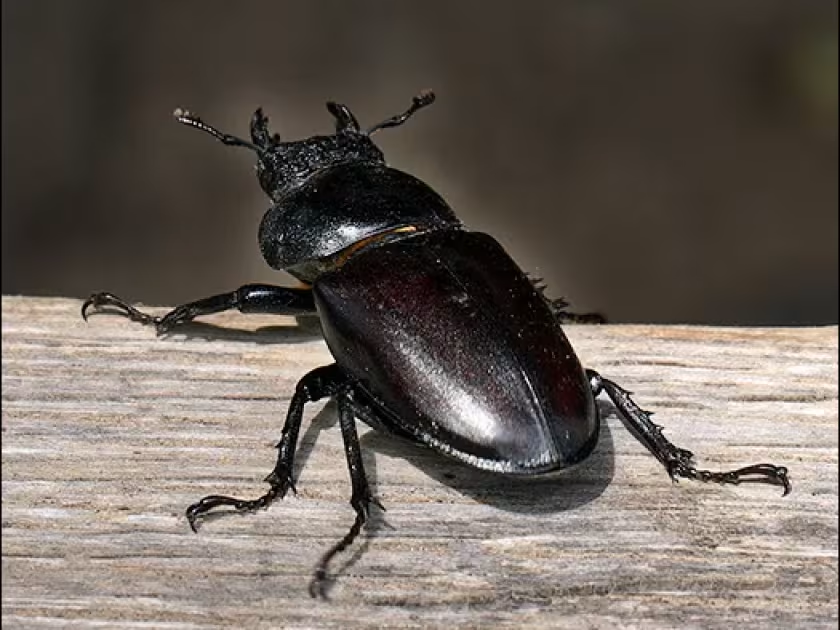
The stag beetle (Lucanus cervus) is the largest beetle found in Europe, famous for the male's antler-like mandibles used for fighting during mating season.
These insects belong to the family Lucanidae and exhibit significant sexual dimorphism, with males being much larger and more distinct than females.
The life cycle is remarkably long, taking 4 to 6 years for a larva to develop into an adult, which makes the population growth quite slow.
The larvae are white, C-shaped grubs with orange heads, specialized in consuming decaying wood rather than living plant tissues.
Because they are protected species in many jurisdictions, it is essential to distinguish them from harmful wood-boring pests before taking any action.
What it damages
Adult stag beetles feed sparingly, if at all, mostly consuming tree sap, and do not pose a threat to the structural integrity of healthy garden trees.
The larvae act as saproxylic insects, meaning they play a vital role in nature by decomposing dead wood, particularly in decaying stumps or tree roots.
Significant damage to living trees occurs only when a tree is already severely weakened or suffering from deep fungal rot in its root or trunk system.
Healthy, vigorous trees are generally avoided by the beetles, as they require specific conditions of wood decay and fungal presence for their development.
In most gardening scenarios, their presence is a sign of a rich, old ecosystem rather than a threat to the horticultural production of fruits or vegetables.
When it appears
Adult stag beetles are primarily visible during the early summer months, specifically June and July, when they emerge to find mates.
The larval stage is hidden within the wood substrate, persisting through all seasons as they grow steadily over several years.
Temperature is a key factor for the emergence of adults, as they prefer warm, calm evenings to perform their flight activities.
Pupation occurs in a specially constructed earthen or wooden cell, where the beetle undergoes transformation before emerging as a fully formed adult.
Winter survival is achieved by remaining deep within the damp, decaying wood or soil, which protects the larvae from freezing temperatures.
Signs of infestation
The primary sign of larval presence is the accumulation of frass, which is fine, sawdust-like material located near rotting stumps or decaying tree trunks.
Circular exit holes, about 1-2 cm in diameter, on the surface of old stumps or logs indicate that adult beetles have recently emerged from the wood.
Visual spotting of the large, flight-active beetles in the garden during mid-summer confirms that the species is established in the local area.
Discovery of large, white grubs while excavating garden soil or removing old tree stumps confirms the presence of the species at the larval stage.
Presence of deep galleries filled with decayed wood fibers inside old, dead trees is a characteristic footprint of the larval development process.
Control measures
Management should focus on cultural practices rather than extermination, as stag beetles are often protected and ecologically beneficial to soil health.
Remove old, rotting stumps and decaying log piles from the garden if you wish to limit the potential nesting sites for the next generation of beetles.
Regular maintenance of fruit trees, including proper pruning and sealing of wounds, prevents the formation of heart rot that could attract potential colonizers.
Avoid the use of broad-spectrum insecticides, as these chemicals are highly toxic to the environment and can harm other beneficial garden insects.
If you have an old tree that is home to a colony, consider if the damage is truly significant before taking any drastic action to remove the host material.
Taxonomy
- Latin name
- Lucanus
- Order
- Coleoptera (beetles)
- Family
- Lucanidae
- EPPO code
- LUCASP
Discussion
No discussions yet — be the first.