
Giant stag beetle
Lucanus elaphus
Description
How to identify
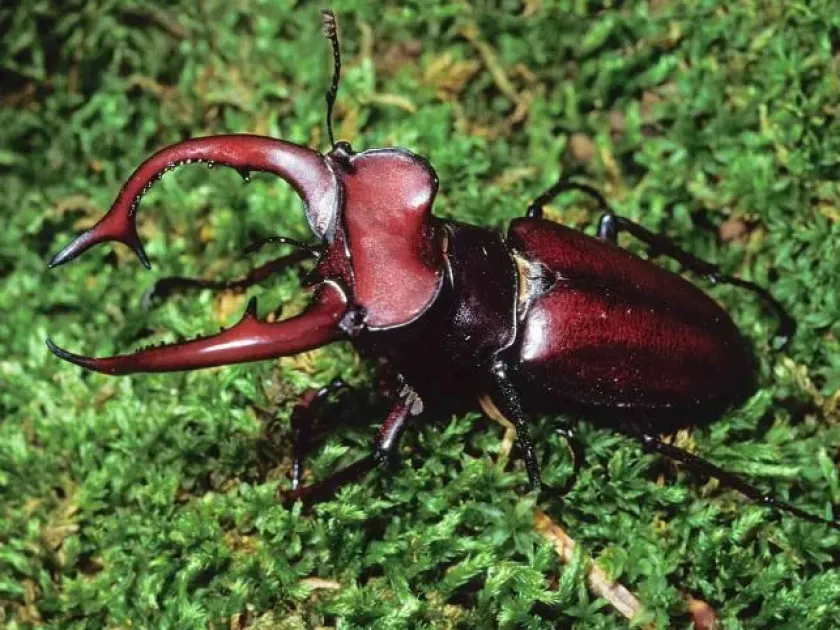
The giant stag beetle (Lucanus elaphus) is a prominent member of the Lucanidae family, known for the impressive size of the males which reach up to 60 mm.
The most distinctive feature of the adult male is the enlarged, branched mandibles that resemble deer antlers, used primarily for ritual combat between males.
The larval stage is characterized by a C-shaped body, pale color, and a hard, chitinous head equipped with powerful jaws capable of chewing through tough wood fibers.
The life cycle of this beetle is quite long, often spanning several years, as the larvae consume decaying wood while living inside the trunks or roots of trees.
Adults typically emerge during the summer months and are primarily active at dusk, feeding on sap flows and looking for mates to continue the next generation.
What it damages
This pest mainly targets weakened or decaying deciduous trees, including fruit species like apple and pear, which are already susceptible to wood-rotting diseases.
Larvae feed internally on the heartwood and roots, creating extensive tunnel networks that compromise the structural integrity and stability of the tree.
By damaging the vascular tissues, the larvae disrupt the flow of nutrients and water, eventually leading to branch dieback and overall tree decline.
These internal cavities create entry points for secondary pathogens, such as fungi and bacteria, which can cause significant damage to the tree's health.
In well-maintained orchards, these beetles are usually considered secondary pests, but their presence is a strong indicator of underlying decay in the wood.
Signs of infestation
Visible sawdust or fine wood shavings at the base of the tree are a clear indicator of larval activity inside the trunk or root system.
Premature leaf yellowing or sudden wilting of specific branches can signify that the beetle tunnels have damaged the tree's nutrient transport system.
Look for small, oval-shaped exit holes on the bark, which indicate that adult beetles have recently emerged from the wood after their metamorphosis.
Excessive sap flow or gumming appearing on the bark surface is often a response of the tree to the structural damage caused by the wood-boring larvae.
During warm summer evenings, the presence of large, flying beetles around the canopy or landing on trunks confirms an active population in the area.
Control measures
The most effective management strategy is sanitation: removing old, rotting logs, stumps, and dying trees that serve as breeding grounds for the beetles.
Implementing good horticultural practices, such as proper fertilization and irrigation, helps maintain tree vigor and prevents decay that attracts these insects.
If an infestation is detected early, localized removal of damaged wood followed by the application of pruning sealants can help protect the remaining tree tissue.
Using light traps or pheromone baits can help monitor population levels and reduce the number of mating adults in high-risk areas of the orchard.
Avoid leaving firewood or organic debris in contact with healthy trees, as these materials often harbor larvae that can migrate to living vegetation.
Taxonomy
- Latin name
- Lucanus elaphus
- Order
- Coleoptera (beetles)
- Family
- Lucanidae
- EPPO code
- LUCAEL
Discussion
No discussions yet — be the first.