
Sinea diadema
Sinea diadema
Description
How to identify
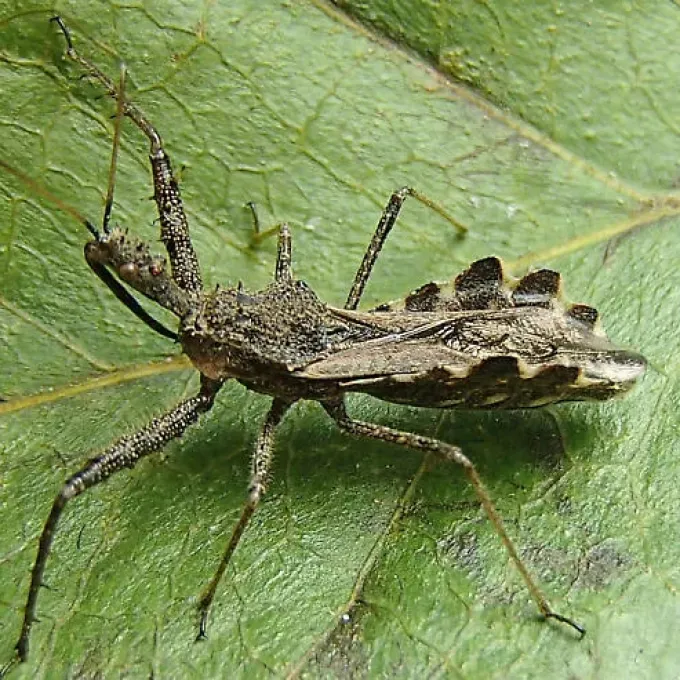
Sinea diadema, commonly known as a spined assassin bug, belongs to the Reduviidae family. This predator is easily recognizable by the crown-like, spined projections on its pronotum, which serve as its primary diagnostic feature.
Adults typically measure between 12 to 15 millimeters in length, possessing a slender body usually colored in shades of brown or grayish-yellow to blend with their environment.
The insect is equipped with a strong, curved rostrum used to pierce its prey's cuticle and inject powerful digestive enzymes for extra-oral digestion.
Its front legs are modified into raptorial appendages, allowing the bug to grasp and hold onto struggling prey items efficiently while it feeds.
Nymphs follow a gradual development process, showing similar body structures to adults but lacking fully developed wings and having smaller, more fragile frames during early instars.
What it damages
This bug is primarily a predator and does not feed on plant tissues. It does not cause direct crop damage like sap-sucking pests or foliage-eating caterpillars.
Its role is generally considered beneficial as it actively hunts various agricultural pests, including moth larvae, beetle larvae, and other small arthropods.
However, it can occasionally target beneficial insects such as pollinators or other predatory species if the density of primary pest prey is low.
In modern agricultural settings, they are often regarded as part of the natural control mechanism, helping to balance the population of various phytophagous species.
No economic damage to the plant's structural integrity, fruit, or foliage is associated with the feeding habits of this assassin bug species.
When it appears
Sinea diadema is most active during the warmer months, typically from late spring through late summer when prey populations are at their peak.
The species overwinters as adults, seeking shelter in protected areas such as plant litter, leaf piles, under tree bark, or in protected cavities near fields.
As temperatures rise in the spring, they emerge from hibernation to forage and mate, often showing multiple generations per season in favorable climates.
Late summer and autumn coincide with the final generations, as the insects prepare for the upcoming winter by slowing down their metabolic activities.
Environmental factors such as high humidity and stable temperatures significantly accelerate their developmental stages and increase their hunting frequency.
Signs of infestation
Observing the bugs directly on foliage or flowers is the most reliable way to detect their presence, as they do not leave specific feeding damage on the plants.
One might find desiccated remains of other insects or empty husks, which are typical remnants after the assassin bug has finished consuming its prey's internal fluids.
They are generally alert and quick to retreat or fly away when disturbed, so movement is a common sign of their presence in field margins.
The use of sticky traps or sweep nets in agricultural monitoring programs often leads to the collection of these predators along with primary pests.
Their presence is often an indicator of a rich ecosystem with a diverse community of both prey insects and other predatory species.
Control measures
Broad-spectrum insecticides should be avoided to prevent the elimination of this beneficial predator, which plays a key role in natural pest suppression.
Integrated Pest Management (IPM) strategies are highly recommended, prioritizing the conservation of natural habitats for predators around crops.
Maintaining wild plant borders or hedge rows provides necessary refuge for Sinea diadema during pesticide applications or off-season periods.
Selective pesticides that target specific pests without harming non-target beneficial insects should be the priority for any necessary crop protection measures.
- Avoid non-selective sprays during peak predator activity.
- Preserve field borders to encourage natural predator colonization.
- Implement regular pest density monitoring before applying chemicals.
Taxonomy
- Latin name
- Sinea diadema
- Order
- Hemiptera (bugs, aphids, leafhoppers)
- Family
- Reduviidae
- EPPO code
- SINEDI
Discussion
No discussions yet — be the first.