
Sinea confusa
Sinea confusa
Description
How to identify
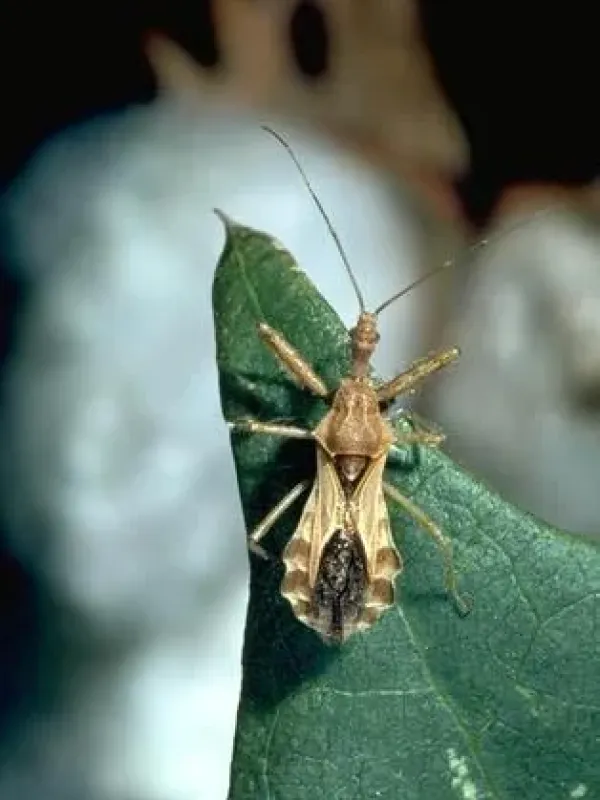
Sinea confusa is a species of assassin bug belonging to the Reduviidae family within the order Hemiptera. These insects are well-known predators that play a significant role in managing insect populations in various ecosystems.
Adults typically possess a sturdy body structure with a characteristic rostrum used for capturing prey. Their coloration often ranges from dull brown to tan, aiding in camouflage against bark and plant foliage.
The pronotum of these bugs often features small tubercles or spine-like projections, which are useful for diagnostic identification by entomologists.
The legs of these bugs are robust, equipped with specialized structures for grasping and subduing active prey items before feeding.
Nymphs resemble smaller, wingless versions of the adults, but they maintain the same predatory behavior throughout their development stages.
What it damages
Sinea confusa is strictly a beneficial insect and does not cause any damage to crops or ornamental plants. It does not feed on plant tissues, sap, or fruits.
Instead, it serves as a valuable biological agent that preys on various garden and agricultural pests, including aphids, leaf-feeding caterpillars, and beetle larvae.
By consuming harmful pests, this species effectively reduces the need for synthetic insecticide applications in agricultural settings.
There is no economic harm associated with this insect; rather, it provides a free ecosystem service by suppressing pest numbers naturally.
Farmers should encourage the presence of these predators as part of an integrated pest management (IPM) strategy to maintain ecological balance.
When it appears
These predators are most active during the growing season, typically from late spring through early autumn, when pest populations are at their peak.
The life cycle involves eggs being deposited in sheltered areas, from which nymphs hatch and begin their predatory activities immediately.
Development speed and reproductive success are heavily dependent on the abundance of prey and favorable local weather conditions.
As temperatures decline in autumn, adult bugs seek protected overwintering sites, such as leaf litter or crevices in wooden structures.
Regular activity is linked to the availability of hosts, meaning their presence correlates directly with the seasonal cycle of potential pest prey.
Control measures
No control measures are needed for Sinea confusa, as they are allies to the gardener and farmer rather than a target for eradication.
To support and preserve their populations, avoid the broad-spectrum use of chemical pesticides that could harm these beneficial predators.
Utilizing selective insecticides that target only specific pests can help keep the assassin bug population healthy within the field.
Implementing hedgerows or wild flower strips encourages the survival of predator populations during fluctuations in target pest availability.
Focusing on biological and cultural controls rather than chemical reliance is the best way to utilize the natural pest-suppression services of these bugs.
Taxonomy
- Latin name
- Sinea confusa
- Order
- Hemiptera (bugs, aphids, leafhoppers)
- Family
- Reduviidae
- EPPO code
- SINECO
Discussion
No discussions yet — be the first.