
Sinea
Sinea
Description
How to identify
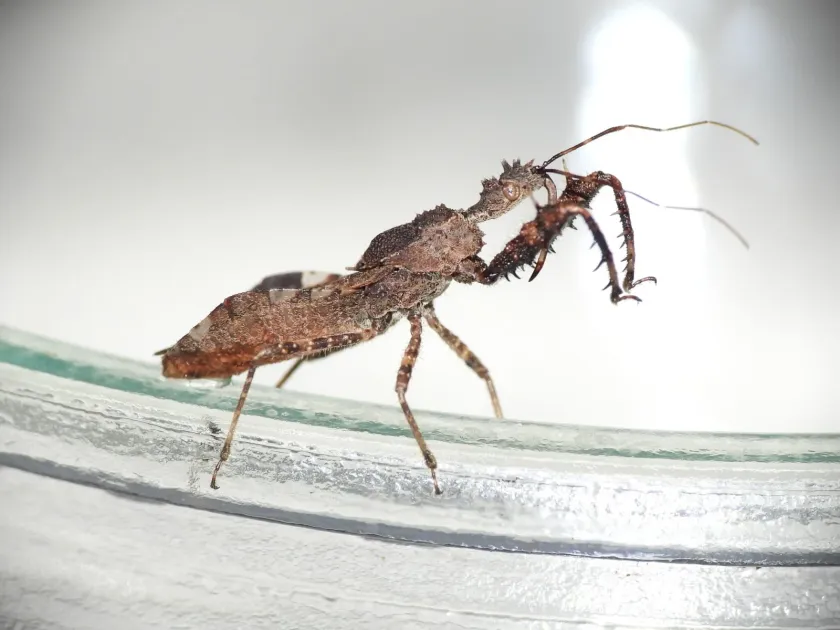
The genus Sinea belongs to the family Reduviidae, commonly known as assassin bugs. These insects are characterized by a distinct, folded proboscis used to pierce their prey and inject digestive enzymes.
Physically, they are identified by their elongated bodies and often spiny legs and pronotum. These features provide them with an intimidating appearance and serve as a camouflage against the bark of trees or foliage.
As predators, they spend much of their time waiting for potential prey to approach, after which they strike with remarkable speed and precision, paralyzing the victim instantly.
The developmental stages include eggs, several nymphal instars, and the adult stage. Nymphs closely resemble adults but lack functional wings, and they are equally adept at capturing and consuming prey.
They are widely recognized by entomologists for their diverse habits, ranging from tree-dwelling species to those that reside among low-growing grasses and agricultural crops.
What it damages
Unlike true agricultural pests, Sinea species do not feed on plant tissues, sap, or fruits. Therefore, they do not cause direct damage to the vegetation or the crop yield itself.
In some agricultural contexts, they are considered beneficial insects or natural enemies of major pests, as they consume aphids, caterpillars, and beetle larvae that threaten crop health.
The only minor concern is their potential to prey on other beneficial insects, such as pollinators or lacewings, if the population of primary pests remains consistently low for an extended period.
Mechanical damage is virtually non-existent; their proboscis is designed solely for fluid feeding on insect prey, and they have no biological incentive to puncture plant stems or leaves.
Their presence in agricultural fields is generally regarded as a sign of a healthy ecosystem with complex food webs that help maintain pest suppression without human intervention.
Control measures
Management of Sinea is rarely necessary in professional agriculture. Because they are efficient predators, they are considered allies in an integrated pest management (IPM) program.
To support these predators, growers should avoid using broad-spectrum insecticides that could inadvertently kill beneficial insect populations and lead to a resurgence of true crop pests.
Creating hedgerows or planting diverse flora around the field edges provides necessary habitats for these assassin bugs, allowing them to thrive and move into crops to hunt when needed.
If population control is required in highly sensitive greenhouse environments, mechanical removal or sticky traps can be used to capture individuals without the use of chemical sprays.
The best strategy involves fostering biological balance, ensuring that predatory species can effectively perform their role of controlling potential pest outbreaks naturally.
Taxonomy
- Latin name
- Sinea
- Order
- Hemiptera (bugs, aphids, leafhoppers)
- Family
- Reduviidae
- EPPO code
- SINESP
Discussion
No discussions yet — be the first.