
Unicorn caterpillar
Schizura unicornis
Description
How to identify
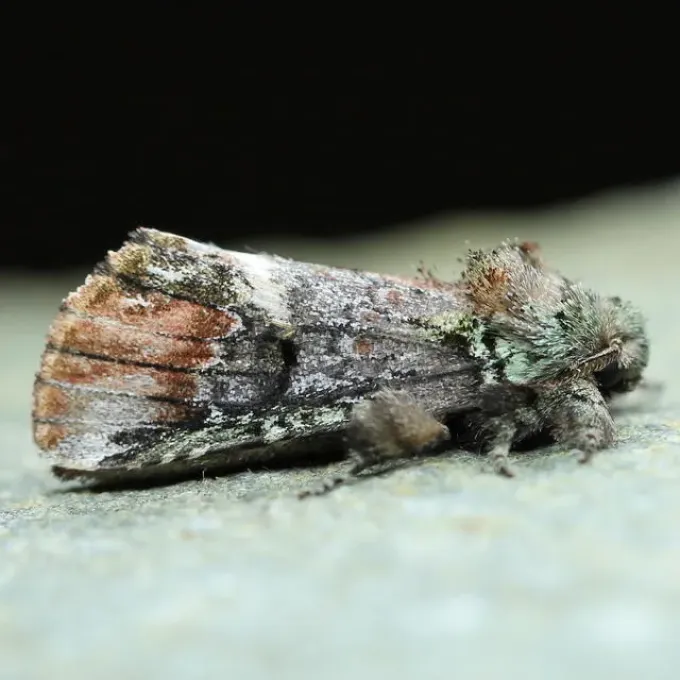
The Unicorn caterpillar (Schizura unicornis) is a member of the Notodontidae family. The adult moth has a wingspan of up to 40 mm, with mottled brown and grey patterns that allow it to camouflage perfectly against tree bark.
The larva, known as the "unicorn caterpillar," is named for the prominent, horn-like projection on its third thoracic segment. This unique physical feature helps distinguish it from other lepidopteran larvae found in orchards.
The larvae display variable coloration, including shades of green, red, and brown, often with spots. This variability mimics the appearance of damaged leaves or twigs, providing excellent protection from avian predators.
Like all moths, the species undergoes complete metamorphosis, including egg, larval, pupal, and adult stages. The larval stage is the most destructive period in its lifecycle, as caterpillars feed voraciously on host plant foliage.
Adult moths are nocturnal and rarely seen during the day. Females lay small clusters of eggs on the undersides of leaves, ensuring the safety of the next generation during their initial developmental phase.
What it damages
This pest is a generalist feeder that affects a wide variety of deciduous trees and shrubs. It poses a threat to both ornamental species and various fruit-bearing trees common in North American landscapes.
Apple, pear, plum, and cherry trees are frequently targeted. The pest also thrives on willows, poplars, and alder, allowing it to migrate easily from wild vegetation into managed orchard environments.
Older caterpillars cause significant defoliation by consuming large portions of the leaf blade, often leaving only the primary veins. In cases of high infestation, entire branches can be stripped of foliage.
Such damage weakens the host tree, affecting its ability to photosynthesize and store energy for the following season. This stress can lead to poor fruit quality and reduced vigor in young or unhealthy plants.
Furthermore, the physical damage to leaf tissue provides an entry point for various plant pathogens, potentially leading to secondary infections that affect the overall health of the tree bark and limbs.
When it appears
Adult moths emerge in late spring or early summer, depending on local temperatures. This is the period when mating occurs and the first eggs of the season are deposited on foliage.
Active larval feeding occurs throughout the summer months, typically spanning from June through August or September. During this time, populations can expand rapidly if conditions are favorable.
The insect typically overwinters in the pupal stage. It constructs a tough, silk-lined cocoon within the soil or amongst leaf litter at the base of the host tree, remaining dormant until the following spring.
The number of annual generations depends on climate; in warmer regions, the species may complete two full cycles per year, leading to increased pest pressure during the late summer.
Monitoring efforts should begin after tree bloom. Gardeners should inspect the undersides of leaves for egg clusters and look for early signs of feeding, which are easier to manage than later, larger instars.
Signs of infestation
The most visible signs of infestation are ragged leaves where tissue has been stripped away. Often, the caterpillars leave only the tougher parts of the leaf, creating a skeletonized appearance.
Observant gardeners can often spot the caterpillars sitting still on stems, where their irregular shape makes them look like broken twigs or natural growth, protecting them from detection.
- Presence of frass (caterpillar droppings) on leaves beneath the feeding site.
- The distinct "horn" on the larva's back, which becomes more pronounced as the caterpillar grows.
- Webbing or slightly curled leaves where the caterpillar may hide during the day.
A thinning canopy in the upper branches is a classic indicator of caterpillar feeding. If trees seem to lose foliage unexpectedly, a closer inspection of the branch tips is recommended.
Fall cleanup provides an opportunity to disrupt the lifecycle by removing leaf debris near the base of the tree, which can help eliminate the pupal sites of overwintering insects.
Control measures
Hand-picking is the most effective management strategy for small-scale gardens. Since the caterpillars are masters of camouflage, searching for them at dusk or dawn can improve success rates.
Cultural practices, such as tilling the soil beneath the canopy in autumn or early spring, are highly effective. This disrupts the overwintering pupae and prevents the next generation from emerging.
Biological control methods, specifically products containing Bacillus thuringiensis (Bt), are highly effective against young larvae and are considered an environmentally safe option for home orchards.
Chemical intervention should be reserved for severe outbreaks. Use broad-spectrum insecticides only when necessary and strictly follow the label's application rates and safety intervals to protect pollinators.
Promoting a healthy ecosystem by encouraging beneficial insects and birds helps manage the population naturally. Predators like parasitic wasps and predatory beetles play a key role in keeping caterpillar numbers below economic thresholds.
Taxonomy
- Latin name
- Schizura unicornis
- Order
- Lepidoptera (butterflies)
- Family
- Notodontidae
- EPPO code
- SCHUUN
Discussion
No discussions yet — be the first.