
Schizura badia
Schizura badia
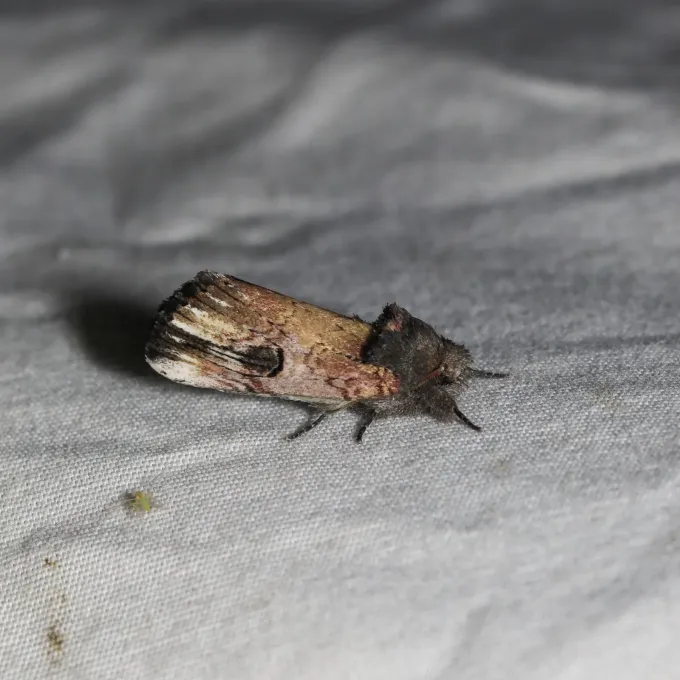
Description
How to identify
Schizura badia is a species of moth belonging to the Notodontidae family, often referred to as the chestnut schizura moth. These insects are known for their intricate camouflage, which is a primary survival strategy during the larval stage.
The adult moths have a wingspan typically ranging from 35 to 45 mm. Their coloration is a complex mix of browns, greys, and muted tones, allowing them to blend perfectly with tree bark and foliage during the day.
Their life cycle consists of four distinct stages: egg, larva (caterpillar), pupa, and adult. The larval stage is the most noticeable, as the caterpillars exhibit distinct morphological adaptations, including humps and textured skin.
They typically overwinter as pupae, buried within the soil or tucked into leaf litter at the base of host trees. This allows them to withstand cold temperatures until the following spring.
Identification often relies on observing the larvae's unique resting posture, where they arch their bodies to mimic a damaged leaf or a twig, making them difficult for predators and observers to detect.
What it damages
The primary hosts for Schizura badia include various deciduous tree species, most notably members of the Fagaceae family, such as oak and chestnut, as well as several species within the Prunus genus.
The caterpillars are foliage feeders that consume leaf tissue with high intensity. They usually begin by feeding on the edges of the leaves, moving inward as they grow, leaving behind only the veins.
In cases of large outbreaks, these caterpillars can cause significant defoliation of the canopy. This loss of photosynthetic tissue stresses the trees, making them susceptible to secondary stressors like drought or diseases.
Young trees are particularly vulnerable, as repeated defoliation events can stunt their overall growth, lead to dieback of young twigs, and weaken the tree's defensive systems against wood-boring insects.
While often considered a sporadic pest, Schizura badia can cause localized damage in gardens and nursery settings, necessitating monitoring and early intervention strategies.
Signs of infestation
The most common sign of a Schizura badia infestation is the presence of partially eaten leaves. A skeletonized appearance of the foliage, where only the leaf veins remain, is highly characteristic.
Frass, or caterpillar excrement, often accumulates on the ground or on lower branches. The presence of dark, pellet-like frass on the leaves is a clear indicator that feeding is currently occurring above.
Observing the larvae themselves requires a careful search of the underside of leaves or the perimeter of the canopy. Their camouflage makes them look like organic debris or damaged leaf parts.
The presence of empty cocoons, usually located in the soil or protected crevices of the bark during the late summer or autumn, indicates the successful development of the pupal stage.
Early-season signs include smaller holes in the newly emerging leaves, which may go unnoticed until the larvae grow larger and the rate of consumption increases dramatically.
Control measures
Manual removal of caterpillars is highly effective for smaller trees or low-density infestations. Inspecting the canopy during early morning hours can help identify and eliminate larvae by hand.
Biological control using formulations containing Bacillus thuringiensis is an excellent, environmentally friendly choice that specifically targets caterpillars while sparing beneficial predatory insects.
If chemical intervention becomes necessary due to high population density, application of selective insecticides should be timed to coincide with the early larval stages for maximum effectiveness.
Good orchard management, including the removal of excess leaf litter and ensuring trees have adequate water and nutrients, can significantly reduce the risk of successful pupation and overwintering.
Encouraging natural predators such as birds, parasitic wasps, and ground beetles can provide sustainable long-term control of the Schizura badia population in your landscape.
Taxonomy
- Latin name
- Schizura badia
- Order
- Lepidoptera (butterflies)
- Family
- Notodontidae
- EPPO code
- SCHUBA
Discussion
No discussions yet — be the first.