
Small Emperor Moth
Saturnia pavonia
Description
How to identify
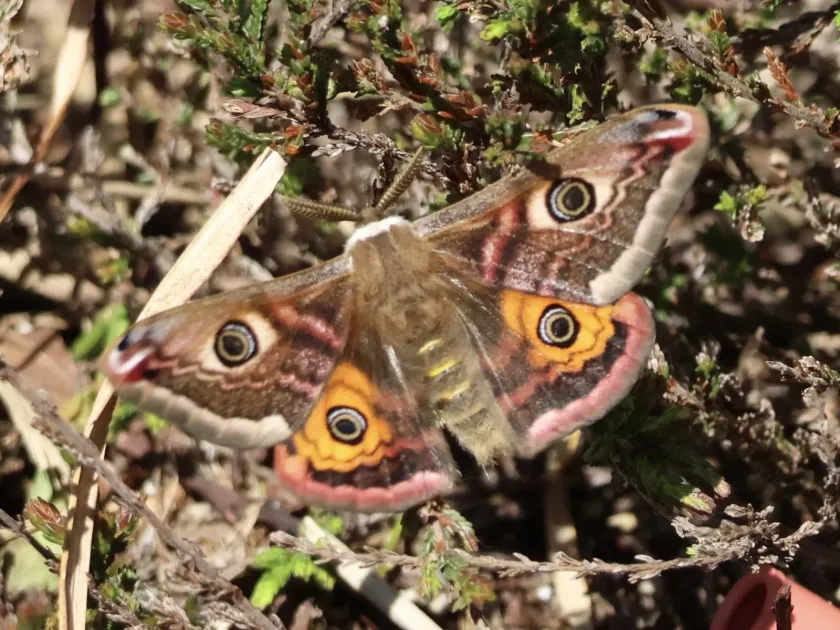
The Small Emperor Moth (Saturnia pavonia) is a prominent member of the Saturniidae family, known for its distinctive large size and wing markings.
Adult males have a wingspan of approximately 60 mm, while females are larger, reaching up to 80 mm with a more robust body.
The wings of both sexes feature iconic eye-spots, surrounded by concentric rings of black, yellow, and brown, acting as a defense against predators.
Larvae undergo dramatic changes during their development, transitioning from dark, hairy states to vibrant green forms with black bands and tufts.
The pupal stage is protected by a tough, pear-shaped brown cocoon, which the moth constructs securely on the branches of its host plant.
What it damages
Small Emperor Moth caterpillars are polyphagous, feeding on a diverse range of deciduous trees and woody shrubs found in orchards and gardens.
Common fruit trees such as apple, pear, plum, and cherry are frequent hosts where caterpillars may cause significant defoliation during their feeding stage.
They also target various bushes, including raspberries, blackberries, and wild roses, which often serve as bridges for infestation in rural areas.
Feeding damage involves the consumption of entire leaf blades, which reduces the plant's ability to photosynthesize and store energy.
In cases of high infestation, the loss of foliage can lead to stunted growth, reduced fruit production, and overall weakness of the host plant.
When it appears
The flight period of the adult moths is quite early in the season, typically taking place between April and May, depending on the local climate.
Females deposit eggs in small clusters on the twigs of host plants, where they remain until the larvae hatch at the start of summer.
Caterpillar feeding is concentrated throughout the summer months, specifically June and July, as they grow through several larval stages.
The species overwinters in the pupal stage, encased within the silk cocoon, which remains attached to the host plant throughout the winter.
This winter stage is the best time for growers to inspect their trees, as the leafless branches make the pupal cocoons easy to identify and remove.
Signs of infestation
Defoliated branches are the most immediate sign of an active infestation, as caterpillars are voracious eaters that strip leaves completely.
The presence of large, brightly colored caterpillars in the canopy of fruit trees is a clear indicator of the moth's current life cycle phase.
Searching for the characteristic pear-shaped cocoons on the twigs of fruit trees during dormancy provides evidence of past or future population presence.
Accumulated frass, or caterpillar droppings, on the foliage below the feeding site is a common symptom of a large infestation in the orchard.
Stunted shoot development and distorted leaf growth can occur if the caterpillars cause repeated damage to the apical buds of young trees.
Control measures
Manual removal of cocoons during the winter pruning season is the most ecological and effective way to manage the population in small gardens.
For young trees, hand-picking the caterpillars during the active feeding season is sufficient to prevent significant damage to the plant.
Biological insecticides containing Bacillus thuringiensis are highly effective against younger caterpillars while maintaining safety for beneficial pollinators.
In larger orchards, monitoring for the flight of adults and early caterpillar appearance allows for timely intervention before damage becomes extensive.
- Regular tree pruning to reduce potential overwintering sites.
- Encouraging local bird populations to control caterpillar numbers naturally.
- Using sticky traps for monitoring, although primarily aimed at other pests.
Taxonomy
- Latin name
- Saturnia pavonia
- Order
- Lepidoptera (butterflies)
- Family
- Saturniidae
- EPPO code
- EUDIPA
Discussion
No discussions yet — be the first.