
Tau Emperor
Aglia
Description
How to identify
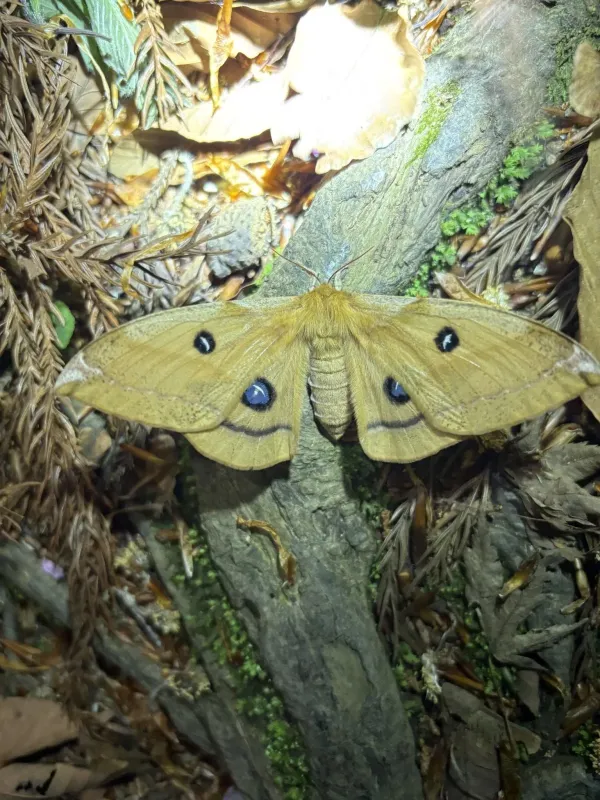
The Tau Emperor moth Aglia tau is a large moth belonging to the Saturniidae family. The adult has a wingspan of up to 80 mm and exhibits a yellowish to dark brown color, characterized by a distinct blue "eye-spot" in the center of each wing, circled by black and white rings.
The larvae, or caterpillars, undergo several developmental stages, evolving from green in their early instars to a yellowish-green color with red or yellow protuberances on their body segments as they mature. The pupa is dark brown and typically overwinters in the forest floor litter.
Taxonomically, this species is classified within the order Lepidoptera. It is a univoltine species, meaning it produces only one generation per year, but mass infestations can still cause significant stress to host tree populations.
Imagoes are predominantly crepuscular and nocturnal. Males possess highly developed, feathery antennae, which are essential for detecting female pheromones across considerable distances within forest ecosystems to ensure successful mating.
Unlike many other insects, adult moths do not feed; their mouthparts are vestigial. Their entire adult phase is dedicated to reproduction, relying exclusively on the energy reserves accumulated during their larval stage.
What it damages
The Tau Emperor primarily attacks various deciduous trees, with a strong preference for beech, though it also thrives on birch, oak, linden, willow, and alder. It is a significant pest in both forestry and ornamental tree care.
The caterpillars are leaf-eaters. They begin by consuming the leaf margins, progressively eating the entire leaf blade and leaving only the tough midribs behind, which disrupts the photosynthetic ability of the trees.
Severe infestations can lead to total defoliation of the tree crown. This process weakens the plant, making it highly susceptible to secondary attacks from wood-boring insects and increased vulnerability to fungal pathogens.
Young trees and nursery stock are the most vulnerable to damage. Early season defoliation can significantly stunt growth, reduce plant vigor, and decrease the tree's ability to survive subsequent harsh winters.
While large-scale outbreaks are relatively rare, localized population surges can cause considerable economic loss in areas where specific valuable tree species are cultivated or in essential protective greenbelts.
When it appears
The flight period for adult moths begins early in the spring, typically during April or May, often occurring before the trees are in full leaf. This makes them one of the earliest active nocturnal insects in the forest.
Females deposit their eggs either singly or in small clusters on the underside of host plant leaves. Embryonic development usually spans approximately two weeks, depending on local environmental temperatures.
The primary period of larval development and feeding occurs during the summer months, from May through July. During this time, the caterpillars move through five instars, consuming massive amounts of foliage.
By late summer, the larvae descend to the ground to pupate. They construct a dense, silk-reinforced cocoon in the leaf litter or soil, which serves as a protective casing throughout the autumn and winter months.
The insect enters diapause as a pupa, completing the yearly biological cycle. When temperatures rise the following spring, the pupae emerge as adults, initiating the next generation and continuing the species' life cycle.
Signs of infestation
Visible leaf damage is the most prominent indicator. Ragged leaf margins and skeletal leaf blades are clear signs that caterpillars have been feeding in the canopy, especially in the upper layers where sunlight is abundant.
Frass, which consists of the small, dark excrement of the larvae, appearing on leaves or on the soil surface below the canopy, serves as a major indicator of active larval feeding and infestation levels.
Finding cast-off larval skins (exuviae) on branches or trunks is another indicator of a growing population. These skins are shed during the molting process and are often left behind on the host tree.
The sound of active feeding can sometimes be heard in the canopy during high-density infestations. Careful inspection of the foliage may reveal the caterpillars, which, despite their camouflage, become easier to spot as they grow larger.
Presence of adults near outdoor lights in spring can indicate an active breeding population in the area, signaling the need for proactive inspections of susceptible trees for signs of egg-laying or early-instar larvae.
Control measures
Mechanical control is highly effective for smaller, accessible trees. Manual removal and destruction of caterpillars can prevent significant damage without the need for toxic chemicals, helping to maintain garden balance.
Chemical control is only recommended during periods of mass infestation. Insecticides containing pyrethroids or organophosphates can be applied to the canopy, following strict dosage guidelines and observing safety intervals.
Biological control using formulations of Bacillus thuringiensis is an excellent, environmentally friendly alternative. This bacterium specifically targets the larvae while leaving beneficial insects and pollinators unharmed.
Encouraging natural predators, such as insectivorous birds (e.g., tits, woodpeckers), provides a sustainable long-term solution. Maintaining birdhouses and bird baths can help manage population levels naturally.
Autumn maintenance, including the collection and disposal of leaf litter, helps eliminate pupae overwintering in the soil. This cultural practice is a simple yet effective way to suppress the next year’s population emergence.
Taxonomy
- Latin name
- Aglia
- Order
- Lepidoptera (butterflies)
- Family
- Saturniidae
- EPPO code
- AGLISP
Discussion
No discussions yet — be the first.