
Indian Moon Moth
Actias selene
Description
How to identify
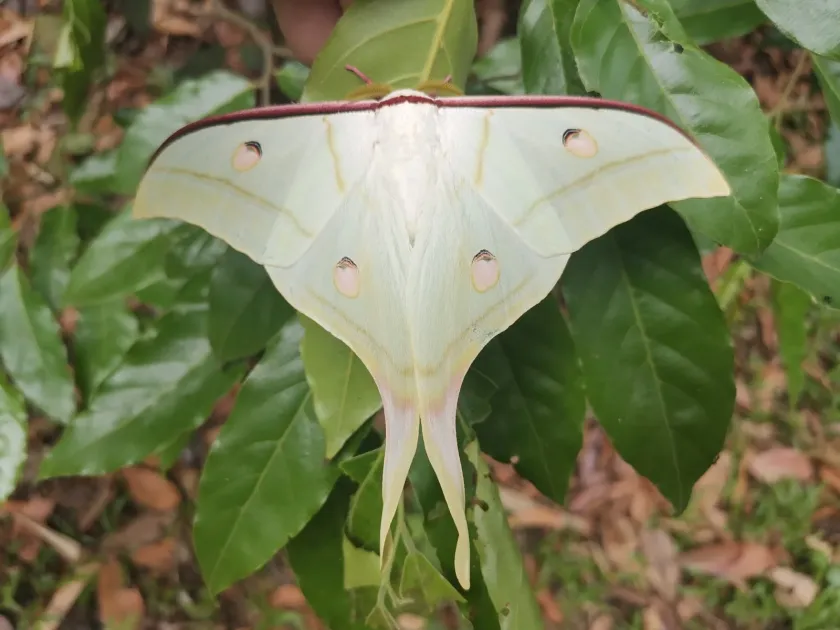
The Indian Moon Moth (Actias selene) is a large, striking moth belonging to the family Saturniidae. The adults are known for their pale green wings, long tails on the hindwings, and prominent eyespots, with a wingspan often reaching 12–15 cm.
The life cycle encompasses four stages: egg, larva (caterpillar), pupa, and adult (imago). The larvae undergo several molts, changing from dark colors to bright green with specialized tubercles as they mature.
The physical appearance of the caterpillar is designed to provide camouflage and defense against predators. They possess strong mandibles capable of consuming large amounts of foliage in a short period.
Adult moths do not possess functional mouthparts and therefore do not feed. Their primary purpose is reproduction, while the larvae are the life stage responsible for all the damage to vegetation.
Pupation occurs within a firm, silken cocoon that is usually attached to the leaves or twigs of the host plant, where it remains protected during the transformation process.
What it damages
The larvae are polyphagous, feeding on a wide range of host plants. They are frequently observed causing damage to walnut trees, persimmons, willows, alders, and various orchard fruit tree species.
Caterpillars consume leaf tissue extensively, often stripping a leaf down to its primary veins. This significant reduction in foliage area disrupts the plant's photosynthetic ability and slows its growth.
In cases of high infestation, the larvae can cause partial or complete defoliation of the tree. This damage stresses the plant, making it more susceptible to environmental factors and secondary infections.
Injured foliage and twigs act as entry points for pathogens, including bacteria and fungi, which can exacerbate the health decline of the affected tree or shrub.
Young plants and seedlings are particularly vulnerable to larval feeding, as they lack the robust canopy to compensate for significant foliage loss, potentially leading to stunted development.
##season##The Indian Moon Moth is multi-brooded in warmer climates, with several generations occurring within a single year. Adults generally appear from late spring through the summer months.
The active feeding period for the larvae correlates with the peak vegetation period of their host plants, allowing them to accumulate the necessary nutrients for their rapid growth and pupation.
Pupae usually develop throughout the summer, while the final generation of the year enters diapause as a pupa, protected within a cocoon until the following season.
Monitoring for signs of the pest should begin in late May. Observations during the early stages of larval development are crucial for preventing large-scale infestation.
Weather conditions significantly impact the speed of the life cycle. Warm and humid seasons tend to accelerate generation turnover, increasing the pressure on horticultural and forest environments.
Signs of infestation
The most immediate sign of an infestation is the presence of eaten leaves with uneven, ragged margins. Caterpillars often rest on the underside of leaves, making them easy to overlook during casual inspection.
Droppings (frass) left on the foliage or on the ground beneath the tree provide clear evidence of larval presence in the canopy above.
Silken cocoons found attached to branches or wrapped within leaves are definitive markers of an established population that requires immediate management attention.
A noticeable decrease in crown density during mid-summer, when the caterpillar population is at its largest, is a primary indicator of substantial feeding damage.
The increased activity of birds foraging within specific trees can serve as a biological indicator, suggesting the presence of large, succulent caterpillars within the foliage.
Control measures
Manual collection of caterpillars and destruction of cocoons is the most effective and eco-friendly strategy, especially for smaller trees or low-density infestations.
Biological insecticides containing Bacillus thuringiensis are highly effective against young larvae and represent a targeted control method that spares beneficial insects and pollinators.
Encouraging natural enemies, such as birds and predatory wasps, within the garden ecosystem provides sustainable long-term control over larval numbers.
Chemical intervention should be reserved for severe outbreaks where the threshold for economic damage has been exceeded, ensuring the use of products with low environmental impact.
- Regular pruning of infested branches.
- Use of light traps to monitor adult flight periods.
- Sanitation by removing leaf litter where pupae may overwinter.
- Early scouting to identify egg clusters before they hatch.
Taxonomy
- Latin name
- Actias selene
- Order
- Lepidoptera (butterflies)
- Family
- Saturniidae
- EPPO code
- ACTISE
Discussion
No discussions yet — be the first.