
Luna moth
Actias luna
Description
How to identify
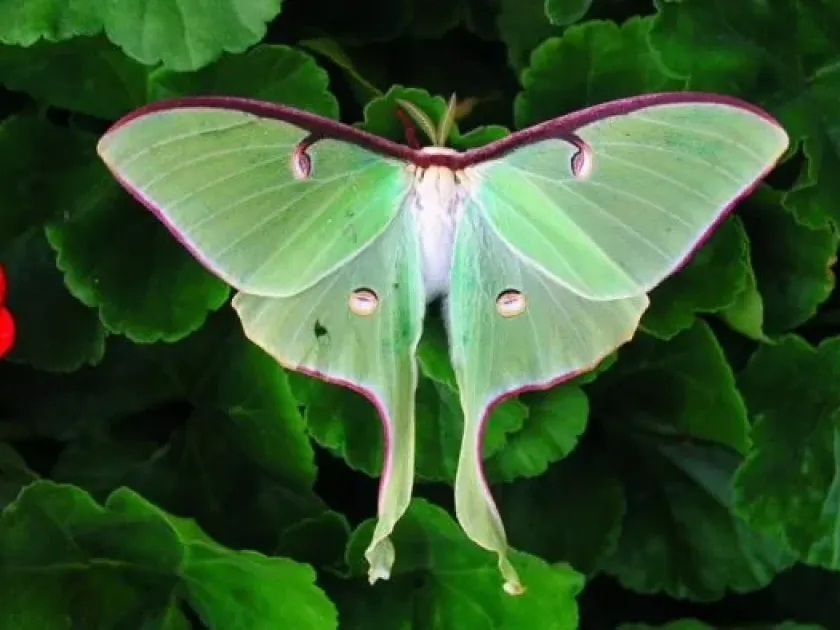
The Luna moth, known scientifically as Actias luna, is a large, striking moth belonging to the Saturniidae family. Adult specimens feature distinctive long tails on their hindwings and a soft, lime-green color.
Caterpillars undergo five developmental instars, transitioning from light yellow to a vibrant green with lateral yellowish stripes. Their bodies possess sparse hairs and spiny tubercles, making them easily identifiable upon inspection.
Pupae of the Luna moth form within dense, silken cocoons, which are typically attached to fallen leaves or hidden in the leaf litter at the base of host trees.
The lifecycle in northern latitudes usually consists of one generation, while southern regions may experience up to three generations per season.
Adult moths do not feed as their mouthparts are vestigial; therefore, the primary damage is caused exclusively by the larval stage of the insect.
What it damages
Luna moth caterpillars are polyphagous, showing a preference for deciduous woody species. Common host plants include walnut, hickory, birch, alder, maple, and occasionally fruit trees from the Rosaceae family.
Damage occurs primarily during the caterpillar's rapid growth phase, as they consume the leaf lamina extensively, leaving behind only the larger veins.
High population densities can lead to partial or complete defoliation of young trees, which negatively impacts their overall vigor and biomass accumulation.
Caterpillars pose a significant threat to saplings in nurseries and reforestation sites, where nutrient loss hinders plant development.
Despite their broad host range, Luna moths rarely reach outbreak levels, classifying them as secondary pests in forestry and ornamental gardening.
Signs of infestation
The first sign of infestation is the presence of eaten leaves, characterized by large, irregular notches along the leaf margins.
Below the canopy of infested trees, you may find caterpillar frass, which appears as dense, dark pellets, indicating the presence of active larvae.
Careful visual inspection of branches may reveal the caterpillars themselves, which utilize their green coloration as camouflage against the foliage.
At the end of the season, cocoons may be found on the ground or near the trunk base, signaling that the insect is preparing for diapause.
The appearance of adult moths near nighttime light sources is a strong indicator that a local host population may exist nearby for egg-laying.
Control measures
Preventative measures include maintaining tree health and performing timely sanitary pruning to remove potential pupation sites.
In small areas or gardens, hand-picking caterpillars during early morning or late evening hours is a highly effective, non-toxic management strategy.
In cases of significant infestation, biological controls using Bacillus thuringiensis are recommended to minimize impact on beneficial insects.
Broad-spectrum chemical insecticides should be used as a last resort, as they may harm natural predators such as parasitic wasps and predatory bugs.
Using light traps to monitor adult population trends helps foresters and gardeners predict future outbreaks and implement interventions promptly.
Taxonomy
- Latin name
- Actias luna
- Order
- Lepidoptera (butterflies)
- Family
- Saturniidae
- EPPO code
- ACTILU
Discussion
No discussions yet — be the first.