
Ailanthus silkmoth
Samia cynthia
Description
How to identify
The Ailanthus silkmoth (Samia cynthia) is a member of the Saturniidae family. It is a large, impressive moth with a wingspan of 12–15 cm, featuring olive-brown wings with distinct translucent crescent-shaped markings.
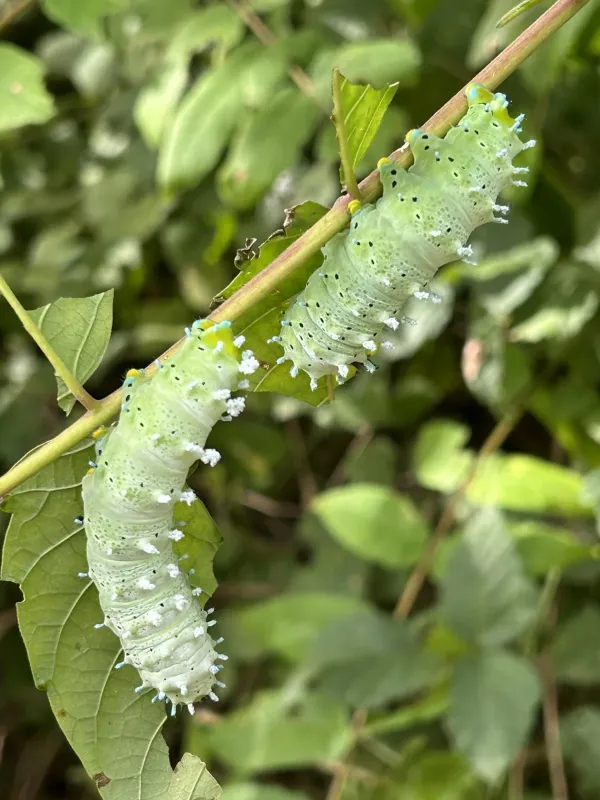
The larvae are bright blue-green with a waxy coating and black spots, reaching up to 8 cm in length. Their appearance changes significantly as they molt, eventually developing white or yellow dorsal tubercules.
The pupal stage is protected within a strong, elongated silken cocoon. The moth secures this cocoon to the host tree's twigs using a long, tough silk stem, which helps it remain anchored throughout the winter months.
Adult moths emerge in late spring or early summer. They do not feed during their short adult life, relying entirely on the energy reserves they accumulated while in the caterpillar stage.
Originally native to East Asia, this species has been introduced to various parts of the world. It thrives in urban environments where its primary host plant, the Tree of Heaven, is abundant.
What it damages
While the Ailanthus silkmoth prefers the Tree of Heaven (Ailanthus altissima), the caterpillars are polyphagous and can feed on a variety of other foliage when food is scarce.
Host plants may include species from the Rosaceae family, such as apple and pear trees, as well as several ornamental species like maple, lilac, and privet.
The larvae cause damage through intensive leaf consumption. In cases of high infestation, a single tree can lose a significant portion of its foliage, leading to severe defoliation.
Heavy defoliation stresses the tree, reducing its ability to photosynthesize, which can lead to stunted growth and weakened defenses against other biotic or abiotic stressors.
Young trees and saplings are at the highest risk, as their limited leaf area cannot afford significant loss, potentially leading to poor winter survival and decreased fruit yield in the following year.
Signs of infestation
Signs of infestation include skeletonized or heavily damaged leaves in the upper and middle canopy. In late summer, large, frass-filled areas under the tree are strong indicators of active feeding.
The presence of large, conspicuous caterpillars on the branches is a primary sign. They are often found resting along the midrib of leaves or on leaf stems, camouflaged by their coloration.
During the winter, the most noticeable signs are the tough, brown, spindle-shaped cocoons attached to the twigs. They often remain on the tree long after the leaves have fallen.
Monitoring the tree for adult moths using light traps at night can provide an early warning of an impending egg-laying season and potential larval outbreaks.
Partial leaf loss and the accumulation of dark, pellet-like excrement on the ground are reliable markers for confirming the presence of the pest in your garden.
Control measures
Mechanical removal of cocoons during the winter is the most sustainable and effective control method. Removing these from the branches eliminates the next generation before they hatch.
For smaller trees, hand-picking the caterpillars in the early morning or late evening is practical and avoids the need for chemical interventions in the home garden.
Biological control using Bacillus thuringiensis sprays is highly effective against young larvae and minimizes the impact on non-target beneficial insect species.
When infestation levels reach an economic threshold in ornamental or fruit-bearing trees, localized applications of authorized insecticides may be necessary to protect the plant's health.
- Winter cocoon collection and destruction.
- Regular visual canopy inspections.
- Biopesticide applications during early larval stages.
Taxonomy
- Latin name
- Samia cynthia
- Order
- Lepidoptera (butterflies)
- Family
- Saturniidae
- EPPO code
- PHISCY
Discussion
No discussions yet — be the first.