
Sugarcane planthopper
Saccharosydne saccharivora
Description
How to identify
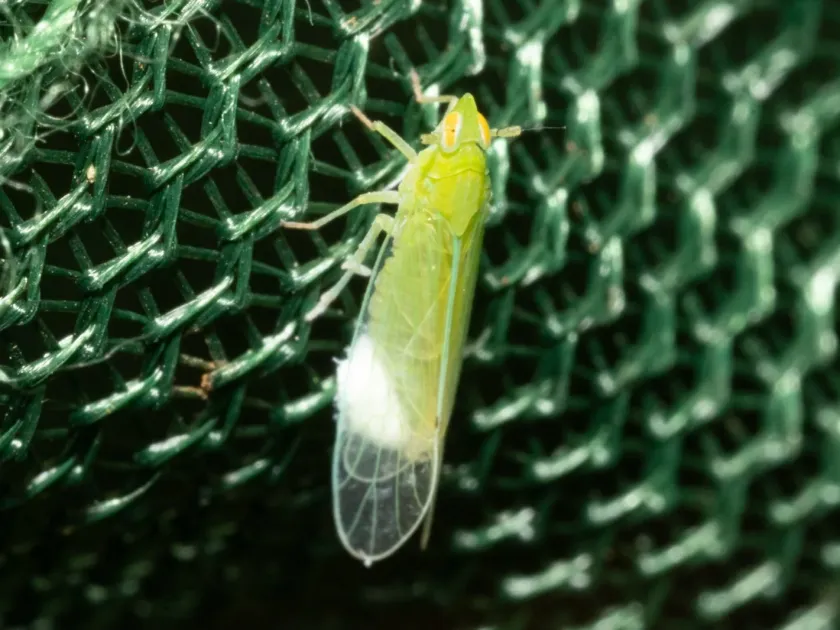
The sugarcane planthopper belongs to the order Hemiptera and the family Delphacidae. The adult insect is small, typically measuring about 5–7 mm in length, with characteristic wings that cover its abdomen.
The coloration of the insect varies from pale green to yellowish, providing excellent camouflage on the leaves of the host plant. The head is equipped with piercing-sucking mouthparts, specifically adapted for feeding on plant sap.
Nymphs of the pest look similar to adults but are smaller and lack developed wings. They undergo several developmental stages, gradually increasing in size and acquiring the traits of a sexually mature insect.
This insect prefers to live on the underside of leaves, where the microclimate is most favorable for its vital activities and protection from natural predators. The species is primarily active during daylight hours.
To identify the species, it is important to observe the presence of specific waxy secretions, which nymphs often leave on the leaf surface, creating whitish spots or residues.
What it damages
The primary host plant for this species is sugarcane. Under intensive farming conditions, the planthopper can cause significant damage to plantations, reducing the overall yield of the crop.
Besides sugarcane, the pest can be found on several other grass species growing near agricultural fields, using them as a reservoir for population survival.
Feeding occurs by extracting vital nutrients directly from the plant's vascular tissues, which leads to the depletion of the plant's metabolic processes.
Serious damage is caused not only by biomass loss but also by the secretion of honeydew, which serves as an ideal nutrient medium for the development of sooty mold fungi.
Mass reproduction of the pest leads to stunted shoot growth, leaf curling, and a general decline in product quality, which is critical for the sugar industry.
When it appears
The life cycle of the sugarcane planthopper is directly dependent on the temperature regime of the region, with tropical and subtropical climates being the most favorable.
Females lay their eggs directly into the leaf or stem tissues, slicing the surface with their ovipositor. Under optimal conditions, the development of one generation takes three to four weeks.
The peak of activity and population density usually occurs during periods of warm and humid weather when plants are in their most intensive growth phase.
Throughout the year, in the absence of adverse factors, the insect is capable of producing several generations, posing a constant threat to new sugarcane shoots.
Overwintering can occur at various stages, but in hot climates, active reproduction can continue almost year-round without a distinct diapause.
Signs of infestation
The first and most noticeable sign of a planthopper presence is a change in leaf color, which begins to yellow and lose turgor due to systematic sap extraction.
The presence of large amounts of sticky secretions on the leaves indicates a high level of infestation, attracting ants and facilitating the development of secondary infections.
The development of a sooty mold layer on the leaf surface hinders photosynthesis, making the plant weaker and more susceptible to other diseases.
When inspecting a plantation, one can notice mass clusters of adults and nymphs on the underside of leaves, which quickly jump or fly away when disturbed.
Severe infestation is accompanied by the delayed development of internodes, which directly reduces sugar yield and the commercial value of the crop.
Control measures
Effective management of the sugarcane planthopper is based on an integrated approach, combining agrotechnical, biological, and chemical control methods.
An important practice is the timely cleaning of fields from weeds, which serve as a refuge for the pest during the off-season.
Biological control includes the use of natural enemies, such as parasitic wasps and predatory entomophages, which effectively control population density.
At critical infestation levels, systemic insecticides are applied to penetrate plant tissues and affect the insects during sap feeding.
Monitoring plantations with yellow sticky traps allows for the early detection of pest migration, enabling prompt action before a massive outbreak occurs.
Taxonomy
- Latin name
- Saccharosydne saccharivora
- Order
- Hemiptera (bugs, aphids, leafhoppers)
- Family
- Delphacidae
- EPPO code
- SACDSA
Discussion
No discussions yet — be the first.