
Rice delphacid
Saccharosydne ornatipennis
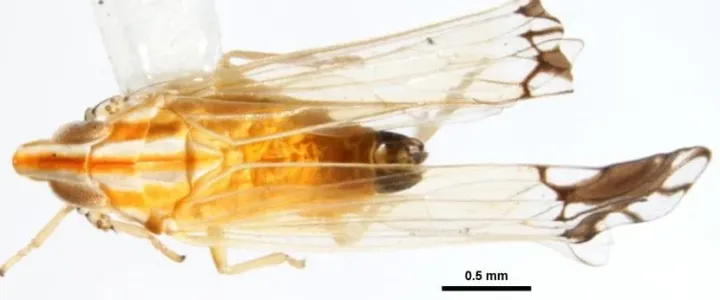
Description
How to identify
The rice delphacid (Saccharosydne ornatipennis) belongs to the order Hemiptera and the family Delphacidae, commonly known as planthoppers.
These insects are characterized by their small size and distinct wing venation, which serves as a key feature for field identification.
The life cycle includes an egg stage, several nymphal instars, and the adult stage, with all active stages capable of causing damage to crops.
They are well-adapted to the humid environments associated with rice paddy fields, where they find both food and shelter.
Populations can increase rapidly under favorable environmental conditions, necessitating regular field monitoring by agronomists.
What it damages
The primary host plant for this pest is rice (Oryza sativa), where it feeds by inserting its stylets into the plant vascular tissues.
While rice is the main target, the pest can also thrive on various weed species that grow around the perimeter of paddy fields.
Damage occurs when the insects extract phloem sap, leading to nutrient loss and physical damage to the plant's structural integrity.
Severe infestations often result in stunted plant growth and reduced yield quality due to the depletion of the plant's reserves.
Direct damage to the leaves and stems restricts the plant's ability to undergo photosynthesis effectively, further hindering development.
Signs of infestation
Early symptoms of infestation often appear as yellow or chlorotic spots on the leaf blades where the insects have been feeding.
As feeding progresses, affected leaves may curl and eventually wither, turning brown as the internal tissue dies.
Plants often exhibit a characteristic stunted growth pattern, appearing significantly smaller and weaker than uninfested plants in the same area.
The presence of honeydew on the leaves, which subsequently promotes the growth of sooty mold, is a common secondary indicator of high pest density.
Farmers can observe the adults and nymphs by gently shaking the rice stems, causing the insects to jump or fly from the foliage.
Control measures
Management strategies involve a combination of good agricultural practices, such as maintaining proper water levels and removing weeds.
Biological control plays a significant role, as naturally occurring predators and parasites often help keep planthopper populations in check.
If economic thresholds are reached, the application of systemic insecticides is necessary to prevent widespread crop damage.
Selecting resistant rice varieties is another effective preventive measure that helps mitigate the impact of the pest on overall production.
Integrated Pest Management (IPM) practices, including the use of monitoring traps, are essential for determining the timing and necessity of chemical interventions.
Taxonomy
- Latin name
- Saccharosydne ornatipennis
- Order
- Hemiptera (bugs, aphids, leafhoppers)
- Family
- Delphacidae
- EPPO code
- SACDOR
Discussion
No discussions yet — be the first.