
Saccharosydne
Saccharosydne
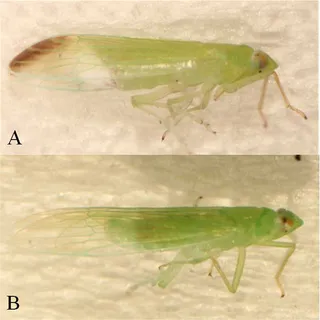
Description
How to identify
Saccharosydne is a genus of insects belonging to the family Delphacidae within the order Hemiptera. The most prominent species is Saccharosydne procerus.
These are small, jumping insects that resemble leafhoppers. Adults are slender, often yellowish-green, with transparent wings held roof-like over the abdomen.
A key diagnostic feature of the Delphacidae family is the presence of a distinct, mobile, and toothed spur at the tip of the hind tibiae.
Nymphs are physically similar to adults but are smaller in size and lack fully developed wings, progressing through several growth instars.
These insects are generally reclusive, tending to hide in the lower parts of stems or within the leaf sheaths of host grasses.
What it damages
The primary crop affected by this pest is rice. In some geographical areas, it may also cause damage to other wild grasses and cereal crops.
The insects feed by piercing plant tissues with their stylets and sucking out the sap, causing physiological stress and metabolic disruption.
Beyond physical damage, Saccharosydne species are known vectors of various phytoplasma and viral diseases that can devastate crop health.
Both adults and nymphs feed on the plants throughout the growing season, which significantly reduces the yield potential of the crop.
Heavy infestations, especially during the tillering and flowering stages of rice, can lead to substantial economic losses in yield quantity and quality.
When it appears
The life cycle of Saccharosydne is highly dependent on environmental factors, particularly temperature and humidity, which dictate population growth rates.
In regions with favorable climates, the pest can produce multiple generations within a single growing season, leading to rapid population explosions.
Overwintering typically occurs in the adult or nymph stages, sheltering near the base of weeds, crop residues, or dense grassy areas.
Activity begins in the spring when temperatures rise, at which point the insects migrate to young rice seedlings to begin feeding.
Monitoring the fields early in the season is critical to detect population spikes and implement management strategies before the damage becomes irreversible.
Signs of infestation
The first visual symptoms of infestation are localized patches of yellowing or scorched leaves appearing in the rice canopy.
Inspecting the plants often reveals the presence of honeydew, a sticky excrement, which may promote the growth of sooty mold fungus on leaves.
The presence of the pest is easily confirmed by sweeping with an entomological net or by shaking the rice stems to observe the jumping insects.
Severely damaged plants show stunted growth, and in some cases, the panicles may fail to develop properly or emerge at all.
Colonies of nymphs and egg-laying sites can be found by carefully examining the underside of leaves and the base of the stems.
Control measures
Cultural control methods include the eradication of weeds that serve as reservoirs and overwintering sites for the pest.
Implementing proper crop rotation and adjusting planting schedules can help reduce the vulnerability of rice crops to infestation.
Biological control involves conserving and promoting natural enemies, such as predatory bugs, spiders, and parasitic wasps in the agroecosystem.
When populations exceed economic thresholds, systemic insecticides approved for rice cultivation should be applied to manage the infestation.
It is essential to rotate chemical classes used in control efforts to prevent the development of insecticide resistance in the pest population.
Taxonomy
- Latin name
- Saccharosydne
- Order
- Hemiptera (bugs, aphids, leafhoppers)
- Family
- Delphacidae
- EPPO code
- SACDSP
Discussion
No discussions yet — be the first.