
Rhynocoris marginatus
Rhynocoris marginatus
Description
How to identify
Rhynocoris marginatus belongs to the Reduviidae family, commonly known as assassin bugs, which are recognized for their predatory nature.
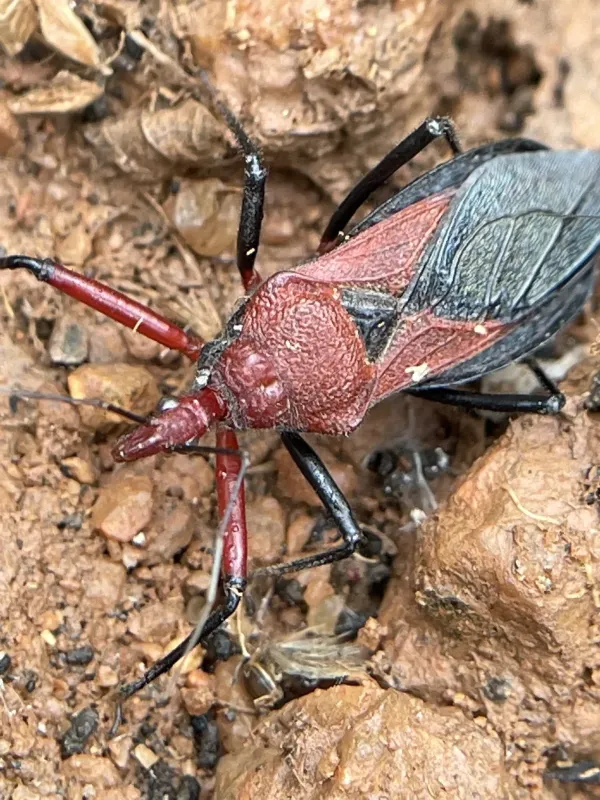
The adult insect has an elongated body with a prominent, curved proboscis used for injecting toxic saliva into its prey during hunting.
The color pattern usually features dark brown or reddish tones with distinctive pale margins along the abdomen, justifying the species' name.
The life cycle involves incomplete metamorphosis, where nymphs resemble smaller versions of the adults but are wingless and equally voracious.
These bugs are highly mobile and exhibit aggressive behavior, often standing still while waiting for prey to pass within striking distance.
What it damages
While often beneficial, Rhynocoris marginatus can become a concern in intensive farming systems if it preys on pollinators or other beneficial insects.
The bug does not feed on plant tissues, meaning it causes no direct mechanical damage or sap loss to the crops it inhabits.
The harm is indirect, as it can disrupt the biological balance by preying on helpful species when its primary food sources are scarce.
In crops like cotton or soybeans, it primarily hunts moth larvae and beetle nymphs, providing a natural control service that can be invaluable.
Farmers should monitor the population density to ensure that the presence of these predators does not negatively affect the overall ecosystem services.
When it appears
The activity of the bug is strongly linked to seasonal temperature variations, with peak numbers occurring during the warmer summer months.
Overwintering takes place in the adult stage, sheltered under plant debris, tree bark, or in the top layers of the soil where temperatures are stable.
Emergence from hibernation occurs as soon as spring temperatures reach a threshold suitable for movement and hunting activity.
The number of generations per year depends on the local climate and the availability of prey species within the crop environment.
As autumn approaches, the insects gradually decrease their activity level in preparation for the upcoming winter dormancy.
Signs of infestation
The primary way to identify their presence is by observing the bugs resting on leaves and stems while scanning the environment for movement.
Empty exoskeletons of pest insects left behind on the foliage serve as indicators of active feeding by this predatory bug species.
The absence of plant damage symptoms, such as wilting, chlorosis, or necrotic spots, differentiates them from sap-sucking agricultural pests.
In the evenings, individuals may show increased movement between plant tiers as they search for new hunting grounds.
Their defensive behavior, including the release of specific secretions when disturbed, is a hallmark of their presence in the field.
Control measures
Control measures are rarely required, as this insect is generally considered a valuable component of integrated pest management strategies.
- Minimize the use of broad-spectrum insecticides to protect native predator populations.
- Implement crop rotation to maintain ecological stability within the fields.
- Monitor predator-to-pest ratios before considering any chemical interventions.
- Use selective biological control products that spare beneficial insects.
Maintaining healthy field margins can provide refugia for the bugs, helping to sustain their population for natural pest suppression.
By prioritizing ecological harmony, growers can leverage the hunting instincts of Rhynocoris marginatus to reduce reliance on synthetic pesticides.
Taxonomy
- Latin name
- Rhynocoris marginatus
- Order
- Hemiptera (bugs, aphids, leafhoppers)
- Family
- Reduviidae
- EPPO code
- RHNCMA
Discussion
No discussions yet — be the first.