
Reduviid bug
Rhynocoris iracundus
Description
How to identify
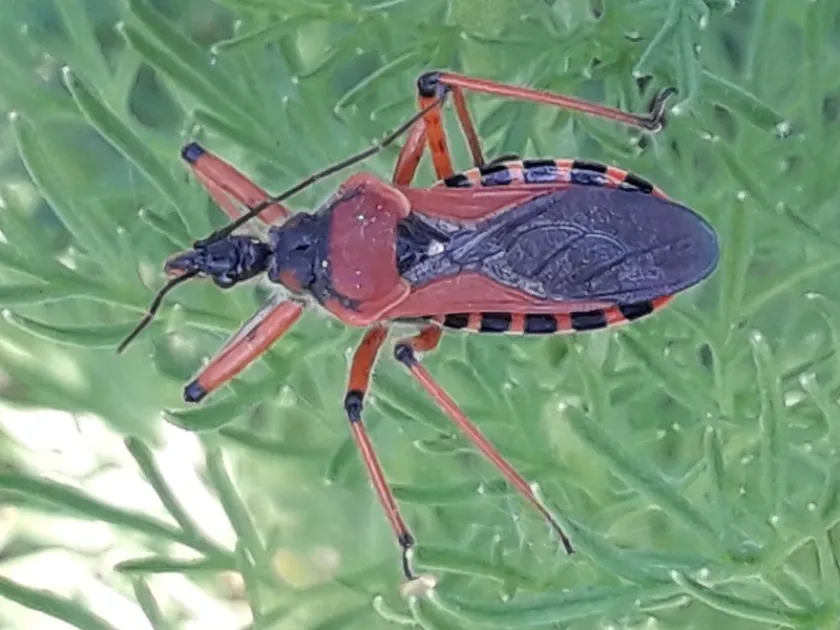
The Reduviid bug, scientifically known as Rhynocoris iracundus, is a member of the Reduviidae family within the order Hemiptera. These insects are easily recognized by their striking red and black warning coloration.
Adults typically measure between 12 and 16 millimeters in length. They possess an elongated head and a robust, curved rostrum (proboscis) designed for piercing the exoskeletons of their prey.
Their body structure is sleek, allowing them to move quickly across various plant surfaces, including leaves and stems, while searching for potential prey items.
Females lay their eggs in clusters, often protected by specialized secretions that shield the eggs from environmental stressors and potential predators.
Nymphs resemble the adult form but are smaller in size and lack fully developed wings; however, they are highly active predators from the earliest stages of their life cycle.
What it damages
It is crucial to emphasize that Rhynocoris iracundus is not a plant pest. It is a highly beneficial predatory insect that plays a significant role in natural pest suppression.
These bugs feed on a wide variety of harmful insects, including caterpillars, beetle larvae, and other pests that inhabit agricultural crops and gardens.
By consuming large numbers of phytophagous insects, they help maintain the balance of the ecosystem and significantly reduce the pressure exerted by common crop pests.
They are active hunters and do not exhibit herbivorous behavior that would cause damage to plant tissues, making them a valuable asset to any agricultural operation.
Farmers and growers should view this species as a natural partner in plant protection, as it contributes to reducing the necessity for synthetic chemical interventions.
When it appears
The activity of the Reduviid bug begins in late spring when temperatures rise, signaling the start of the growth season for both plants and their insect inhabitants.
During the summer months, these predators are at their most active, patrolling foliage and flowers in search of adequate nutrition to support their growth and reproduction.
The breeding season typically peaks mid-summer, resulting in a robust population that effectively manages pest outbreaks throughout the warmer months of the year.
As autumn approaches and temperatures drop, the bugs seek out sheltered microhabitats such as leaf litter, soil crevices, or tree bark to enter diapause for the winter.
Their life cycle is synchronized with the availability of prey, ensuring that the predator population is most abundant when pest activity is at its highest.
Control measures
Since the Reduviid bug is a beneficial predator, there is absolutely no reason to implement control measures against it. On the contrary, their preservation should be encouraged.
The use of broad-spectrum insecticides should be strictly avoided, as these chemicals destroy beneficial predator populations and lead to secondary pest outbreaks.
Integrated Pest Management (IPM) practices should be employed, focusing on the use of selective insecticides that spare non-target predatory species.
Maintaining ecological diversity in and around agricultural areas provides essential habitats for these beneficial bugs to thrive and maintain their population.
- Implement selective pesticide application.
- Preserve natural vegetation borders.
- Promote biological control strategies.
Taxonomy
- Latin name
- Rhynocoris iracundus
- Order
- Hemiptera (bugs, aphids, leafhoppers)
- Family
- Reduviidae
- EPPO code
- RHNCIR
Discussion
No discussions yet — be the first.