
Rhynocoris fuscipes
Rhynocoris fuscipes
Description
How to identify
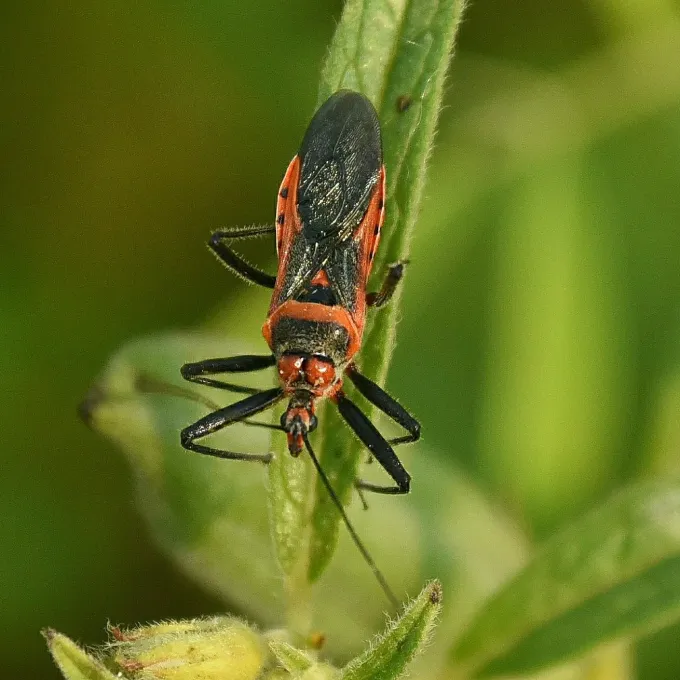
Rhynocoris fuscipes is a species belonging to the family Reduviidae (assassin bugs) within the order Hemiptera. It is primarily a predatory insect characterized by its elongated body, which typically measures between 12 and 15 mm in length.
The insect possesses a distinctive dark brown or reddish-brown coloration, which aids in camouflage against plant stems and bark. Its legs are relatively long and robust, enabling efficient movement across various plant surfaces to locate prey.
The head features a prominent, curved rostrum (proboscis) designed specifically for piercing the cuticle of prey insects. Through this structure, the bug injects digestive enzymes, which liquefy the internal tissues of the victim for easier consumption.
Nymphs of the species resemble adults but are generally smaller and lack fully developed wings. They are highly active and predatory from their early developmental stages, continuously patrolling vegetation for soft-bodied prey.
These bugs are typically found in sunny, open areas within agricultural fields, orchards, and gardens. Their presence is often indicative of a diverse insect population, as they rely on a constant supply of food sources.
What it damages
While often classified within agricultural manuals as an insect of interest, Rhynocoris fuscipes is fundamentally a beneficial predator rather than a primary pest. It plays a significant role in reducing populations of lepidopteran larvae and beetle larvae.
Under specific environmental conditions, such as extreme prey scarcity, these bugs may exhibit facultative phytophagy. In these rare instances, they may probe plant tissues for moisture or nutrients, leading to small, localized lesions on leaves or succulent stems.
These minor physical injuries rarely result in significant crop loss. However, the presence of the bug in large numbers may occasionally cause minor cosmetic damage, which is usually outweighed by their contribution to natural pest regulation.
The economic impact of this species is largely positive. By suppressing populations of true agricultural pests, they help decrease the overall dependence on synthetic insecticides in various crop systems, including legumes and fruit trees.
Growers should weigh the potential for minor tissue damage against the value of the pest control services provided. Misidentification often leads to unnecessary chemical treatments that disrupt the balance of the ecosystem.
When it appears
The activity of Rhynocoris fuscipes typically begins in late spring as temperatures rise, allowing overwintered adults to emerge from hibernation. They quickly transition into their predatory phase.
Peak population density usually occurs during mid-summer, aligned with the highest abundance of prey species. This timing coincides with critical vegetative and reproductive phases of many crops, maximizing the predator's impact.
The life cycle encompasses eggs, five nymphal stages, and the adult stage. The duration of these phases is highly dependent on ambient temperature and the availability of prey items in the surrounding environment.
As autumn approaches and temperatures drop, adults and late-stage nymphs seek shelter for hibernation. They often utilize leaf litter, wood crevices, or thick vegetation as overwintering sites, ensuring survival during winter.
In warmer climates, the species may complete two generations within a single growing season. This reproductive strategy ensures a consistent presence of predatory bugs in the field throughout the entire growing cycle of the crop.
Control measures
In most agricultural settings, no control measures are required for Rhynocoris fuscipes. As an effective predator, it is an asset to integrated pest management (IPM) programs and should be conserved rather than eradicated.
If population control is deemed necessary due to unusual, excessive damage to sensitive crops, focus should be on cultural practices rather than chemical interventions. Tillage and removal of crop residues can effectively reduce overwintering sites.
Avoid the use of broad-spectrum insecticides, as these are highly detrimental to predatory bugs. If chemical intervention is required for other pests, prioritize selective pesticides that have minimal toxicity to beneficial predator species.
Monitoring populations through visual inspections or yellow sticky traps can provide data on whether the bug is helping or harming the crop. This informed approach prevents unnecessary actions that could escalate pest problems.
- Maintain field margins to support predator populations.
- Prioritize biological control over synthetic applications.
- Monitor pest-predator ratios during the growing season.
- Use selective chemicals only when strictly necessary.
- Implement fall field sanitation to manage populations.
Taxonomy
- Latin name
- Rhynocoris fuscipes
- Order
- Hemiptera (bugs, aphids, leafhoppers)
- Family
- Reduviidae
- EPPO code
- RHNCFU
Discussion
No discussions yet — be the first.