
Sharp-pointed assassin bug
Rhynocoris cuspidatus
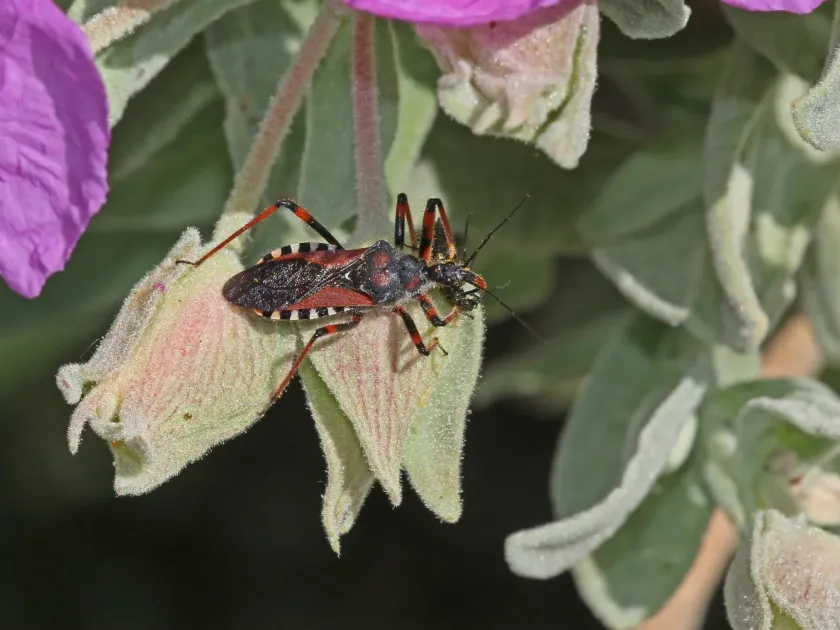
Description
How to identify
The sharp-pointed assassin bug (Rhynocoris cuspidatus) belongs to the family Reduviidae, a diverse group of predatory insects within the order Hemiptera. These insects are easily identified by their elongated body and a strong, curved rostrum used for piercing prey.
Adults typically display a brownish or reddish-brown coloration, which provides excellent camouflage against bark and plant stems, allowing them to remain undetected by both prey and predators.
They possess prominent, well-developed eyes that grant them a wide field of vision, crucial for tracking small insects as they move through complex foliage.
The nymphs go through several developmental stages, resembling miniature adults but lacking the hardened wings that characterize the mature reproductive stage of the insect.
Unlike many other bug species that cause agricultural damage, this assassin bug is structurally evolved for hunting and consuming other arthropods.
What it damages
This species is not a crop pest in the traditional sense; rather, it is a beneficial insect that preys upon various harmful organisms, including caterpillars and beetle larvae.
Occasionally, they may feed on beneficial pollinators if other food sources are scarce, which can lead to localized imbalances in the garden's ecosystem.
They do not cause damage to plant tissues, as their anatomy is specialized for fluid-based nutrition derived from animal proteins rather than plant sap.
In highly managed agricultural landscapes, their presence is generally seen as a sign of natural biological control, which helps maintain the health of the orchard.
Overall, they contribute positively to the agroecosystem by reducing the populations of pests that would otherwise require extensive chemical intervention.
When it appears
The activity cycle of the sharp-pointed assassin bug begins in early spring, as rising temperatures trigger the emergence of adults from their overwintering sites.
Summer is the peak period for this species, characterized by intensive hunting behavior and the rapid development of nymphs feeding on the abundant summer pest populations.
As the season shifts towards autumn, adults search for protected habitats, such as deep bark fissures or dense garden litter, to survive the winter months.
The number of generations per year is heavily dependent on the local climate and the availability of prey, which dictates the success of their reproductive cycle.
Their winter dormancy is a vital strategy, allowing them to persist in temperate zones and reappear as soon as the first pest activity is detected in the spring.
Signs of infestation
One of the most obvious signs of their presence is the discovery of shriveled insect carcasses, which remain attached to leaves after the assassin bug has finished feeding.
During the day, keen observers can spot these bugs motionless on branches, waiting patiently for a target to wander into their immediate strike zone.
Egg clusters are often found in tucked-away corners of the garden, safely secured to the underside of branches or hidden within crevices of the tree bark.
A reduction in pest populations, such as aphids or small leaf-feeding larvae, is often a hidden indicator that predatory bugs are active in the specific area.
When approached, these insects may display defensive behavior, such as spreading their legs or turning their heads, which is a recognizable sign of their territorial nature.
Control measures
Management of this species is rarely necessary since they provide natural pest control, acting as a free and effective biological partner for the gardener.
If their population becomes a concern due to the decline of beneficial pollinators, manual relocation of individuals to different areas is the most environmentally friendly approach.
Chemical control should be avoided as it is counterproductive; synthetic pesticides often wipe out these predators, leading to subsequent pest outbreaks due to a lack of natural enemies.
Maintaining diverse vegetation and providing natural hiding spots, such as logs or bushy areas, supports a healthy population of predators that manage pest levels effectively.
By promoting a habitat that encourages these bugs, farmers can reduce their dependency on insecticides and foster a more resilient and self-sustaining garden environment.
Taxonomy
- Latin name
- Rhynocoris cuspidatus
- Order
- Hemiptera (bugs, aphids, leafhoppers)
- Family
- Reduviidae
- EPPO code
- RHNCCU
Discussion
No discussions yet — be the first.