
Rhodnius
Rhodnius
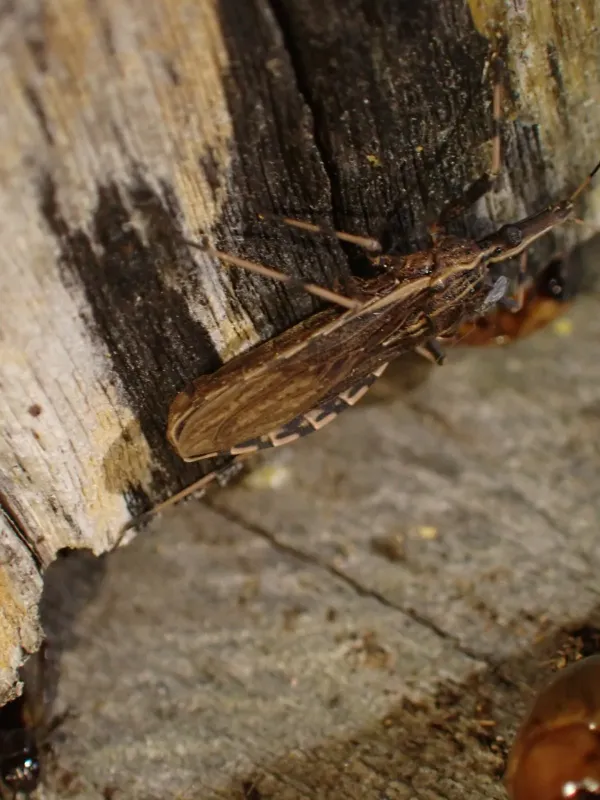
Description
How to identify
Rhodnius is a genus of insects within the family Reduviidae, subfamily Triatominae. These insects are well-known as blood-sucking bugs characterized by their slender heads and specialized mouthparts.
The body of a Rhodnius bug is typically flattened, which allows them to hide in narrow crevices. They exhibit a distinct color pattern along the edges of the abdomen, known as the connexivum.
A key identification feature is the position of their antennae, which are inserted on the sides of the head midway between the eyes and the tip of the head.
Adult bugs are capable of flight, facilitating their movement between habitats. Nymphs closely resemble adults but lack wings and are smaller in overall size.
These insects are primarily nocturnal, preferring to spend daylight hours in dark, sheltered areas to avoid detection and desiccation.
What it damages
Rhodnius bugs are not agricultural pests that damage plants. They are obligate hematophagous insects, meaning they feed exclusively on the blood of vertebrates, including humans and livestock.
The primary concern regarding Rhodnius is their role as a vector for Trypanosoma cruzi, the parasite responsible for Chagas disease. Transmission occurs when infected feces contaminate the bite site.
In farming environments, their presence can cause significant distress to livestock. Frequent feeding leads to skin irritation, allergic reactions, and reduced overall weight gain or milk production.
They do not consume plant sap or tissue; therefore, they do not cause direct mechanical damage to crops. Their presence in farm areas is mainly a sanitation and health issue.
Economic impact is primarily associated with the costs of structural improvements, sanitation protocols, and the potential health risks posed to workers and animals.
When it appears
The activity of Rhodnius is highly dependent on ambient temperature, as they thrive in warm, stable climates. In natural settings, they are most active during warmer months.
In indoor environments such as barns or homes, the life cycle can continue throughout the year if temperatures remain sufficiently warm, preventing natural dormancy.
These bugs exhibit nocturnal behavior, emerging from their hiding spots after sunset to locate a host for a blood meal.
The development from egg to adult involves several nymphal instars and typically spans several months, depending heavily on food availability and climate.
Continuous breeding occurs when conditions remain favorable, allowing the population to grow rapidly if sanitation measures are neglected.
Signs of infestation
The most immediate sign of a Rhodnius infestation is the visual detection of the bugs themselves, typically spotted near animal bedding or resting areas at night.
Evidence of their presence includes the accumulation of dark, liquid fecal spots found on walls, furniture, or construction materials near resting sites.
Finding discarded exoskeletons (exuviae) is a strong indicator of an established, growing population, as these are shed during each molting phase.
- Bite marks on skin or animal hide, which often appear in linear clusters.
- A characteristic, pungent odor released by the bugs when they are present in large numbers.
- Egg clusters hidden in structural cracks, crevices, or accumulated debris.
Early signs are often missed, leading to well-established populations that are harder to eradicate once they are fully settled into the building structure.
Control measures
Control of Rhodnius relies heavily on improving housing structures and maintaining high standards of hygiene to eliminate hiding spots.
Sealing cracks and crevices in walls, floors, and ceilings is the most effective way to prevent the bugs from colonizing a space.
The use of residual insecticides is recommended to manage existing populations. These treatments target both nymphs and adults during their nighttime activity.
Sanitation practices such as removing piles of wood, debris, or trash near animal enclosures significantly reduce potential nesting sites for the bugs.
Professional pest management services should be consulted for large-scale infestations to ensure safe and effective application of chemical control agents.
Taxonomy
- Latin name
- Rhodnius
- Order
- Hemiptera (bugs, aphids, leafhoppers)
- Family
- Reduviidae
- EPPO code
- RHODSP
Discussion
No discussions yet — be the first.