
Reptalus panzeri
Reptalus panzeri
Description
How to identify
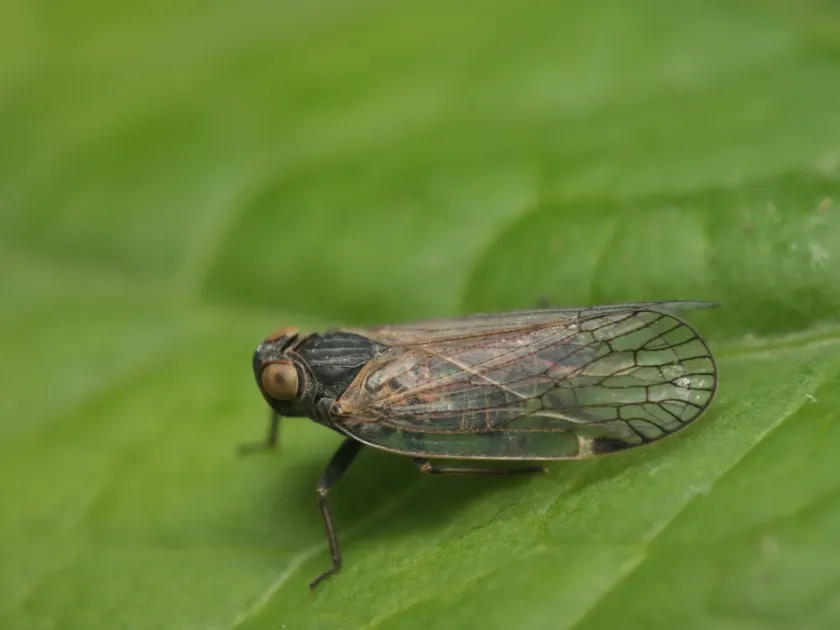
Reptalus panzeri is a species of planthopper belonging to the Cixiidae family. The adult insect measures approximately 6–8 mm in length and exhibits a brownish-yellow to brown coloration with transparent wings featuring a distinct vein network.
The nymphs are soil-dwelling organisms that feed on the root systems of plants, making them difficult to detect during the early stages of crop development compared to the winged adult forms.
This species is highly mobile, with adults exhibiting strong jumping capabilities, which allows them to migrate rapidly between weed reservoirs and cultivated fields during favorable weather conditions.
The life cycle encompasses an egg stage, five nymphal instars, and the adult stage. In most temperate regions, the pest typically completes one generation per year, overwintering as nymphs in the soil.
Proper identification of the species often requires expert examination due to the morphological similarity with other related planthoppers found in similar agricultural habitats.
What it damages
Reptalus panzeri is recognized as a significant pest for various agricultural crops, particularly cereals like wheat and barley, as well as sugar beets and some vegetable crops.
Its primary economic impact is not only direct feeding damage but also its role as a vector for phytoplasma diseases, such as stolbur, which can cause severe stunting and deformation in host plants.
By feeding on plant sap, the insects weaken the host's vitality, leading to reduced photosynthetic efficiency, stunted growth, and a marked decrease in total yield volume and quality.
Nymphal feeding on roots significantly limits the plant's ability to absorb nutrients and water, making the crop more susceptible to environmental stressors like drought and secondary infections.
High population densities can lead to significant patches of crop failure, potentially causing substantial losses for farmers if management interventions are not implemented in time.
When it appears
The emergence of adults from the soil typically begins in late spring, once stable average daily temperatures exceed 15 degrees Celsius, aligning with the vegetative stages of cereal growth.
The peak of migratory activity usually occurs during late May and June, when adults move from perennial weed reservoirs and wasteland areas into cultivated fields.
Females deposit eggs into the soil near the root zone, where newly hatched nymphs initiate their feeding cycle on available host plants, both cultivated and wild weeds.
The summer season facilitates rapid development and multiplication, especially during dry and warm periods, which can accelerate the maturation of the insect population.
As autumn approaches, the nymphs migrate deeper into the soil profile to enter diapause, effectively overwintering until the following spring when the cycle begins anew.
Signs of infestation
Signs of infestation often manifest as localized patches of stunted, chlorotic plants that fail to develop normally compared to the surrounding healthy crop.
Symptoms of phytoplasma infection, transmitted by these leafhoppers, include yellowing or reddening of leaves, excessive tillering, and the formation of deformed, smaller-than-average ears or fruit.
On sugar beet crops, signs include leaf curling and marginal chlorosis, accompanied by a noticeable delay in root development that affects the final harvest weight.
Visual verification can be achieved by using sweep nets during the early morning or evening hours when the insects are less prone to flight and more concentrated on vegetation.
The presence of high populations of host weeds, such as Convolvulus arvensis, near the field edges often serves as a key indicator of the potential risk of infestation.
Control measures
Effective management begins with the rigorous control of weeds within and surrounding the fields, which eliminates the primary breeding sites for the pest population.
Deep autumn plowing is a highly recommended agricultural practice to disrupt the soil-dwelling nymphs, exposing them to environmental conditions that reduce their survival rate.
Systemic insecticides should be applied during the period of maximum migratory activity to reduce adult populations and prevent the transmission of phytoplasma diseases to the crop.
Maintaining spatial isolation from perennial grasses and unmanaged habitats is crucial to preventing the colonization of the crop by adults moving from reservoir zones.
- Implementing crop rotation to break the insect's life cycle.
- Using pest-resistant crop varieties where available.
- Regular monitoring with yellow sticky traps to assess density.
- Strategic edge-of-field chemical applications to deter migration.
Taxonomy
- Latin name
- Reptalus panzeri
- Order
- Hemiptera (bugs, aphids, leafhoppers)
- Family
- Cixiidae
- EPPO code
- REPTPA
Discussion
No discussions yet — be the first.