
Masked hunter
Reduvius personatus
Description
How to identify
The masked hunter (Reduvius personatus) is a large insect from the Reduviidae family, typically measuring 15–17 mm in length. It is easily recognized by its dark, almost black appearance and unique camouflage behavior.
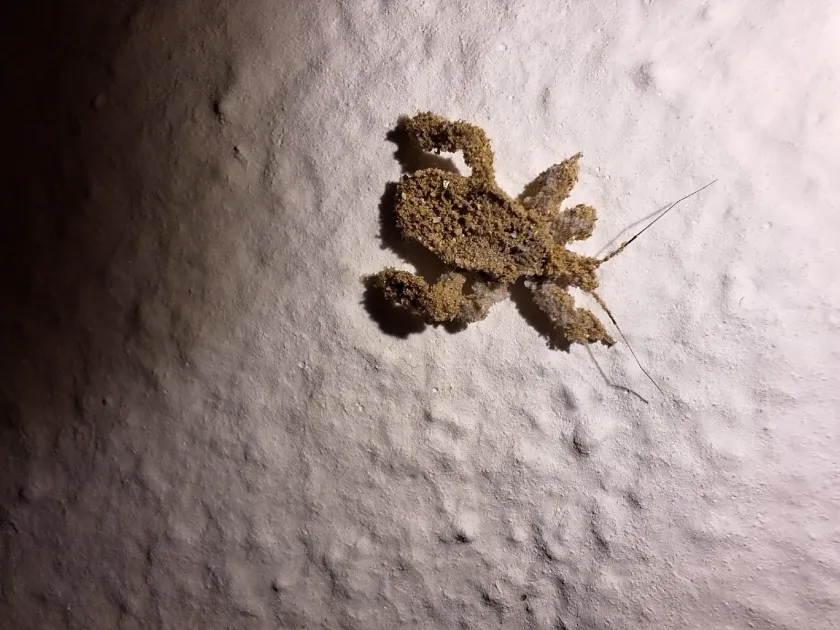
Nymphs of this species have a distinct trait: their bodies are covered in sticky hairs that collect dust, sand, and debris. This "masked" appearance helps them remain invisible to their prey while hunting in dusty environments.
Adults possess well-developed wings and are capable of flight, often being attracted to artificial lights at night. The insect has an elongated head with a strong, sharp rostrum used to pierce the exoskeleton of its prey.
Unlike many true bugs, it does not release a foul odor; however, if handled carelessly, it can deliver a very painful bite that may cause temporary inflammation in humans.
Taxonomic classification: Order Hemiptera, family Reduviidae. It is considered an active predator rather than a plant feeder.
What it damages
From an agronomic perspective, the masked hunter is not a pest of agricultural crops. On the contrary, it is categorized as a beneficial entomophagous insect that helps regulate pest populations.
This bug feeds on various insects found in households, outbuildings, and gardens. Its diet includes bed bugs, clothes moths, mealworms, and other small arthropods, effectively acting as natural pest control.
It does not damage plants, as it does not consume plant sap or tissues. Its presence in a field or garden usually indicates the presence of a food source, meaning other small pests are likely nearby.
Agronomists view this bug as a natural ally that assists in suppressing parasite populations without the need for intensive chemical pesticide applications.
Therefore, this species causes no direct harm to cultivated crops, making it a valuable representative of the ecosystem that should be protected and encouraged.
When it appears
Adult masked hunters are most active during the summer months, typically from June to August, when they actively move in search of prey and mates.
The life cycle is extended; females lay eggs in sheltered spots such as wall cracks, debris, or quiet garden corners. Nymphs develop slowly and can overwinter in indoor spaces or plant residue.
Pupation occurs after several molts, with the nymph carrying its "dust coat" throughout its development. Adult bugs can also overwinter in warm, dry shelters.
Population peaks coincide with the mass reproduction of small indoor or garden pests that serve as their primary food source.
In spring, as temperatures rise, overwintering nymphs begin to feed actively, rapidly building biomass in preparation for their final transition into adults.
Control measures
Because the masked hunter is a beneficial predator, no specific control measures are needed. Instead, its presence should be encouraged to assist in natural pest management.
If the presence of these insects in a home is undesirable due to the risk of accidental bites, the best strategy is thorough cleaning and sealing cracks where bugs or their potential prey might hide.
Broad-spectrum insecticide use in gardens should be avoided, as it kills beneficial predators, disrupting the ecological balance and potentially leading to outbreaks of actual plant pests.
When pest control is necessary, it is recommended to use selective biological agents that have minimal impact on predatory insects to maintain the effectiveness of natural regulators.
The optimal protection strategy is to preserve the natural habitat of these insects, allowing them to thrive and contribute to the reduction of overall pesticide reliance in agricultural systems.
Taxonomy
- Latin name
- Reduvius personatus
- Order
- Hemiptera (bugs, aphids, leafhoppers)
- Family
- Reduviidae
- EPPO code
- REDUPE
Discussion
No discussions yet — be the first.