
Reduvius ciliatus
Reduvius ciliatus
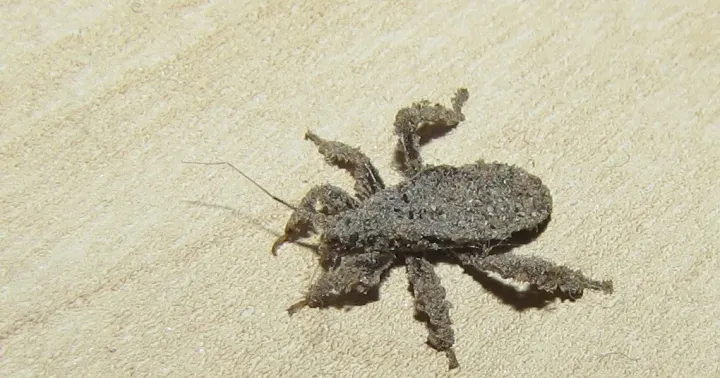
Description
How to identify
Reduvius ciliatus is a species of assassin bug belonging to the family Reduviidae, within the order Hemiptera. These insects are characterized by an elongated body and a prominent, needle-like proboscis designed for piercing the exoskeleton of their prey.
Adult bugs typically reach a length of 10 to 15 mm. Their coloration ranges from dark brown to black, which serves as an effective camouflage against tree bark and leaf litter, making them difficult to spot in natural habitats.
The head of the bug is elongated with large, protruding eyes, providing them with excellent vision for hunting. Long, thread-like antennae are essential for sensory input during the search for potential prey.
Nymphs resemble adults but are significantly smaller and lack developed wings. They undergo several developmental stages, gradually increasing in size and transitioning to the characteristic pigmentation of the species.
Distinguishing Reduvius ciliatus from other beneficial predatory insects is crucial, as their role in the ecosystem can be complex, often extending to preying on pollinators and other useful insect species.
What it damages
Although biologically classified as a predator, Reduvius ciliatus can pose a risk in agricultural settings. They may attack vital pollinators, such as honeybees and bumblebees, directly impacting the fertilization and yield of various crops.
In orchards and fields, this bug does not feed on plants directly. However, by preying on other beneficial insects, such as those that naturally control aphids or spider mites, it disrupts the biological balance of the agroecosystem.
The removal of natural enemies by this bug can lead to population spikes of other, more harmful pests, which can cause significant economic losses if not managed appropriately.
They prefer hunting in areas where insects congregate, often negatively affecting programs that rely on integrated pest management (IPM) strategies to protect fruit trees and vegetable crops.
The feeding mechanism involves injecting digestive enzymes into the prey, liquefying its internal tissues. This method is lethal to the beneficial insect community, significantly reducing the efficacy of biological control.
When it appears
The activity of Reduvius ciliatus begins in the spring, as temperatures rise, allowing overwintering adults to emerge from their shelters to begin their search for food and mating sites.
Peak population density usually occurs in mid-summer, when the development of nymphs is at its height. During this period, the bugs are at their most mobile and aggressive stages of their life cycle.
As autumn approaches and temperatures drop, adults seek protected sites, such as bark crevices, dense leaf litter, or debris, to successfully survive the winter months.
The life cycle is closely linked to the phenology of local plant life. Depending on climatic conditions, the species may complete one or two generations per year in warmer regions.
Egg-laying typically occurs in secluded, well-hidden places, such as deep cracks in wood or the undersides of leaves, making it a challenge for agricultural managers to monitor their reproduction.
Signs of infestation
Detecting Reduvius ciliatus is difficult due to their secretive nature and effective camouflage. They are most commonly identified during thorough orchard inspections or by using sweep nets to sample local insect populations.
An indirect sign of their presence is the sudden disappearance of beneficial predator colonies in specific field sections, especially where no insecticides have been applied.
The presence of exuviae (cast-off skins) on stems or tree trunks serves as clear evidence that the bug is actively developing and hunting in the immediate vicinity.
Adults are occasionally attracted to artificial light sources at night, which can be utilized by researchers to monitor their activity levels throughout the spring and summer months.
Professional monitoring programs often use sticky traps to track migration patterns and estimate the density of the assassin bug population across the managed area.
Control measures
The most effective strategy for managing Reduvius ciliatus is to foster high levels of biodiversity, allowing natural enemies such as birds and specialized parasites to regulate their numbers.
Broad-spectrum insecticide use is highly discouraged, as it eliminates other beneficial insects, potentially leading to further environmental imbalances and secondary pest outbreaks.
Agricultural practices should focus on maintaining a clean orchard floor by removing excess organic debris that serves as an overwintering site for the bug.
Continuous monitoring allows growers to detect population increases early and make informed decisions, avoiding the need for heavy chemical interventions in the field.
- Conduct regular phytosanitary inspections.
- Preserve refugia for beneficial predator species.
- Prune trees and remove loose, infested bark.
- Employ manual collection in small-scale garden settings.
Taxonomy
- Latin name
- Reduvius ciliatus
- Order
- Hemiptera (bugs, aphids, leafhoppers)
- Family
- Reduviidae
- EPPO code
- REDUCI
Discussion
No discussions yet — be the first.