
Reindeer
Rangifer tarandus
Description
How to identify
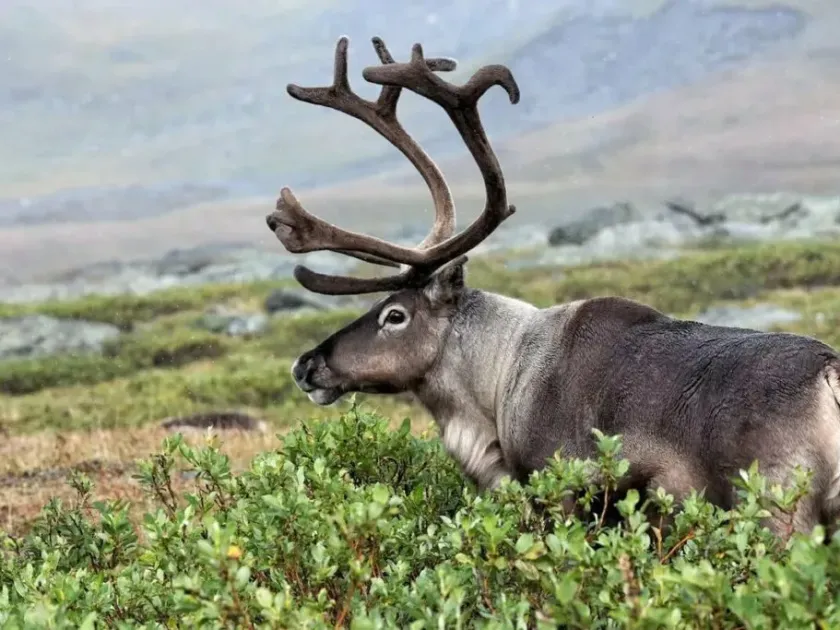
The reindeer (Rangifer tarandus), also known as the caribou, belongs to the Cervidae family. It is a large hoofed mammal uniquely adapted to arctic and subarctic environments, featuring thick fur and specialized hooves that provide traction on snow and soft terrain.
Both males and females grow antlers, which is a rare characteristic among deer species. In an agricultural context, reindeer are highly mobile and social animals that live in herds, which significantly increases the potential scale of impact when they enter agricultural lands.
Their biological adaptations allow them to survive on varied vegetation, ranging from lichens to shrubs and grasses. When reindeer migration routes overlap with cultivated areas, their presence becomes a management challenge for farmers and agronomists.
The species is known for its migratory behavior, which is driven by seasonal climate changes and food availability. These natural instincts often lead them to intersect with agricultural zones that offer high-protein forage during critical growth stages of crops.
Understanding their behavior, such as their preference for open areas during insect season or specific migration patterns, is essential for implementing successful deterrence and protection strategies in the field.
What it damages
The primary damage caused by reindeer involves the consumption of crops, particularly forage plants, cereals, and young seedlings. Their voracious appetite means that a herd can quickly deplete a significant area, leading to severe yield losses.
Physical damage to the soil is another major issue. The weight of the herd leads to soil compaction, which destroys soil structure and hinders the growth of plant roots. Constant hoof traffic can also result in localized erosion, particularly in sensitive environmental areas.
Reindeer often cause structural damage to farm facilities, including fences and storage structures, as they attempt to access food or navigate their migratory routes. This leads to additional maintenance costs for farmers.
Feeding behavior also damages young shrubs and tree plantations that serve as windbreaks or buffer zones around fields. This loss of protective vegetation makes fields more vulnerable to wind erosion in the long term.
Furthermore, reindeer may act as vectors for various plant pests and invasive seeds that can be transported across fields via their hooves or digestive tract, affecting future planting cycles.
When it appears
The risk of damage is highest during the spring and summer months. During spring, reindeer actively seek out the first emerging plants, which are nutrient-rich and highly attractive as they migrate to their summer ranges.
In mid-summer, reindeer tend to move toward open fields to escape biting insects that are more prevalent in wooded or dense brush areas. These open spaces often overlap with active farming fields, increasing the likelihood of damage.
The autumn rutting season influences herd movement, often making the animals less wary of human-made obstacles. During this period, herds may travel over vast distances, potentially entering agricultural lands in search of partners or food.
Winter poses a different challenge, as food sources become scarce. If natural lichen cover is depleted or covered by ice, herds may search for stored forage or supplemental feed stockpiled on farms, which requires secure storage solutions.
Farmers must adjust their monitoring efforts based on these seasonal patterns to effectively mitigate the risk and protect their investments throughout the year.
Control measures
Effective control requires the use of physical barriers such as high-tensile fences designed to withstand the weight of the herd. Electric fencing is highly recommended as a cost-effective and powerful deterrent when properly maintained.
Deterrence measures including acoustic devices (e.g., propane cannons) and visual alarms can be utilized, though it is crucial to vary the signals to prevent the animals from habituating to them over time.
Land management practices, such as maintaining buffer zones or utilizing less desirable crop varieties around the perimeter of the farm, can redirect the herd's movement away from high-value production fields.
Communication and collaboration with local reindeer herders are essential for avoiding conflicts. Managing migration routes and coordinating grazing schedules can drastically reduce the pressure on local agricultural land.
- Installation of high-tensile fencing.
- Deployment of electric fencing systems.
- Variable acoustic and visual deterrents.
- Collaborative herd management and monitoring.
- Strategic crop perimeter planning.
Taxonomy
- Latin name
- Rangifer tarandus
- Family
- Cervidae
- EPPO code
- RANFTA
Discussion
No discussions yet — be the first.