
Elk
Cervus canadensis
Description
How to identify
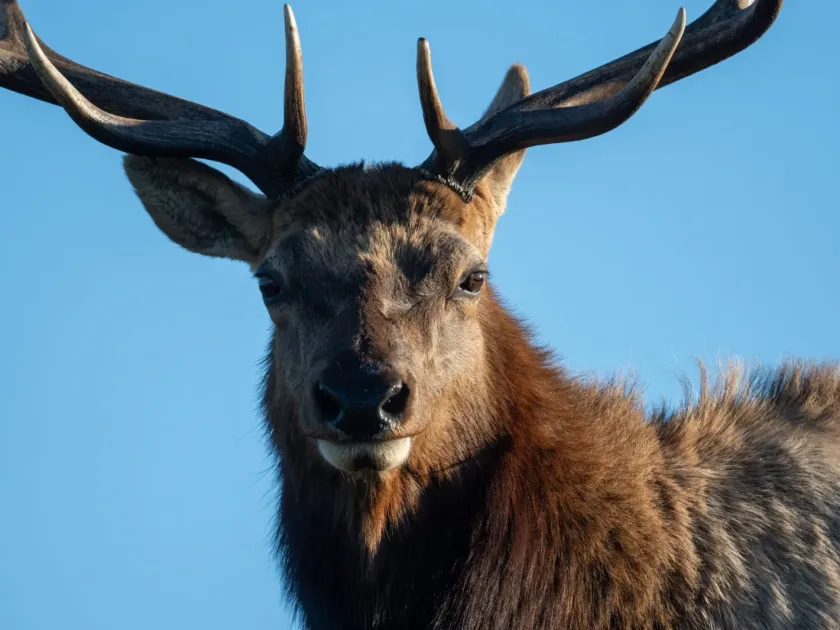
The elk, scientifically known as Cervus canadensis, is a large ungulate species belonging to the deer family (Cervidae). They are recognized by their impressive size and the majestic, multi-branched antlers that male elks grow and shed every year.
Elks are highly adaptable mammals that inhabit various ecosystems, ranging from dense forests to expansive grasslands. Their diet is diverse, consisting mainly of grasses, forbs, and, increasingly, agricultural crops when natural forage is scarce.
They are social animals that move in herds, particularly during the winter and early spring. This herd behavior makes them a significant challenge for farmers, as a single visit from a group can result in substantial crop loss in a very short time.
The life cycle of the elk includes a distinct mating season in the fall, known as the rut, during which males become highly active and territorial. This activity often overlaps with late harvest periods or early winter crop emergence.
Understanding their behavior, such as their preference for edge habitats between forest and open fields, is essential for implementing effective farm management and protection strategies.
What it damages
Elk cause significant economic losses in agriculture by consuming various crops including winter wheat, alfalfa, soybeans, and corn. Their appetite is immense, and they can graze down large sections of a field within one night.
Beyond direct consumption, elks inflict mechanical damage through trampling. Their heavy hooves compact the soil and crush plants, which ruins the quality of the crop and complicates harvesting operations.
Orchards and tree nurseries are particularly vulnerable to elk damage. By rubbing their antlers on trees and feeding on tender bark and terminal buds, they can stunt tree growth or cause complete mortality of young saplings.
Frequent grazing on the same field disrupts the crop growth cycle, causing uneven maturation and potential secondary disease infections in the damaged tissue of the plants.
The presence of elk also brings concerns regarding biosecurity, as they can carry and transmit diseases such as chronic wasting disease, which may negatively impact both wildlife and local livestock populations.
Signs of infestation
The most reliable sign of elk presence is the identification of their large, heart-shaped hoof prints. These tracks are usually deeper in the soil and distinct from those of smaller deer or livestock.
On vegetation, elk leave characteristic jagged edges on leaves and stems. Unlike the clean cuts made by insects or harvesting machines, elk feeding results in frayed, uneven plant ends from the tearing motion of their teeth.
The discovery of large amounts of droppings in concentrated areas of the field indicates where the herd has been feeding or resting. This confirms their regular route through your agricultural property.
Bark stripping on trees at a height of 1 to 2 meters is a clear indicator that elk have been foraging in the vicinity, often occurring during periods of low food availability.
Additionally, visual observation of herds in the early morning or dusk hours, combined with broken fences or displaced agricultural supplies, confirms their impact on your farm operations.
Control measures
The most effective strategy for elk management is the installation of high-tensile, tall fencing. To be effective, these fences must be at least 2.5 meters high to prevent the animals from jumping over.
Various deterrents, including strobe lights, motion-activated sirens, and propane cannons, can be utilized to scare elks away, although these methods often have limited long-term effectiveness due to habituation.
Chemical repellents applied to the border of the fields can act as an olfactory deterrent. However, these products require frequent reapplication, especially after rainfall, to maintain their effectiveness.
Farm management techniques, such as using scarecrows or keeping fields illuminated, have shown mixed results but can contribute to an integrated pest management strategy when used in combination with other methods.
- Installing perimeter exclusion fencing.
- Implementing regular field monitoring and wildlife census.
- Coordinating with local wildlife authorities for managed population control.
Taxonomy
- Latin name
- Cervus canadensis
- Family
- Cervidae
- EPPO code
- CERVCA
Discussion
No discussions yet — be the first.