
Axis deer
Axis
Description
How to identify
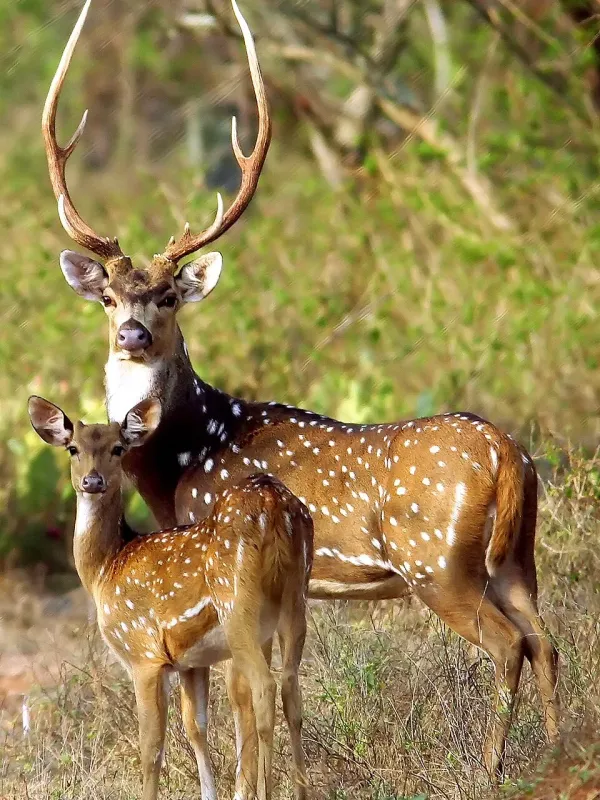
The Axis deer (Axis axis), also known as the chital, is a medium-sized deer distinguished by its reddish-brown coat covered in numerous white spots that persist throughout its adult life.
This animal possesses a slender build, long legs, and males carry three-tined antlers that are shed irregularly depending on the individual breeding cycle.
Systematically, it belongs to the order Artiodactyla and the family Cervidae. Due to its high adaptability, it has become a successful invasive species in regions far from its native range in India.
They prefer open forest habitats mixed with grasslands, but they frequently encroach upon agricultural lands to forage on human-grown crops.
Being highly social animals, they move in herds, which significantly exacerbates the scale and speed of damage caused to farm fields.
What it damages
The Axis deer is an herbivore with a broad diet, causing substantial damage to a wide variety of agricultural crops throughout their range.
Cereal crops like wheat, corn, and sorghum are primary targets, as the deer consume these plants during both the seedling and maturity growth stages.
Fruit orchards face severe damage from deer grazing on leaves and stripping the bark of young trees, which often leads to the death of the saplings.
Vegetable plots are also frequently targeted, particularly during dry seasons when natural vegetation is scarce and irrigated crops offer a nutritious alternative.
In addition to direct consumption, their habit of congregating in large numbers causes soil compaction, which hinders the development of root systems.
When it appears
The severity of the damage is most pronounced during the active vegetative growth phase, as crops are most palatable and nutrient-dense during this time.
These animals are primarily crepuscular, meaning they are most active during dawn and dusk, which often makes them difficult to observe and mitigate in time.
During winter months or severe droughts, the pressure on agricultural land increases significantly as native food sources become depleted.
Because the Axis deer lacks a strictly seasonal breeding cycle, they maintain high population densities throughout the year, sustaining constant pressure on agricultural fields.
Field farmers report the most critical damage during the grain ripening stages, when the plant development is at its peak and vulnerable to grazing.
Signs of infestation
One of the primary indicators of Axis deer presence is the distinct hoof prints found in soft soil within rows or along the perimeters of farm fields.
Plants damaged by deer exhibit irregular, torn edges because they lack upper incisors, resulting in a shredded appearance rather than a clean-cut look.
Bark damage on trees appears as deep grooves or sections of bark stripped away, often accompanied by snapped twigs and branches within reach of the deer.
The accumulation of droppings near the damaged crop areas provides clear evidence of regular visits by a herd of deer.
Structural damage to farm fencing, such as holes or bent wire sections, serves as a direct indicator of the deer's attempts to gain access to the crops.
Control measures
The most effective long-term defense is the installation of high-tensile mesh fencing, which physically prevents the deer from entering agricultural areas.
Acoustic deterrents, such as sirens or ultrasonic devices, can provide temporary relief by creating an uncomfortable environment for the herd.
Chemical repellents applied directly to the crops can make the plants unpalatable, though these require frequent reapplication and are sensitive to weather conditions.
In regions where the Axis deer is classified as an invasive pest, managed culling programs are essential for reducing population density and protecting natural resources.
An integrated approach, combining physical barriers with the use of guard dogs and strategic planting of less attractive crop varieties, is the most sustainable management plan.
Taxonomy
- Latin name
- Axis
- Family
- Cervidae
- EPPO code
- AXISSP
Discussion
No discussions yet — be the first.