
Moose
Alces
Description
How to identify
The moose (Alces alces), also known as the elk in Eurasia, is the largest member of the Cervidae family. They are massive animals with a distinctive humped snout and powerful limbs.
Adult males are recognized by their large, palmate antlers, which are shed annually. Their coat color ranges from dark brown to black, providing camouflage within forest habitats.
Moose are highly adaptable and thrive in diverse environments, ranging from dense boreal forests to subarctic areas. They are known to be strong swimmers and can traverse deep snow with ease.
These animals are generally solitary, though they may congregate in areas with abundant food during winter months. Their reproductive period, or rut, typically occurs in early autumn.
With an average lifespan of over a decade in the wild, moose maintain stable populations that can significantly influence the vegetation structure of their home ranges.
What it damages
Moose cause significant damage to young forest plantations by browsing on terminal shoots of conifers and deciduous trees, including spruce, pine, willow, and aspen.
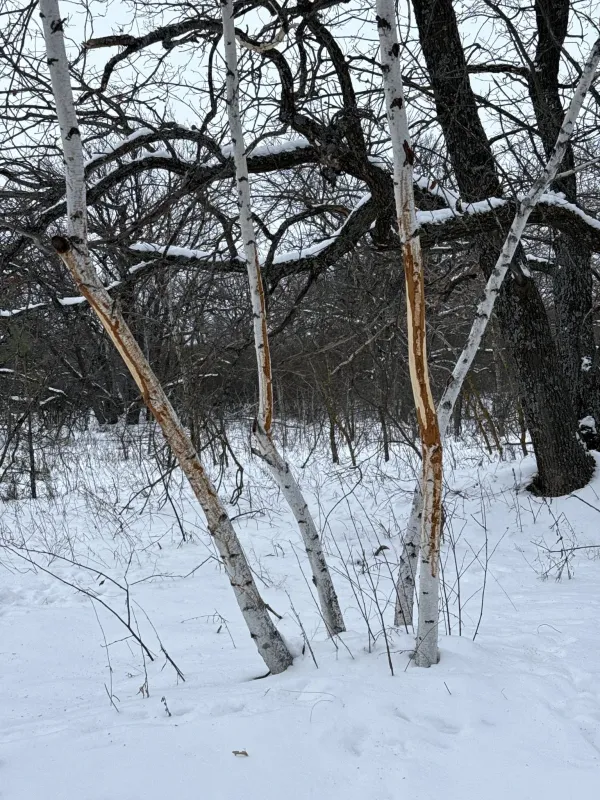
During winter, they strip bark from trees, a behavior that stunts growth and introduces pathogens. This damage can lead to tree deformity or mortality, significantly reducing timber value.
In agricultural settings, moose frequently raid fields of winter wheat, rape, and other cereals. Trampling and grazing can result in substantial yield losses near forest edges.
Summer browsing focuses on herbaceous plants and aquatic vegetation, but the consumption of high-protein agricultural crops remains a common issue for farmers in forested regions.
Young plantations aged between 5 and 15 years are particularly vulnerable to moose browsing, as the tree tops are at an accessible height for the animals.
When it appears
Winter is the most critical season for forestry damage, as deep snow limits mobility, forcing moose to concentrate their feeding in specific areas of young plantations.
Spring marks the transition to green vegetation, and the emergence of early crops provides a high-quality food source that attracts moose to agricultural fields.
During summer, moose continue to graze on crops as they seek nutrition to recover from winter stressors. The proximity to forest cover makes crops highly susceptible during this time.
Autumn rutting behavior increases the mobility of moose, leading to potential damage in areas that might not be visited during the rest of the year.
Year-round activity patterns ensure that forestry managers and farmers must maintain constant vigilance against potential damage throughout the entire growing and dormant seasons.
Signs of infestation
Large, deep hoof prints are the most prominent signs of moose presence. These prints often show the impression of dewclaws in softer soil or deep snow.
Browsing marks are evident on trees: ragged twig ends and stripped bark on trunks are clear indicators that a moose has been feeding on the vegetation.
Droppings, typically seen as dark, elongated pellets, are found in concentrations along established game trails or near browsing sites.
Distinctive pathways through tall grass or damaged sections of field fences are common indicators of moose entering agricultural properties from surrounding forests.
The presence of flattened areas or "beds" in the vegetation or snow suggests that moose are using the area for resting, indicating a frequent and persistent presence.
Control measures
Individual tree protection methods, such as mesh sleeves and physical barriers, are effective at preventing bark stripping and terminal bud consumption in young forests.
Electric fencing is a highly recommended solution for protecting agricultural fields from moose incursions, providing a strong deterrent for large ungulates.
Chemical repellents applied to tree bark or surrounding foliage can effectively discourage moose from browsing on high-value saplings or crops.
Population management, including controlled hunting, is often necessary to maintain the moose density at levels that are compatible with sustainable forest and crop management.
- Strategic placement of salt licks in remote areas.
- Installation of motion-activated sonic deterrents.
- Diversification of crop varieties near forest edges.
- Consistent scouting and monitoring by foresters.
Taxonomy
- Latin name
- Alces
- Family
- Cervidae
- EPPO code
- ALCSSP
Discussion
No discussions yet — be the first.