
Red deer
Cervus
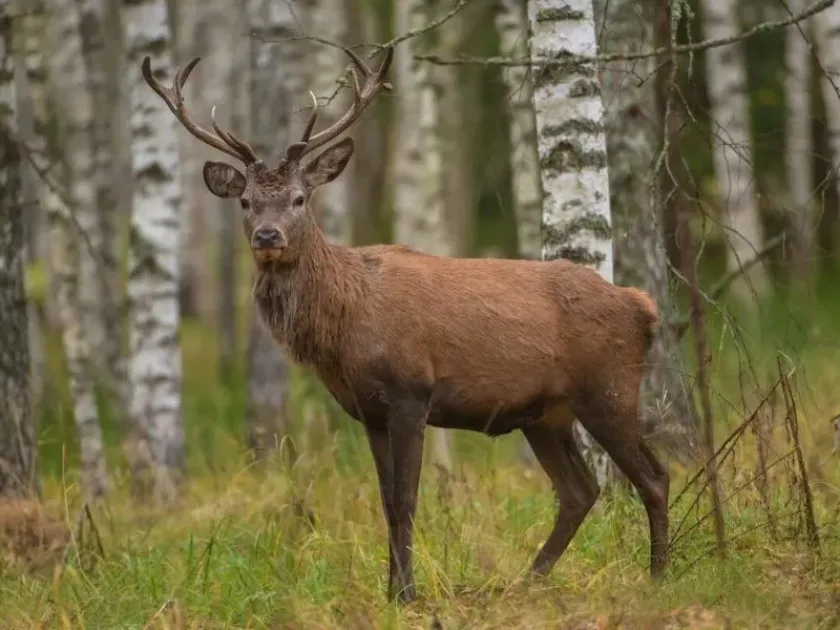
Description
How to identify
The red deer (Latin: Cervus elaphus) is a large mammal belonging to the Cervidae family. Adult males can weigh up to 300 kilograms and are characterized by impressive, branching antlers that are shed annually in late winter or early spring.
These animals are highly mobile, allowing them to traverse large areas in search of high-quality food. Their coat color changes from reddish-brown in summer to grayish-brown in winter, aiding in camouflage within their natural woodland habitat.
Red deer live in herds, with group sizes fluctuating depending on food availability and the season. High population densities near agricultural zones pose a significant risk to crop yields and nursery plantations.
Equipped with keen senses of smell, sight, and hearing, these animals are difficult to deter. Their behavioral patterns are strictly adapted to finding the most nutritious plant parts throughout the entire year.
Breeding occurs once a year during the autumn rutting season. Young individuals reach sexual maturity within two to three years, enabling rapid population recovery in areas with sufficient resources.
What it damages
The primary damage caused by red deer involves the intensive grazing on young shoots of agricultural crops such as winter wheat, maize, oilseed rape, and sunflower. Grazing often leads to significant crop loss and trampling of large areas.
In forest nurseries and young plantations, deer cause critical damage by feeding on buds and leading shoots. This leads to stem deformation and severe stunting of growth in young timber species.
During winter months, deer strip bark from trees, a behavior known as "bark peeling." This exposes the wood to fungal infections and wood-boring insects, frequently resulting in the death of the tree.
Orchards and vegetable fields adjacent to forests are particularly vulnerable to raids, especially during periods when natural forest food is scarce. Deer frequently damage fruit trees by gnawing on bark and tender branches.
The damage to fields bordering forests can reach 30–50% of the total yield. Furthermore, deer act as hosts for various parasites that may pose health risks to domestic livestock.
When it appears
Peak activity for red deer as pests occurs during autumn and winter when natural forest food sources become depleted. Animals migrate towards agricultural lands where winter crops offer a succulent food alternative.
The spring period is particularly risky for young seedlings and budding trees, as deer seek out nutrient-dense vegetation to recover after winter. Intensive grazing during this time can devastate small-scale plantations.
In summer, red deer continue to damage young forest stands by rubbing their antlers or stripping bark. They may also target fields with fodder crops, maintaining a steady pressure on agricultural production.
Seasonal migration is closely synchronized with the agricultural cycle. Deer demonstrate a keen ability to follow planting and harvesting schedules, targeting crops when they are at their peak nutritional value.
Environmental factors like deep snow or prolonged drought trigger higher activity levels on farmland. In such conditions, the intensity of herbivore damage increases significantly due to the lack of forest forage.
Signs of infestation
On agricultural land, red deer presence is easily identified by large, distinct hoof prints, which are significantly larger than those of other ungulates. Signs include flattened crop patches and vegetation with jagged, uneven bite marks.
In forested areas, the most obvious sign is bark stripped up to two meters above the ground. Teeth marks on the trunk and patches of fur snagged on rough bark are clear indicators of their feeding activity.
Deer droppings, which are oval-shaped and typically found in clusters, provide definitive proof of the pest's presence in a specific area. Discovering these deposits on field edges confirms herd entry.
Damaged branches often look torn or chewed at the tips. When widespread feeding occurs, young saplings may appear "trimmed" from the top, which prevents vertical development and timber quality.
Antler rubbing marks on tree trunks during the rutting season look like vertical strips of damaged bark. This causes deep mechanical injury that often provides an entry point for disease.
Control measures
The most effective method for protection is the installation of robust wire-mesh fencing, standing at least 2.2 to 2.5 meters high. This remains the only reliable barrier for preventing access to high-value agricultural areas.
Electric fencing systems are a practical solution for creating a psychological barrier. These systems should be installed with multiple wires adjusted to the height of the animal's body to ensure effective deterrence.
Repellents applied to the bark of young trees or crops can discourage deer through scent or taste. However, these methods require frequent re-application, especially after rainfall, to maintain effectiveness.
Acoustic and visual deterrents, such as signaling devices or reflective markers, provide temporary relief. Deer tend to habituate to static stimuli quickly, so these tools must be rotated to remain effective.
Managing the population size through legal hunting quotas is a crucial long-term control strategy. Close cooperation with wildlife management agencies helps balance ecosystem health while minimizing agricultural losses.
Taxonomy
- Latin name
- Cervus
- Family
- Cervidae
- EPPO code
- CERVSP
Discussion
No discussions yet — be the first.