
Reindeer
Rangifer
Description
How to identify
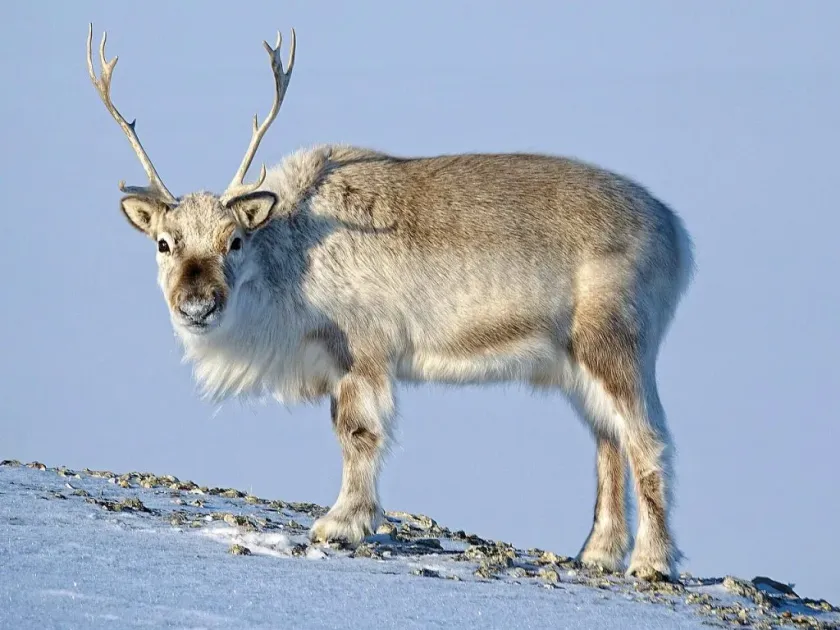
The reindeer (Rangifer tarandus), also known as the caribou in North America, is a species of deer (Cervidae) native to the arctic and subarctic regions. They possess wide, crescent-shaped hooves that act as snowshoes, allowing them to traverse difficult terrain with ease.
Their dense, double-layered fur provides essential insulation against freezing temperatures. A unique feature of the species is that both males and females grow antlers, which they shed and regrow annually.
In an agricultural context, reindeer can become unexpected pests. Their tendency to migrate in large herds brings them into contact with human agricultural settlements, particularly in northern farming zones.
Reindeer are highly gregarious animals. Their social behavior means that if they gain access to a food source, they arrive in numbers, multiplying the potential damage to crops or sensitive vegetation.
Their biology is intrinsically linked to seasonal migrations. These long-distance travels often result in herds crossing through farmland, as they move between seasonal foraging grounds in search of lichen and grasses.
What it damages
Reindeer cause significant damage to forage lands and grazing pastures by overgrazing and trampling sensitive vegetation. Their hooves can compact soil, making it difficult for future crop growth.
During the harsh winter months, when natural food sources are covered by deep ice or snow, reindeer often encroach upon agricultural fields in search of supplemental feeding, consuming stored hay or winter crops.
The damage to young saplings in forestry plantations and nurseries is particularly severe. They strip bark from trees to satisfy their need for minerals and roughage during the winter, often killing the trees in the process.
Mechanical destruction of irrigation infrastructure, fences, and farm equipment is common. Large herds moving through narrow passages or attempting to access water sources can crush and ruin expensive farm assets.
In regions where greenhouse agriculture is practiced, reindeer may damage the structures themselves, seeking warmth or food, leading to substantial financial losses for northern horticulturalists.
Signs of infestation
The most reliable sign of reindeer presence is their distinctive footprint. The hooves are broad and rounded, leaving a characteristic split-track mark that stands out in dirt or mud, easily distinguished from other deer species.
Pellet-like droppings scattered across fields are a clear indicator of a herd's presence. These are usually found in clusters where the animals have paused to feed or rest during their migration.
Signs of feeding include cleanly nipped plant tops and broken stalks. Unlike domestic livestock, reindeer feeding patterns are often more erratic, covering larger areas in shorter timeframes.
Damage to trees is identified by irregular bark stripping and fresh bite marks on lower branches. This is particularly noticeable in orchards or protected wooded areas during the late winter and early spring.
Audible cues, such as the clicking sound made by their tendons when moving, combined with morning observations, allow farmers to detect the presence of the herd before damage becomes extreme.
Control measures
Physical exclusion is the most effective control method. High-tensile, heavy-duty wire fencing is necessary to prevent these strong animals from breaking through into critical agricultural areas.
The use of motion-activated deterrents, such as high-intensity lights or ultrasonic acoustic devices, can successfully discourage reindeer herds from lingering near fields, especially at night.
Strategic diversion is another approach. By creating designated forage zones away from sensitive crops, farmers can encourage the herd to graze where they cause minimal economic loss.
Collaborating with local wildlife management agencies allows farmers to track herd movements via GPS-collared individuals, providing early warnings that allow for proactive measures to be taken.
Using scent-based repellents applied to the perimeter of fields can also serve as a deterrent. These substances mimic predator scents or unpleasant tastes, causing the herd to bypass the protected area.
Taxonomy
- Latin name
- Rangifer
- Family
- Cervidae
- EPPO code
- RANFSP
Discussion
No discussions yet — be the first.