
Grackle
Quiscalus
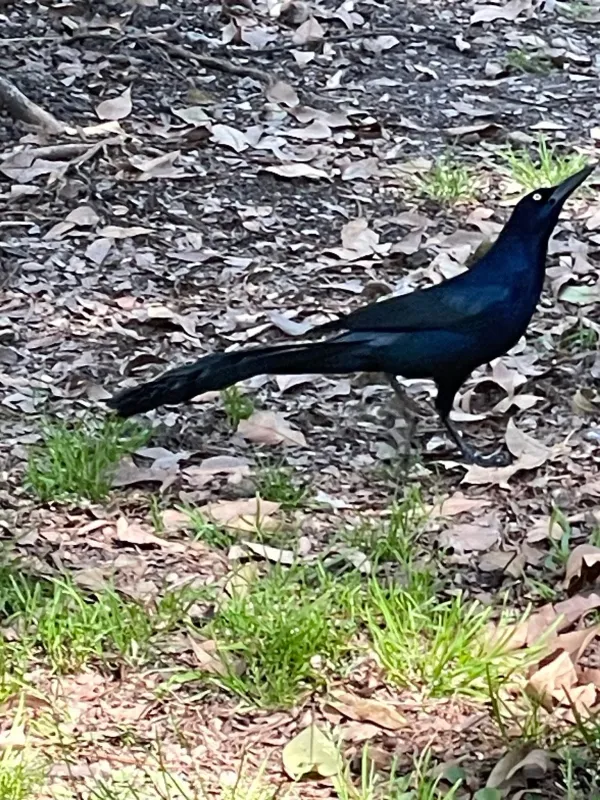
Description
How to identify
Grackles (genus Quiscalus) are medium-sized passerine birds belonging to the Icteridae family. They are known for their distinct iridescent plumage, which can appear black, purple, or bronze depending on the light.
Males are typically larger than females, possessing longer tails and a more pronounced metallic sheen. These birds are highly gregarious and often congregate in large flocks, especially during the agricultural harvest season.
The biology of the grackle is adapted to both natural and human-modified environments, as they rely on a mix of insect and grain-based diets, which often leads them into cultivated farm fields.
Their nesting habits involve dense vegetation near water sources or field edges, providing a base for the flocks to range over agricultural landscapes in search of sustenance.
Grackles are known for their high intelligence and rapid habituation to traditional scare tactics, making them a challenging pest for modern crop management.
What it damages
Grackles cause significant damage to corn (maize) by stripping husks and consuming kernels during the milk and soft dough stages of grain development.
In sunflower fields, they cause heavy losses by pecking out seeds from the flower heads, which can also leave the crop vulnerable to secondary infections and mold growth.
Other small grains, such as sorghum and rice, are also subject to damage, as grackles consume the grain during the maturation phase, often leaving fields partially empty.
Beyond seed consumption, the birds frequently break stalks and leaves while congregating on the plants, which hinders mechanical harvesting and increases overall yield loss.
In high densities, a flock of grackles can decimate significant portions of a harvest in a very short period, particularly if the field is adjacent to a roosting site.
When it appears
The peak period of damage occurs in late summer and early autumn, as various cereal crops reach maturity and become highly attractive energy sources for bird populations.
During the migratory season, grackles form massive flocks that can cause widespread devastation to fields, as birds seek to build fat reserves before their travel.
In the spring, grackles may target newly planted seeds or young seedlings, pulling them from the ground to extract the nutrient-rich seed casing before germination.
The duration of the birds' presence on a field is dictated by the availability of food; once a field is identified as a reliable food source, flocks will return daily.
Diurnal activity patterns indicate that grackles are most active during the early morning and late evening, which are the critical times for implementing deterrent strategies.
Signs of infestation
The most prominent sign of a grackle infestation in corn is the presence of shredded husks and partially eaten ears, often concentrated in specific areas of the field.
Sunflower heads that exhibit missing seeds, combined with scattered chaff and visible bird droppings, are clear indicators of recent foraging by grackle flocks.
Observing large concentrations of birds on nearby infrastructure, such as power lines or tall trees, is a warning sign of an imminent raid on the surrounding crops.
Ground-level indicators include scattered debris, husk remnants, and bird guano patches, which mark where the birds spent time foraging or resting.
When dealing with seedlings, patches of missing or uprooted plants with small crater-like depressions in the soil are signs of grackle interference during the germination stage.
Control measures
Acoustic deterrents, such as the playback of predator distress calls or species-specific alarm sounds, are among the most effective ways to discourage grackle activity.
Visual deterrents, including reflective tape, holographic deterrents, and predator statues, may work in the short term but often require frequent repositioning to avoid habituation.
Propane cannons or other auditory startling devices can create a localized exclusion zone, though their effectiveness relies on the element of surprise and rotating locations.
Agricultural management should prioritize clean harvesting practices to ensure that no leftover grain is available on the field surface to attract flocks post-harvest.
Integrated pest management (IPM) is recommended for larger operations, utilizing a combination of deterrents and potentially chemical repellents under professional supervision to mitigate severe damage.
Taxonomy
- Latin name
- Quiscalus
- Family
- Icteridae
- EPPO code
- QUISSP
Discussion
No discussions yet — be the first.