
Quedius
Quedius
Description
How to identify
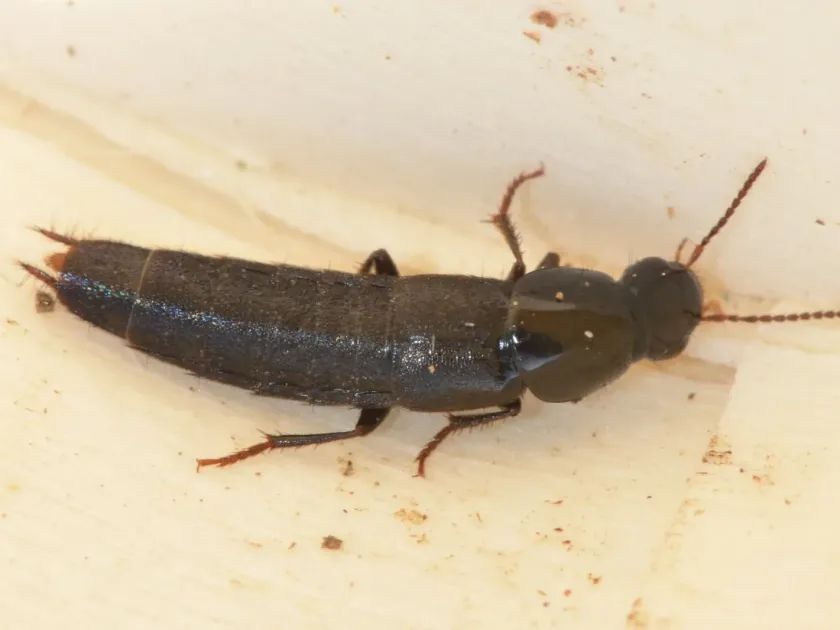
Beetles of the genus Quedius belong to the large family Staphylinidae (rove beetles), order Coleoptera. These insects are characterized by an elongated body, often with a metallic sheen, and shortened elytra that conceal well-developed wings.
Adults are highly mobile and capable of moving quickly within soil litter, surface debris, or under plant residues. Their heads are massive with well-developed mandibles adapted for a predatory lifestyle, which defines their ecological role.
Larvae have a campodeiform body shape, equipped with functional legs and sensitive cerci at the end of the abdomen. They live a cryptic lifestyle, inhabiting the upper soil layers and actively hunting small invertebrates.
The taxonomy of this genus is extremely complex due to the vast number of species with very similar morphological traits. Accurate identification usually requires a specialist examination of male genitalia under a microscope.
It is crucial to distinguish Quedius from other Staphylinidae, as most species in this family are beneficial entomophages that control various soil pests, and only specific species may cause damage under certain conditions.
What it damages
While most representatives of the genus are predators, certain Quedius species may damage underground plant tissues when their usual prey (small invertebrates) is scarce.
The primary targets include young seedlings of vegetable crops, root vegetables, and germinating seeds. Damage is more frequent in high-humidity environments and areas with excessive organic matter.
They pose the greatest risk in greenhouse environments, where the stable microclimate allows for year-round development and high planting density facilitates the rapid spread of the pest population.
Damage manifests as the consumption of seed tissues or feeding on the epidermis of roots, which weakens the plant and creates entry points for various fungal and bacterial infections.
In field conditions, the damage caused by Quedius is typically secondary and localized, occurring mostly in areas with poor biological balance or where fresh manure has been applied excessively.
When it appears
The life cycle of Quedius is closely linked to soil temperature and moisture levels. Adult activity begins in early spring as soon as the soil warms up sufficiently for insect metabolism.
The population peak usually occurs during the wetter periods of the year, typically in spring and early summer, when mating and egg-laying in humus-rich substrates take place.
During the heat of summer, most species remain deep in the soil or in shaded moist refuges, significantly reducing their surface activity.
A second wave of activity is often observed in the autumn with the return of moderate temperatures and rainfall. During this time, they prepare for overwintering as adults or late-stage larvae.
In greenhouses, the developmental cycle can be continuous if stable moisture and temperature levels are maintained, necessitating careful monitoring by agronomists.
Signs of infestation
The first sign of the pest is the presence of the beetles themselves under soil clumps, stones, or plant residues during field inspections.
When seedlings are damaged, they may show sudden wilting and death without clear external reasons, while the root system appears chewed or damaged upon examination.
The presence of specific burrows or tunnels in the topsoil layer, left by active larvae, can also serve as an indicator of high population density.
Vegetable stands might appear thin or sparse, with seed destruction often accompanied by decay caused by the beetles' feeding activities.
It is recommended to use soil traps to monitor population levels and determine whether these beetles are the primary cause of crop damage before taking intervention steps.
Control measures
The primary control method involves maintaining proper agricultural practices that create conditions unfavorable for the mass reproduction of these beetles.
- Use fully decomposed compost instead of raw manure.
- Perform timely weeding and removal of plant residues that serve as hiding spots.
- Ensure an optimal irrigation regime to avoid soil over-saturation.
- Conduct deep autumn plowing to destroy overwintering sites.
- Use bio-preparations based on entomopathogenic fungi if the damage threshold is exceeded.
Chemical treatments against Staphylinidae are rarely advised, as these insects are often part of the beneficial soil fauna, and their broad-spectrum elimination may trigger outbreaks of other pests.
Consistent population monitoring allows for informed decision-making regarding control measures based on actual economic damage rather than the mere presence of individual beetles.
Taxonomy
- Latin name
- Quedius
- Order
- Coleoptera (beetles)
- Family
- Staphylinidae
- EPPO code
- QUEDSP
Discussion
No discussions yet — be the first.